It is no coincidence that Pharaoh is mentioned seventy-four times in the Holy Quran, while major acts of worship like ablution are mentioned only once, prayer a few times, and inheritance and pilgrimage once or twice. This striking balance in mention is not a random distribution, but rather a message directed to the Muslim community: the greatest danger threatening its existence is not its failure to perform religious rites, but its continued acceptance of tyranny and perpetuation of despotism. Pharaoh is not merely a historical figure who lived in a distant past; he is a living, ever-renewing symbol, embodied in all those who monopolize power, monopolize truth, monopolize existence, and make themselves gods on earth. Therefore, Pharaoh is not mentioned as a name referring to a specific person, but as a dangerous political function that recurs in every era, under new forms and different guises.
Dr. Muhammad Shahrour, in his renewed reading of the Quranic text, points out that Muslims, for centuries, neglected to dissect the institution of political tyranny, becoming preoccupied with the details of religious rituals while allowing the roots of political injustice to fester within the body of the Muslim community. He explains that tyranny is no longer merely a ruler who imprisons or orders killings, but has transformed into a comprehensive systemic mechanism: economic tyranny that steals the poor man’s bread in the name of the law; social tyranny that excludes the other and crushes diversity in the name of unity; and religious tyranny that makes the religious establishment a tool in the ruler’s hands to legitimize oppression in the name of Sharia. The oppressor is sanctified by fatwas, funded by the nation’s wealth, and taught in schools that he is the founding leader. The essence of tyranny is when the ruler becomes the absolute ruler, controlling the economy, manipulating religion, controlling education, and suppressing dissenting opinions in the name of national unity or stability. All of this, in its essence, is transgressing the limits, as God Almighty described Pharaoh: “Indeed, he transgressed.” According to Shahrour, tyranny is exceeding the limits set by Heaven for humanity: the limits of freedom, dignity, and justice. Indeed, even in the language of the Quran, there is a profound implication: Pharaoh is not merely described as an unbeliever, but as a tyrant. His disbelief is not only doctrinal but also behavioral and political, which makes confronting him a religious duty as well as a human one. The true believer is not the one who closes his eyes and says, “O God, grant us patience with the oppressors,” but rather the one who opens his eyes and says, “O God, make me a cause for the removal of injustice.” Therefore, it is no wonder that the Quran opens such a wide door for Pharaoh. While acts of worship may reform the individual, tyranny corrupts the nation.
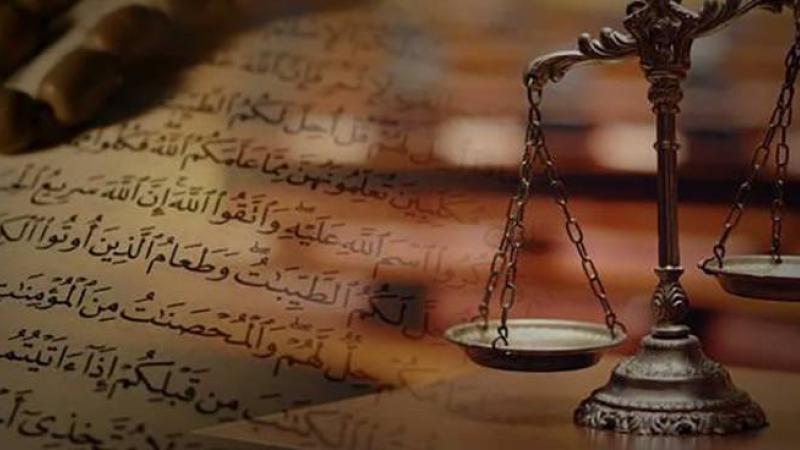
In this context, the precedence given to justice over worship in many Quranic verses becomes clear evidence of the priority of a just system over the form of worship. The noble verse: {Say, “My Lord has commanded justice and that you face your faces toward every place of worship.”} Note: God Almighty placed the command for justice—that is, fairness—before prayer. Why? Because prayer under the rule of an oppressor loses its essence. Because prayer under an oppressive regime can become an empty ritual that changes nothing, and may even be used to justify tyranny itself. A mosque cannot illuminate your heart if outside it there is a hungry child, a tortured prisoner, or a young person or family displaced from their homeland because they refused to be slaves to the Pharaoh of our time. Justice is not merely a virtue, but a prerequisite for the sincerity of worship.
The shocking paradox that Shahrour reveals is that we, as a nation, continue to pray, perform pilgrimages, give charity… while simultaneously perpetuating tyranny in our political and social conduct. Tyranny is no longer merely political power; it has transformed into economic tyranny, where wealth is distributed among the elite while the people are left to beg. It has also become social tyranny, where a young man is prevented from marrying because his tribe is at odds with his, or a man is prevented from educating his daughter because religion forbids it (a blatant lie against religion!). Religious tyranny: where the jurist and the mufti become God’s spokespeople, criminalizing anyone who dares to think otherwise, and interpreting the Quran to justify a new form of servitude in the name of loyalty to the ruler. Justice, however, is the dividing line between existence and collapse. When justice is replaced by loyalty, and truth by blind obedience, the nation begins to crumble from within, even if mosques remain full and hearts still memorize the Quran.
In truth, the roots of the crisis in Eastern societies, indeed in all of humanity, lie in the authoritarian state that concentrates power in one hand, negates the role of society, and transforms the individual from an active political being into a mere submissive follower. The tyrannical ruler resembles Pharaoh when he usurps the will of the people and replaces it with his own, sanctifies himself, and uses religion as a tool to pacify the masses. The reality of the authoritarian state is not limited to the individual ruler, but encompasses every structure that exercises dominance: such as the military and security apparatus, the subservient religious establishment, and even educational systems that teach obedience instead of critical thinking.
Let’s take an example from our own reality: In a society where wealth is monopolized by a single family, where unions are banned, where anyone demanding a minimum wage is imprisoned, and where religious rhetoric is used to label those calling for justice as foreign agents, we find a pharaoh incarnate, but with a new name and a contemporary entourage. And in another society where discrimination is practiced against a religious or ethnic group, where others are barred from leadership positions, and where their cultural identities are erased under the guise of national unity, there too is a new pharaoh, exercising social and cultural tyranny.
The true liberation from Pharaoh lies not merely in overthrowing the ruler, but in rebuilding society from the ground up through a participatory democracy that restores to the individual their role as an active participant in decision-making. This is not a superficial representative democracy that merely uses the ballot box to reproduce the same elite, but rather a genuine participatory democracy that distributes power among municipalities, associations, and popular councils, ensuring that power is never concentrated in one hand. The true confrontation with Pharaoh lies in building societies that reject tyranny—in politics, economics, and religion—based on participatory, decentralized, and conscious democratic principles. Indeed, the repeated mention of Pharaoh in the Quran cannot be understood without seeing it as a constant warning against the “Pharaonic condition” that could emerge at any moment through a ruler, an elite, or an institution. The Holy Quran does not tell us about Pharaoh to simply recount a past story, but to make us ask ourselves every day: Who is our Pharaoh today? Where is he hiding? And what is he doing?
Faced with this reality, it is not enough to recite the verses of punishment that befell Pharaoh as if they were a story of miracles. Rather, we must see them as a call to action, an incitement to awareness, and a plea for liberation. For true worship does not begin with bowing and prostration alone, but with rejecting injustice, fighting tyranny, and building societies founded on justice, dignity, and freedom. Otherwise, mosques will remain full, but hearts will be empty, and societies will remain captive to new Pharaohs who do not call themselves Pharaohs, but who commit the same crime: transgressing the bounds.
Therefore, mentioning Pharaoh 74 times is not mere repetition, but a resounding warning that rings in the ears of generations: there is no true worship without political justice, no genuine faith without resistance to tyranny, and no stable existence for a nation that accepts its right to life being confined to the hands of a single individual. Today, more than ever, the people of this nation need to read the story of Pharaoh not as a tale from the past, but as a mirror reflecting the faces of their rulers, their systems, and their silence.