First, background:
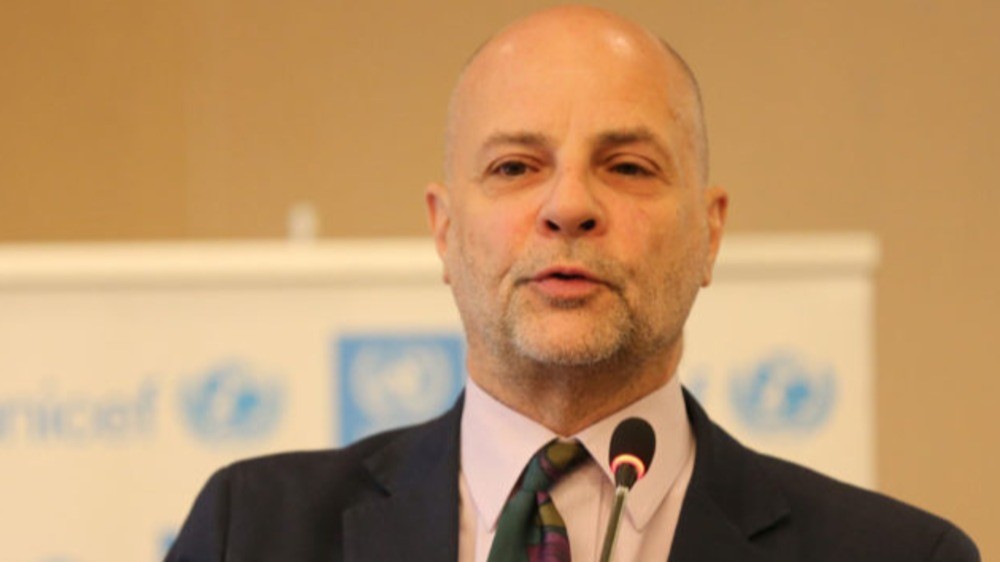
The UN’s appointment of a new Deputy Special Envoy to Syria comes at a critical juncture, as the country undergoes a post-regime transformation and a nascent political transition whose structures are not yet fully formed.
This appointment coincides with the UN’s expanding role in early reconstruction, refugee returns, human rights monitoring, and humanitarian coordination, as well as growing discussions about the possibility of UN involvement in regional arrangements concerning borders, withdrawals, or disengagement of forces, particularly in the Golan Heights.
Given the absence of a new Special Envoy, the appointment of a Deputy Special Envoy carries significant political and diplomatic weight, as it may signal a restructuring of the UN’s approach to Syria or the beginning of a broader role that could encompass sensitive political and security issues.
Second, the political implications of the appointment:
1) An international message of continued engagement in the Syrian file:
The appointment reflects a clear desire on the part of the United Nations to avoid a political vacuum in the Syrian file during the transition phase, and confirms that the international community does not intend to relinquish its role, especially in the absence of stable institutions capable of managing this phase independently.
2) Ensuring an effective UN communication channel:
The new Deputy Special Envoy will contribute to maintaining a level of communication between the United Nations and local and regional actors, given the rapidly changing balance of power within Syria.
3) Strengthening the UN presence in humanitarian and development matters:
The appointment is expected to enhance the UN’s role in issues such as:
- Managing the return of refugees.
- Supporting emerging local governance.
- Restoring basic services.
- A safe transition of power.
- Monitoring Violations and Strengthening Accountability Mechanisms
Third, Potential Opportunities for a New Syria:
1) Updating the UN Approach Based on New Realities: The fall of the previous regime opens the door to formulating a completely different approach from the one adopted since 2012, which was limited by Resolution 2254. The current transitional phase allows for the introduction of more modern models for peacebuilding, based on strengthening local institutions, expanding community participation, building trust among different groups, promoting administrative decentralization, and supporting transitional justice mechanisms.
2) Benefiting from the UN’s Experience in Post-Conflict State-Building:
The UN possesses extensive experience in managing transitions in countries that have experienced wars or institutional collapses, such as East Timor and Kosovo.
Despite the different contexts, Syria can benefit from establishing standards for transparency, managing the security transition, monitoring the reform of the military and security sector, and building local governance capable of delivering services. 3) Creating an international framework to support stability and prevent a return to violence. An effective Deputy Special Envoy would allow for:
Coordination among international powers to ensure that agendas do not clash.
Supporting an internal negotiation process among national forces.
Providing guarantees for transition procedures.
Fourth, potential challenges and risks:
1) The potential politicization of the UN role internally. Some powers might view the move as an attempt to reinstate international trusteeship or interference in national decision-making, especially if the role expands to include sensitive issues such as border security.
2) Conflicting agendas among international powers. Appointing a Deputy Special Envoy does not resolve the conflicting interests among the key players in Syria, such as the United States, Russia, Turkey, Iran, European countries, and Arab states. This could place the new Deputy Special Envoy in a delicate position amidst conflicting pressures.
3) A sensitive issue such as Syria-Israel:
If the UN role expands to include border issues, monitoring withdrawals, or any arrangements concerning the Golan Heights, it is essential to emphasize:
Syria’s full sovereignty. The necessity of direct national leadership for any negotiations.
Rejection of any imposed arrangements.
Ensuring that the United Nations acts as a technical, not a political, mediator.
Preventing the United Nations from becoming a substitute for national decision-making.
Fifth, the position of the Syrian Future Movement:
1) Conditional welcome: The Syrian Future Movement supports the appointment of a new Deputy Special Envoy to the United Nations, as a step that helps prevent a political vacuum, supports stabilization efforts, and opens the door for broader participation between Syrians and the international community.
2) Emphasis on Syria’s ownership of crucial decisions: Here, we believe that any UN role should be supportive, not guiding, and that the political process should belong to the Syrians without interference or the imposition of external agendas. 3) The necessity of establishing a national framework for cooperation with the United Nations. We also call for a clear plan for cooperation with the UN during the transitional phase, including: formal coordination mechanisms, defining the limits of the UN’s role, ensuring national oversight of any international agreements, and establishing a Syrian body specialized in managing interaction with the UN.
4) Preserving sovereignty in sensitive matters, particularly any issue related to borders, the Golan Heights, or the future relationship with Israel.
This can be achieved through:
- Sovereign red lines.
- Including the upcoming parliament and political forces in any discussions.
- Ensuring full transparency.
- Protecting national decisions from external pressures.
Based on all of the above, we recommend the following to the Research and Studies Department:
- Strengthening national-international communication through a clear official channel.
- Developing a Syrian strategy for cooperation with the UN during the transition.
- Supporting the UN’s role exclusively in humanitarian and development matters.
- Rejecting any pivotal political process not led by Syrians themselves.
- Establishing a National Transitional Council to oversee all international cooperation.
- Defining mechanisms to preserve sovereignty in sensitive matters.
- Benefiting from successful and recent international experiences, while adapting them to the Syrian context.
the reviewer:
- Chesterman, Simon. You, the People: The United Nations, Transitional Administration, and State-Building. Oxford University Press, 2004.
- Call, Charles & Cousens, Elizabeth. Ending Wars and Building Peace. International Studies Perspectives, 2008.
- United Nations Peacebuilding Support Office. UN Peacebuilding Architecture Overview. UN.org, 2023.
- O’Leary, Brendan. Power-Sharing in Deeply Divided Places. University of Pennsylvania Press, 2013.
- International Crisis Group. Ways Forward for Syria’s Transition. Middle East Report, 2024.
- UN Department of Political and Peacebuilding Affairs. Post-Conflict State-Building Lessons. UN 2022.
- Paris, Roland. At War’s End: Building Peace after Civil Conflict. Cambridge University Press, 2014.