Abstract:
This paper sheds light on the issue of land expropriation in Syria, drawing on the protest organized by the residents of the city of Al-Tall in the Damascus countryside in October 2025, demanding the revocation of expropriation decisions issued under the former regime.
The paper considers this event as a revealing example of a deeper crisis related to property ownership and real estate justice in Syria, and attempts to demonstrate how this issue could constitute a major test of the will for reform during the transitional phase.
The study adopts an analytical-critical approach and draws on legal, economic, and field references to propose a practical vision for addressing this problem within the framework of transitional justice and reconstruction.
First, the background and implications of the event:
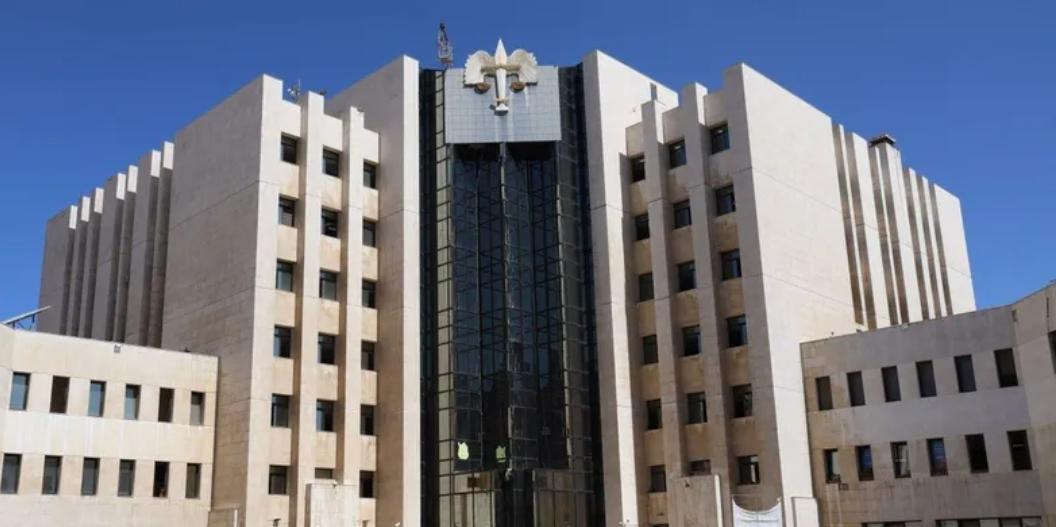
On October 21, 2025, Syrian media reported that residents of the city of al-Tall in the Damascus countryside organized a protest in front of the municipality building, demanding the “cancellation of expropriation decisions issued by the deposed regime and compensation for those affected.” The residents submitted an official letter to the governor of the Damascus countryside, requesting a review of the decisions to expropriate vast areas of land in the Damascus suburb and surrounding areas, owned by local families decades ago.
Hence, this incident appears to carry profound implications, as it is the first public local movement of this magnitude after years of social and political stagnation in the Damascus countryside.
It reflects a shift in the public mood from fear to legal demands.
It also reveals a widespread property crisis extending beyond al-Tall to include most Syrian governorates, as a result of decades of expropriation and confiscation policies that lacked justice and transparency.
Second, the legal framework for the issue of expropriation in Syria:
- Governing Laws:Expropriation operations in Syria are governed by Law No. 20 of 2005. 1983 and its amendments, which grants the state the authority to expropriate property “for the public interest” in exchange for “fair” compensation.
However, practical implementation has deviated from the legal text in several aspects:
- The concept of “public interest” has expanded to include projects of a commercial or investment nature for the benefit of security agencies or companies affiliated with the regime.
- Compensation payments have been delayed or assessed at low prices that are inconsistent with market value.
- The absence of an effective right to object, as expropriation decisions were often issued by decree that cannot be appealed.
2.
Laws after 2011:
With the outbreak of the Syrian revolution in 2011, new laws emerged that further complicated the situation. Most
notable among these was Decree No. 66 of 2012, which established two development zones in Damascus (Basatin al-Razi and al-Mazzah), later becoming a model of unjust confiscation following the displacement of residents.Law No. 10 of 2018, which expanded the scope of Decree No. 66 to include any Syrian region and granted local authorities the right to seize undocumented property within a short period of time.These laws created a legal environment The expropriation of real estate facilitates the guise of “reconstruction,” but in reality, it has led to the displacement of historical rights holders and the redistribution of real estate wealth to benefit the loyalist elite.
Third, the political and social dimension:
- Expropriation as a tool of political control:
Since the 1970s, the Syrian regime has used expropriation and confiscation to dismantle the social structure and control major cities.
In Damascus, vast tracts of land were expropriated from their original owners in Mezzeh, Kafr Sousa, and Midan and converted into housing projects for the political and military elite.
In Homs and Aleppo, expropriation was used to alter the demographic composition after widespread destruction, particularly in the neighborhoods of Baba Amr, Sakri, and Sakhour.In the Damascus countryside, expropriation decisions were linked to “capital expansion” projects at the expense of rural properties, as occurred in al-Tall, Daraya, and Moadamiya. - Social and economic impacts :
These policies have led to:
The impoverishment of the middle class, which relied on real estate as a source of wealth.The loss of confidence in the state as an institution. To protect rights. The increase in migration and displacement resulting from the loss of housing and property has deepened the social rift.Therefore, the expropriations of Al-Tall are a microcosm of the legitimacy crisis in resource management and relations between citizens and the state.
Fourth: The Economic Dimension and Reconstruction:
- Property is the Foundation of Development:
Real estate ownership is a civil right, as it is a fundamental element in any reconstruction process. Without establishing rights and ensuring fair compensation, reconstruction projects will remain mere tools for reproducing marginalization. According to a World Bank report (2022), more than 40% of Syrians have lost their property documents, and 16% of land has been forcibly changed ownership since 2011. - The Impact of the Lack of Real Estate Justice:
It appears that the lack of addressing the issue of expropriation threatens the flow of investment, as no one will invest in an ambiguous legal environment. It also threatens social stability, as conflicts over property fuel any future unrest. It also threatens the principle of national reconciliation, as real estate justice is linked to transitional justice and the right of return.
Fifth: The Legal Dimension International:
Many Syrian practices during the former regime violate the standards of international humanitarian law, which prohibits the confiscation of civilian property except for genuine military necessity and requires fair compensation.
Article 17 of the Universal Declaration of Human Rights also stipulates that “Everyone has the right to property and no one shall be arbitrarily deprived of his property.”
Accordingly, reconsidering old and recent expropriation decisions is a legal and humanitarian obligation that must be included in any transitional settlement.
Sixth, the Transitional Justice Approach:
Transitional justice is based on four axes:
- Revealing the truth.
- Accountability.
- Reparations.
- Ensuring non-repetition.
In the Syrian case, the issue of expropriations could be included within “material reparations.”
This requires the formation of an independent national real estate justice body that would: - Inventory all expropriation and confiscation decisions since 1970.
- Verify the legality of the decisions and their compliance with the law and the constitution.
- Propose just settlements, such as annulment, compensation, or repossession.
This model is used in similar experiences, such as post-apartheid South Africa (Land Restitution Commission 1994), and post-dictatorship Chile and Argentina (Compensation and Restitution Programs).
Seventh, Towards a National Property Policy in the New Syria:
We, in the Syrian Future Movement, believe that to achieve real estate justice, decision-makers in the transitional phase must adopt a comprehensive national property policy based on the following principles:
- Recognizing the historical right to property. Every citizen whose land has been seized or expropriated without fair compensation has the right to reclaim it or receive compensation for it, regardless of their affiliation or place of residence.
- Freezing all expropriation and confiscation decisions issued since 2011 until they are reviewed by an independent body, to ensure that the rights of displaced persons and refugees are not lost.
- Reformulating the expropriation law to clearly define “public interest” so as not to allow for political exploitation, guaranteeing compensation at the actual market value, and allowing for an effective legal challenge.
- Establishing a unified national property registry in cooperation with municipalities and civil society to electronically document old and new property ownership.
- Adopting a real estate reconciliation mechanism supervised by the Transitional Justice Commission, allowing for voluntary mediation between the state and citizens to restore rights or provide fair compensation.
Eighth, applying the issue to the broader Syrian context:
The al-Tall expropriation crisis is not a unique case; rather, it reflects the structure of Syrian real estate grievances, extending from Daraya to Aleppo and from Homs to Deir ez-Zor. Estimates indicate that approximately 70% of civil disputes after 2011 are related to real estate.
Therefore, addressing this issue represents a fundamental test for the new state:
Will it be a state that recognizes property rights and restores confidence in institutions?
Or will it reproduce the old tools of control in a new guise?
Ninth, executive proposals for decision-makers:
- Establish a national real estate justice commission during the transitional period, including judges, legal experts, and civil society representatives.
- Issuing a decree temporarily freezing all expropriation and confiscation decisions since 2011 pending their review.
- Reactivating the central real estate registry and ensuring its digitization and modernization.
- Launch a national program for fair compensation with joint funding (local and international) within the framework of reconstruction.
- Involve Syrian civil society organizations and human rights activists in monitoring real estate violations and collecting documentation and evidence.
- Include the principle of real estate justice in the new constitution as a pillar of social justice.
- Integrate the issue of expropriation into international political settlement negotiations, as it is a postponed issue with humanitarian and economic dimensions.
Conclusion:
What began as a protest in the city of Al-Tall could become a starting point for comprehensive national reform of property ownership and real estate.
The issue is not merely legal; it touches on the core of the relationship between citizens and the state and reflects the extent of the new Syria’s readiness to break with a past of confiscation and coercion.
Here, we, in the Syrian Future Movement, emphasize that real estate justice must be a pillar of transitional justice and a foundation for restoring trust and building civil peace. Any reconstruction process without resolving this dilemma will remain a formality, threatened with explosion at any moment.
References:
- Syria TV, “Residents of al-Tall in the Damascus Countryside Demand the Cancellation of the Deposed Regime’s Expropriations and Compensation for Victims,” October 21, 2025.
- Legislative Decree No. 20 of 1983 (Syrian Expropriation Law).
- Legislative Decree No. 66 of 2012, Syrian Official Gazette.
- Law No. 10 of 2018, Syrian Official Gazette.
- World Bank, Syria Damage Assessment Report, 2022.
- Amnesty International, We Leave or We Die: Forced Displacement and Demolitions in Syria, 2018.
- Carnegie Middle East Center, Reconstruction in Syria: Justice Delayed, 2021.
- Al-Quds Al-Arabi Report, “How Regime Forces Evacuated Neighborhoods in Damascus for Investment Projects,” 2024.
- United Nations Human Rights Office (OHCHR), Housing, Land and Property Rights in Conflict-Affected Settings, 2023.
- Truth and Reconciliation Commission – South Africa, Land Restitution Report, 1999.