
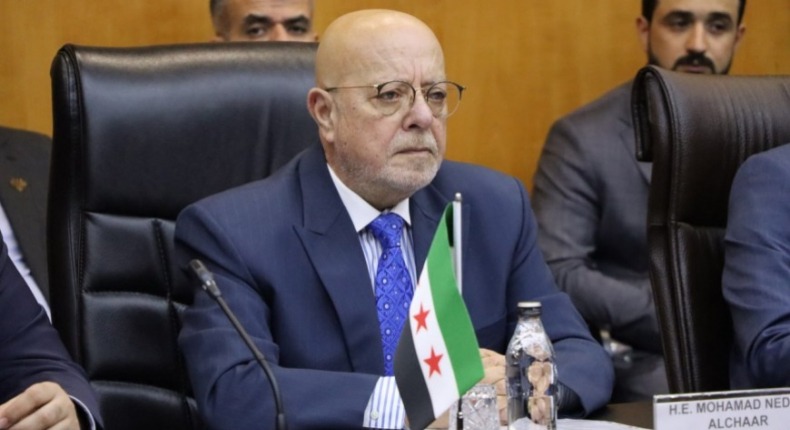
The Syrian Future Movement welcomes the ministerial decision issued by the Minister of Economy and Industry, Mohammad Nidal al-Shaar, on September 10, 2025, transferring the management of branches and agencies of foreign companies to the Directorate of Companies affiliated with the General Administration of Internal Trade and Consumer Protection. We believe this decision represents an important administrative step aimed at simplifying procedures, unifying administrative authority, and enhancing the business environment in Syria, at a time when the national economy faces profound structural challenges following a decade of conflict and an economic contraction of more than 80% since 2011.
The Syrian Future Movement believes this decision comes at a critical transitional stage, as Syria seeks to regain its position in the regional and global economy. Transferring the management of foreign agencies to a central authority enhances transparency and reduces bureaucratic overlap, contributing to building the confidence of foreign investors, which is vital to attracting investments estimated at approximately $400 billion needed for reconstruction. We also believe that the decision reflects the transitional government’s commitment to developing a regulatory framework that supports fair competition, protects consumers, and opens the way for strategic sectors such as industry, agriculture, and energy to attract Gulf and European capital.
The Syrian Future Movement calls for urgently addressing the challenges facing the decision to ensure its success. The most important of these challenges, as we see it, are:
- Weak administrative structure. Administrative transfers could lead to temporary confusion if employees are not trained or technical systems are not updated.
- The absence of a comprehensive legal framework. The lack of intellectual property laws and protection against political risks remains an obstacle to attracting significant investments.
- Economic disparity. The preference for foreign companies over local companies could exacerbate social inequality, especially in areas such as the Damascus countryside, which suffer from high unemployment.
- International sanctions, or the remnants of sanctions, and regional instability could limit investor confidence.
The Syrian Future Movement affirms its support for this decision as an initial step toward improving the investment environment, but stresses the need to complement it with comprehensive reforms to ensure sustainable economic development. We also see this decision as an opportunity to integrate Syria into the global economy, provided the aforementioned challenges are addressed and a strong legal and regulatory framework is built. We also warn against any trends that could lead to foreign dominance at the expense of local companies, which requires a delicate balance between encouraging foreign investment and supporting Syrian entrepreneurs.
The Syrian Future Movement proposes the following ideas to address the challenges and maximize the benefits of this decision:
- Establish a unified digital platform by developing a central electronic platform for registering and monitoring foreign agencies, enabling easy and transparent tracking of procedures, while providing a multilingual guide for investors.
- Launch an investment fund jointly funded by the government and the private sector to support partnerships between foreign and local companies, with a focus on priority sectors such as renewable energy and agriculture.
- Dedicate training programs for employees of the New Enterprises Directorate, in cooperation with international organizations such as the United Nations Development Programme, to enhance administrative efficiency.
- Provide temporary tax exemptions for local companies that cooperate with foreign agencies, to ensure fair competition and create job opportunities.
- Organize workshops in major cities such as Damascus and Aleppo to educate entrepreneurs on the benefits of foreign partnerships, with a focus on avoiding social tensions.
- Establish an independent center for dispute resolution between foreign and local companies, which will enhance trust and reduce legal risks.
The Syrian Future Movement believes that the ministerial decision to regulate foreign companies’ agencies holds great potential to stimulate the Syrian economy. However, it requires a supportive environment that includes legal reforms, advanced infrastructure, and community participation. We believe that by adopting the above proposals, this decision can be transformed into a lever for sustainable development, ensuring a balance between attracting foreign investment and strengthening the local economy. Therefore, we call on the transitional government to cooperate with the private sector and civil society to ensure effective implementation that contributes to building the future of Syria as an economically prosperous and socially just country.