Introduction:
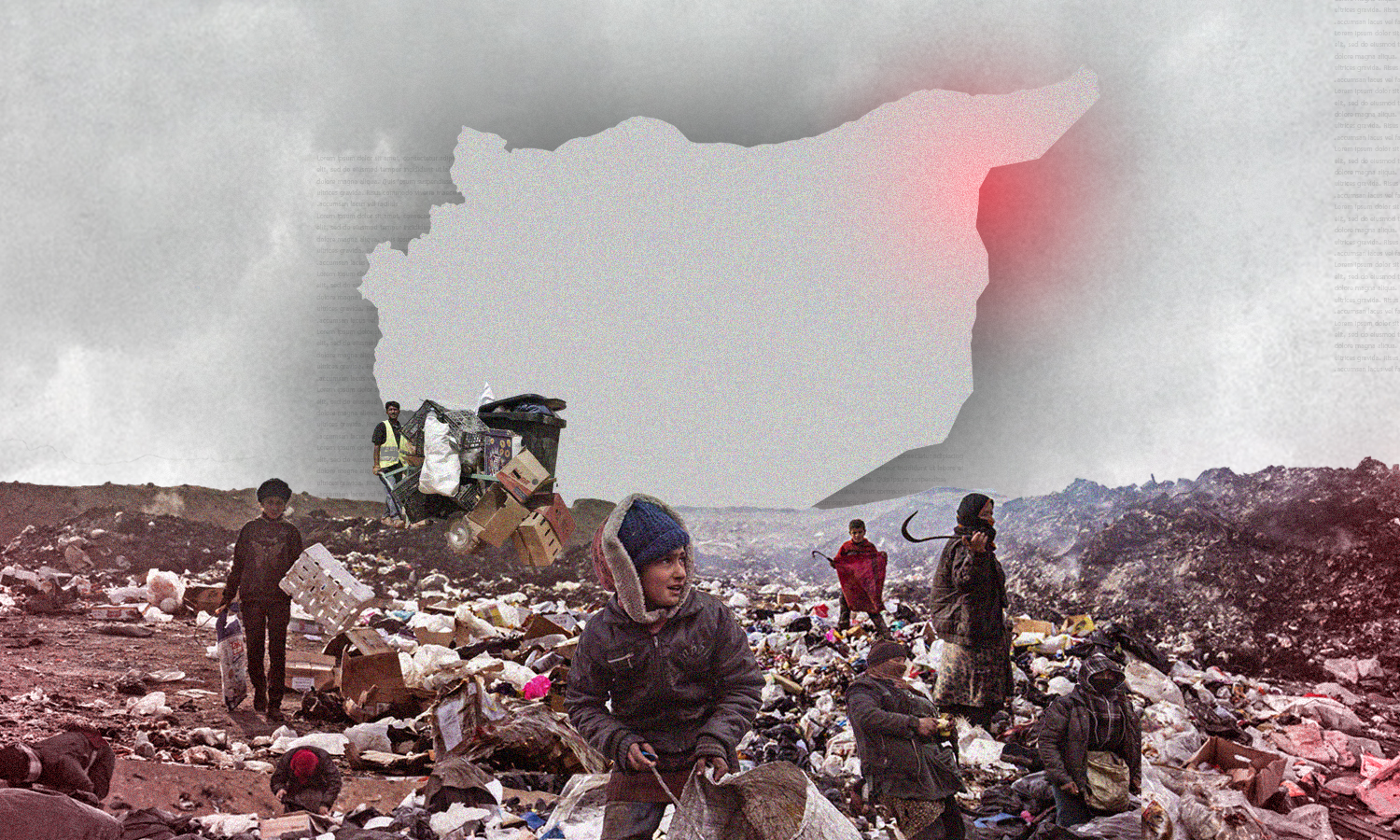
Syria, particularly cities like Jaramana in the Damascus countryside, is experiencing a worsening waste crisis. Media reports have indicated that Jaramana alone produces approximately 1,000 tons of waste daily, amid a severe shortage of sanitation workers, machinery, and infrastructure, exacerbating health and environmental risks.
Although this crisis appears to be a heavy burden in light of the economic and administrative challenges facing Syria after the fall of the Assad regime in December 2024, it could turn into an economic and environmental opportunity if we draw inspiration from the experiences of countries that have successfully transformed waste management into a sustainable resource. This article aims to analyze the garbage crisis in Syria, reviewing international experiences that demonstrate how waste can be a positive resource.
1.The Waste Crisis in Syria: Causes and Challenges:Jaramana—a real-life example of the waste situation in Syria—suffers from waste accumulation due to several factors:
- Labor shortage: Low salaries (400,000 Syrian pounds, about $10 per month) prevent the hiring of sanitation workers, as no one applied for the 40 advertised positions.
- Poor infrastructure: Old transport trucks and insufficient containers hinder waste collection, leading to waste piling up in streets like Karm Smadi and Kashkul.
- Population density: The amount of waste in Jaramana has doubled due to the influx of displaced people since the beginning of the Syrian revolution, increasing pressure on the municipal system.
- Mismanagement and corruption: Uneven distribution of containers and ineffective fees (25,000 Syrian pounds for shops) reflect the lack of effective planning.
Consequently, these areas and others have experienced the following impacts:
- Healthwise: Diseases such as leishmaniasis (returned in August 2025), typhoid, and cholera are spreading due to insects and rodents.
- Environmentally: Waste burning causes air pollution, and the leakage of pollutants into sewers threatens groundwater.
- Socially: Residents suffer from a reduced quality of life, with fears that the crisis will worsen in the winter.
- These challenges are not unique; other countries have faced similar crises but have been able to transform waste into an economic and environmental resource.
2. Waste as an Economic and Environmental Resource … International Experiences :
Syria can benefit from the experiences of countries that have successfully managed waste, proving that waste can be a source of wealth and sustainability. Examples include:
A. Sweden: Waste-to-Energy
- Experience: Sweden is a world leader in waste recycling, with 99% of household waste recycled or converted into energy or reusable materials. According to the Swedish Environment Agency (2023), non-recyclable waste is incinerated in power and heating plants, covering 20% of the country’s heating needs.
- Mechanism: Waste is separated at the source (organic, plastic, metal) by individuals and then transported to waste-to-energy (WTE) plants. Sweden also imports waste from countries like Norway to operate these plants.
- Economic Results: This industry has created thousands of jobs and reduced dependence on fossil fuels by 10% in the heating sector.
Despite its challenges, Syria could initiate small-scale projects to convert organic waste into compost or biogas, benefiting from international support to establish WTE plants in Damascus or Aleppo.
B. Germany: A Circular Economy Through Recycling
- Experience: Germany is the leading country in Europe in recycling, having recycled 67% of its household waste in 2022, according to the Federal Statistical Office. The system is based on strict waste separation laws (paper, plastic, glass, and organic waste) and imposes fines for non-compliance.
- Mechanism: The government encourages companies to design recyclable products and supports recycling industries with subsidies. For example, plastic and organic waste are recycled for composting.
- Economic Outcomes: The recycling market in Germany contributes €50 billion annually to the economy and provides 300,000 jobs (2023 Report).
Syria could launch awareness campaigns to separate waste at the source, while establishing small recycling centers to convert plastic and paper into local products, creating jobs for young people.
C. Rwanda: An Environmental Renaissance in a Developing Country
- Experience: Rwanda, a developing country similar to Syria in its economic challenges, banned plastic bags in 2008 and launched recycling and waste management programs. According to a World Bank report (2022), Kigali manages 70% of its waste through private and public companies.
- Mechanism: Rwanda relies on public-private partnerships, where companies collect waste and convert it into compost or building materials. Citizens are encouraged to pay a small fee for collection.
- Economic Results: These initiatives have created thousands of jobs, especially for women, and have contributed to cleaning up Kigali, making it one of the cleanest capitals in Africa.
Syria can benefit from Rwanda’s model by engaging the private sector in waste collection, with the support of international organizations such as the UNDP, which has already begun providing containers in Jaramana (May 2025).
3.How can Syria turn waste into an opportunity?
Based on international experiences, Syria can turn the waste crisis into a positive outcome through the following steps:
A. Investing in infrastructure:
- Waste-to-energy plants, by establishing small plants to convert organic waste into biogas or electricity, with support from organizations such as the UNDP or the World Bank. This can provide energy to deprived areas like Jaramana.
- Local recycling centers, and establishing small centers for sorting and recycling plastic and paper, will reduce reliance on landfills and create jobs.
B. Legislation and awareness:
- Waste separation legislation, by enforcing simple waste separation laws at the source, with awareness campaigns in schools and mosques to encourage citizens.
- Incentives for the private sector, by providing tax exemptions for companies that invest in recycling or waste collection.
C. Job creation:
- Employing youth and displaced persons, improving sanitation workers’ salaries (currently 400,000 Syrian pounds), and providing training for youth to work in recycling centers.
- Empowering women, inspired by Rwanda, where women can be involved in waste collection and sorting, enhancing economic empowerment.
D. International Partnerships:
- Leveraging the support of organizations such as the UNDP, which began distributing containers in Jaramana (May 2025), to expand projects to other cities.
- Cooperating with countries such as Sweden to transfer expertise in waste-to-energy.
4.Potential Challenges in Syria:
By examining the Syrian reality regarding the waste issue, Syria faces three challenges in addressing the waste issue:
- The economic situation, as the fragile economy limits large investments in infrastructure.
- Political instability, as sectarian tensions, as occurred in Jaramana in February 2025, may hinder project implementation.
- campaignsLack of awareness and the absence of a recycling culture among the population require intensive awareness
. Conclusion:
The waste accumulation crisis in Jaramana and Syria represents an environmental and health challenge, but it also holds promising opportunities for achieving sustainable development, as demonstrated by the experiences of countries such as Sweden, Germany, and Rwanda.
Waste can be transformed into a source of energy, employment opportunities, and a boost to the local economy if effective strategies are adopted.
Based on the above, we, at the Syrian Future Movement’s Economic Office, recommend the following:
- Launching national awareness programs, encouraging citizens to separate waste at the source through awareness campaigns in schools and local communities, in cooperation with international organizations.
- Establishing local recycling centers, by establishing small centers in Jaramana and other cities to recycle plastic and paper, while providing job opportunities for youth and displaced persons.
- Strengthening international partnerships and cooperating with the UNDP and countries like Sweden to establish waste-to-energy plants, which would contribute to the provision of electricity.
- Improving sanitation workers’ salaries by increasing wages to attract workers, while providing vocational training to ensure efficient waste collection.
- Engaging the private sector by offering tax incentives to companies that invest in waste management, similar to the Rwandan model.
Through these steps, we at the Syrian Future Movement believe that the waste crisis can be transformed into an economic and environmental lever, contributing to building a sustainable and prosperous Syria of the future. The waste crisis in Syria, in general, represents a major challenge, but it holds tremendous economic and environmental potential if addressed strategically. The experiences of Sweden, Germany, and Rwanda demonstrate that waste can be transformed into a source of energy, jobs, and sustainability.
In Syria, small steps can be taken, such as enhancing waste collection, establishing local recycling centers, and leveraging international support. With proper planning and political will, waste can become a positive resource that contributes to Syria’s economic and environmental reconstruction.
References:
- Syria TV Report, September 11, 2025.
- Swedish Environment Agency, Waste Management Report 2023.
- German Federal Statistical Office, Recycling Data 2022.
- World Bank Report on Waste Management in Rwanda, 2022.