Introduction:
After years of devastating conflict, Syria is on the cusp of a new phase that requires a comprehensive renaissance to rebuild the nation’s social and economic fabric. The city of Maarat al-Numan, one of the historical jewels of Idlib Governorate, is an ideal model for embodying this renaissance.
Located on the M5 highway linking Aleppo to Damascus, the city boasts a rich cultural heritage, represented by Abu al-Ala al-Ma’arri and landmarks such as Khan Murad Pasha, positioning it as a potential economic and tourist hub in the new Syria.
However, the massive destruction caused by the war, coupled with a lack of international funding (only 13% of the $3 billion required for the humanitarian response in 2025), poses significant challenges.
This study proposes an innovative investment vision for the reconstruction of Maarat al-Numan, relying on public-private partnerships, modern technologies such as blockchain, and the engagement of youth and the Syrian diaspora, to achieve sustainable development that combines profitability for investors with the well-being of the population.
The study aims to provide a viable model for the Syrian government, the people, and Syrian and foreign investors.
Context: Maarat al-Numan: Between Destruction and Potential:
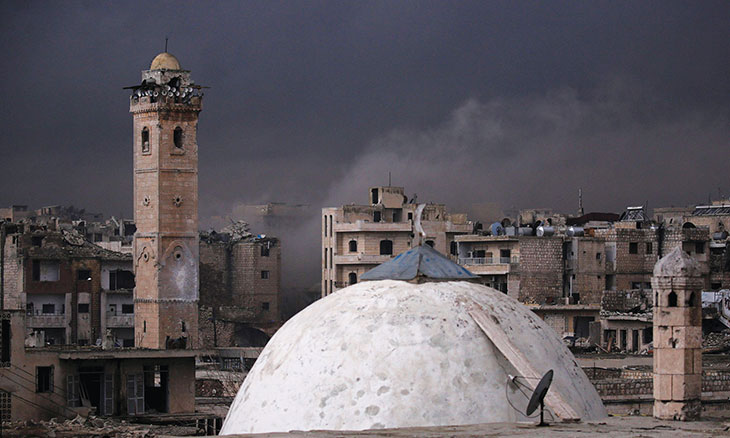
Maarat al-Numan suffered massive destruction during the Syrian war, with entire neighborhoods destroyed and basic infrastructure (electricity, water, and healthcare) damaged, displacing tens of thousands of residents.
Local reports indicate that 25,000 cubic meters of rubble had been removed by August 2025, but the city still suffers from a severe lack of services, with the absence of night police and frequent incidents of revenge, which hinder stability.
In addition, legal complications related to endowment properties hinder real estate investment, as it is difficult to prove ownership in many cases.
However, Maarat al-Numan possesses exceptional potential that makes it a candidate for reconstruction:
- Strategic Location: Located on the M5 highway, it is a logistics hub connecting northern, central, and southern Syria.
- Cultural Heritage: The home of Abu al-Ala al-Ma’arri, with landmarks such as the Ma’arra Museum (Khan Murad Pasha), the historic bazaar, and the tomb of Omar ibn Abd al-Aziz, offers tremendous tourism opportunities.
- High Housing Demand: Estimates indicate a need for 50,000 housing units in Idlib by 2030, with strong local demand from returnees and displaced persons.
- Youthful Spirit: Ma’arra’s youth, who participated in the revolution, represent a creative force ready to lead development.This potential, coupled with President Ahmad al-Sharaa’s vision to reduce dependence on foreign aid and build a self-sufficient economy, makes Ma’arra fertile ground for profitable and sustainable investment.
Challenges: Obstacles to Reconstruction:
The reconstruction of Maarat al-Numan faces major challenges that must be addressed to attract investors:
- Lack of Funding: A statement by the UN Humanitarian Coordinator in Syria, Adam Abdelmoula, on August 21, 2025, confirmed that the humanitarian response had received only 13% of the $3 billion requested, reflecting the scarcity of international funding.
- Destruction of Infrastructure: The lack of electricity and water makes the city currently unattractive for living or investment.
- Legal Complexities: Waqf properties and the difficulty of proving ownership hinder land development.
- Security: The absence of night police and incidents of revenge raise investor concerns about instability.
- Investor Confidence: Syrian investors, especially those from Maarat al-Numan, need financial guarantees and transparency to overcome their fears of corruption and mismanagement.
Vision:
Reconstructing Maarat al-Numan through Sustainable Investment:
The proposed vision we worked on in the Economic Office of the Syrian Future Movement is based on transforming Maarat al-Numan into a global model for reconstruction in post-conflict areas. This is achieved through public-private partnerships (PPPs), modern technologies such as blockchain, and the involvement of youth and the Syrian diaspora. The goal is to create a thriving local economy that provides housing for residents and high financial returns for investors (15-20% annually), while enhancing the city’s cultural identity.
- The Public-Private Partnership (PPP) Model:
Public-private partnerships provide an effective framework for attracting capital while ensuring public benefit. Inspired by the experience of Ras al-Hikma in Egypt, which attracted $35 billion in Emirati investments in 2024, smart suburbs could be developed on the outskirts of Maarat al-Numan, combining affordable housing units (for displaced persons and returnees) and luxury housing units (for the wealthy).
The model is based on:
- Profit distribution: 65% to investors, 35% to the local government, ensuring attractive financial returns.
- Timeframe: Pilot projects (such as 50 residential units and a shopping mall) will be completed within 12-18 months.
- Expected returns: A $10 million investment in a smart suburb could generate $1.5-2 million annually in commercial and residential rental income, based on similar estimates for projects in Iraq (Al-Numaniyah, 10% returns in 2023).
- Leveraging Cultural Heritage:
Ma’arrat al-Numan possesses a unique cultural heritage that can serve as an economic driver.
For example, developing the Ma’arrat al-Numan Museum and Murad Pasha Khan as a global tourist destination, along with the construction of traditional-style hotels and restaurants, could attract local and international tourists. The Petra experience in Jordan, which attracted 1.2 million tourists in 2024 and generated $100 million in revenue, provides an inspiring model.
For example, we propose:
- Launching an annual festival called “Ma’arra al-Ma’arri,” combining poetry, arts, and technology, along with media coverage to attract tourists.
- Investing $2 million in a small tourist hotel could generate 12-18% annual returns from cultural tourism.
- Blockchain Technology for Transparency and Trust:
The problem of endowment properties and investors’ concerns about corruption require innovative solutions. Here, we propose the use of blockchain technology, a decentralized digital ledger that provides unparalleled security and transparency. Implementation suggestions include:
- Real Estate Documentation Platform: Establishing a blockchain platform to register land ownership in Maarat al-Numan, documenting each property as a digital “block” containing ownership details and a time stamp. This resolves property disputes and reassures investors.
Georgia’s experience, which has used blockchain to register property since 2016, has significantly reduced property disputes and increased investor confidence thanks to transparency and speed of transactions, making it a global model for digital transformation in the real estate sector. - Transparent Investment Fund: Launching the “Maarat Reconstruction Fund” on a blockchain platform, allowing investors to track every dollar invested in residential or commercial projects.
For example, investing $1,000 in a residential unit can generate $150 annually in rental income. - Crowdfunding: A platform like “Beit Maara” is proposed, allowing Maarat’s diaspora to invest small amounts ($1,000) in construction projects, with guaranteed returns. Dubai-based Eureeca, a leading crowdfunding platform, has raised over $20 million for small and early-stage startups and contributed to funding large projects such as Lulu Group’s $1.72 billion IPO in 2024, demonstrating its ability to support SMEs and proving the viability of this model.
- Empowering youth as a driver of development:
The youth of Maarat al-Numan, who were at the heart of the revolution, represent the most vital human capital.
Therefore, we propose:
- Establish “Ma’arrat Labs,” youth training centers offering courses in programming, architectural design, and sustainable construction using local materials (such as compressed bricks).
- Leverage the experience of business incubators in Saudi Arabia. There are numerous programs and initiatives in the Kingdom that support entrepreneurs, such as the Ministry of Industry and Mineral Resources’ “Nomu” program, which aims to launch industrial incubators and accelerators across the Kingdom.m.
Young people from Ma’arrat al-Numan can develop startups in real estate and digital touris - Involve youth in managing the “Ma’arrat Investment” digital platform, enhancing their sense of ownership and attracting investors.
- Implementation Mechanisms:
To turn this vision into reality, we recommend following coordinated steps:
- Establishing the Maarat al-Numan Reconstruction Authority, an independent body comprising government representatives, investors, youth, and international experts, tasked with identifying reconstruction priorities (rubble removal, infrastructure construction, housing development) and providing tax incentives for a period of seven years.
- Launching the Maarat al-Numan Reconstruction Fund, a $500 million initial capital fund combining donations from the Syrian diaspora, Gulf and Turkish investments, and government support. The fund will allocate 60% to housing, 20% to infrastructure, and 20% to tourism.
- A pilot project: Building 50 housing units and a small commercial center worth $5 million over 12 months to demonstrate the feasibility of the model, so that the Gaza experience (2021) can be learned from here.
- A global marketing campaign, the “Rebuild Maarat al-Numan” campaign, targets Syrians in the diaspora and Gulf investors, with an investment exhibition in Damascus or Istanbul showcasing 3D models of smart suburbs.
Linking the vision to President Ahmad al-Sharaa’s approach:
President Ahmad al-Sharaa’s vision, which focuses on reducing dependence on foreign aid and building a self-sufficient economy, aligns with this strategy. His statements in The Economist and The New York Times confirm his rejection of turning Syria into a state dependent on Gulf “charities” and call for attracting unconditional investments in infrastructure.
This approach supports the idea of transforming Maarat al-Numan into an economic and tourist hub, as follows:
- Sovereign Fund: Al-Sharaa indicated the establishment of a sovereign fund to collect donations and investments, providing additional guarantees for investors.
- Economic Diplomacy: His meetings with international leaders, such as Donald Trump, reduce the risks of sanctions and open the door to partnerships with the Gulf and Turkey.
- Self-Sufficiency: Focusing on Syria’s human and natural resources aligns with the involvement of Maarat al-Numan’s youth in reconstruction projects. The Future of Syria.
Benefits for Investors and Residents:
- For Investors:
- High financial returns (15-20% annually) from commercial and residential rentals.
- Government guarantees, including 7-year tax exemptions and golden residency for large investments.
- Transparency guaranteed through blockchain technology, reducing the risk of corruption.
- For Residents:
- Ample housing at subsidized prices, with 20% of units allocated to displaced persons and returnees.
- Employment opportunities in construction, tourism, and technology.
- Improved basic services (electricity, water, and healthcare) through project revenues.
The Future Outlook: Maarat al-Numan as a Symbol of Renaissance
Maarat al-Numan should not be viewed as a ruined city, but rather as a laboratory for innovation and renaissance. Thanks to its strategic location, cultural heritage, and youthful energy, it can become a national model for sustainable reconstruction.
Imagine, for example, smart, solar-lit suburbs, vibrant commercial markets, and a museum that attracts millions of tourists annually.
This vision is not a dream, but rather an achievable plan that invites Maarat al-Numan’s diaspora, Gulf investors, and international companies to be partners in its construction.
- To the Government:
- Establish a Maarat al-Numan Reconstruction Authority within three months, with representation from youth and residents of the city.
- Provide tax exemptions and legal facilities for investors, and launch a blockchain platform for real estate documentation by June 2026.
- Allocate $100 million from the national budget to support pilot projects in Maarat al-Numan.
- To the Syrian People:
- Invite Maarat al-Numan residents abroad to contribute to the “Maarat Fund,” even small amounts ($1,000), to become partners in the reconstruction.
- Encourage youth to engage in training centers and entrepreneurial incubators to build their skills.
- To Research Centers and Media:
- Conduct comparative studies with the reconstruction experiences in Rwanda and Iraq to draw lessons learned.
- Promote this model as a global case study at international conferences.
With its rich history and the energy of its youth, Maarat al-Numan has the potential to become a symbol of Syria’s renaissance. Through sustainable investment, public-private partnerships, and technologies like blockchain, the city can be transformed from the ruins of war into a vibrant economic and cultural center.
This vision is not just a reconstruction plan; it is an invitation from the Syrian Future Movement to every Syrian to be a partner in building a future that reflects Syria’s dignity and ambition. The Ma’arra of tomorrow is not far away; it is within our grasp if we work together with a spirit of optimism and innovation, as is the case for all of Syria.