

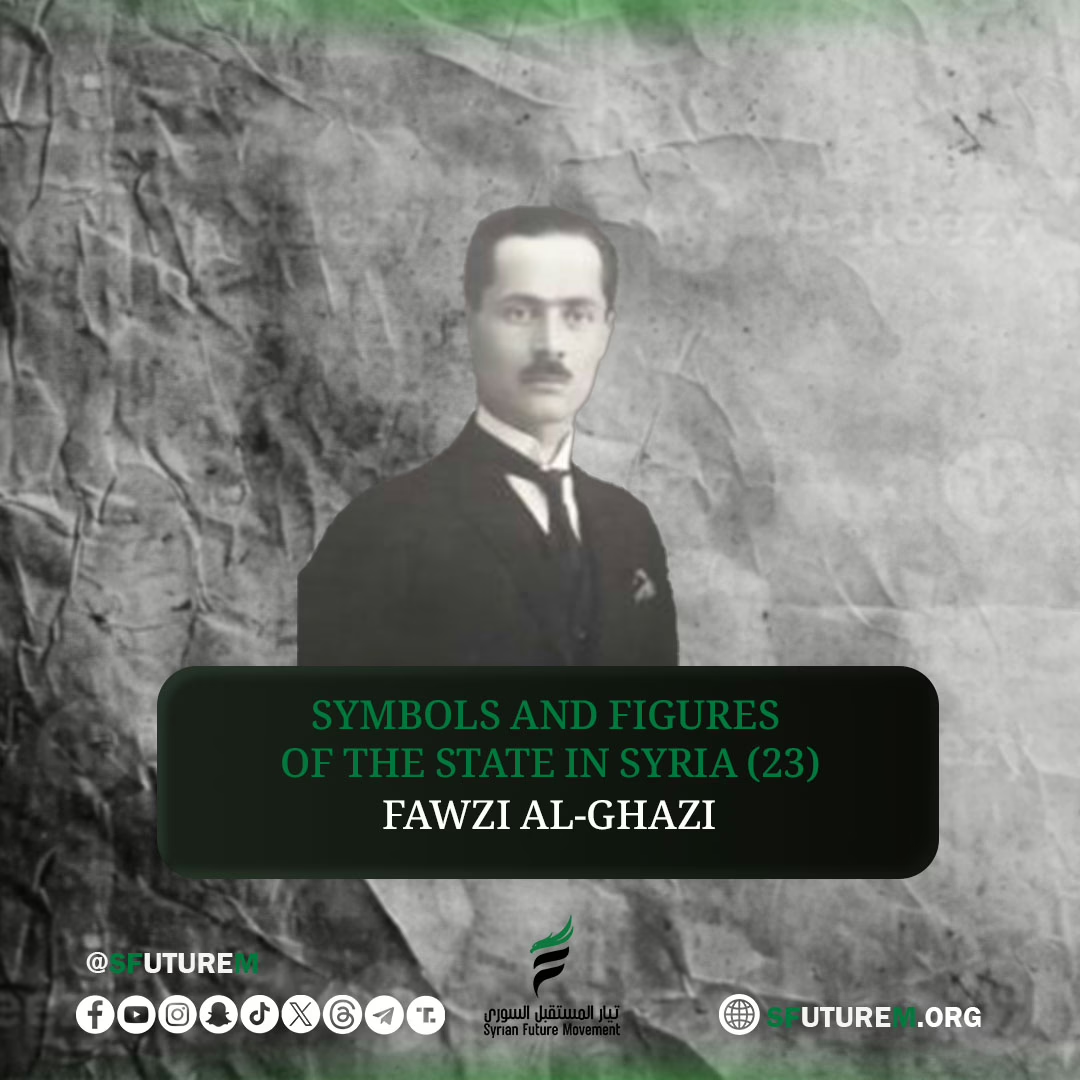
- Fawzi al-Ghazi was born in 1897 in the Al-Aqeebah neighborhood of Damascus. His father, Ismail al-Ghazi, was a well-known judge. He studied law at the Royal Institute in Istanbul.
- He joined the People’s Party, which was founded in June 1925, making it the first political party in the country during the French Mandate. Together with his colleague at the Faculty of Law, Fares al-Khoury, he worked on drafting the party’s basic system and its goals. The party was headed by Dr. Abdul Rahman al-Shahbandar, with lawyer Ihsan al-Sharif, al-Ghazi’s partner at their Damascus law firm, serving as the secretary.
- The party called for liberating the country from French rule and for unifying the Syrian territories that had been divided by the French in 1920. It also aimed to establish a constitutional monarchy in Syria, with the throne to be held either by King Faisal I or one of his brothers, sons of Sharif Hussein bin Ali, the leader of the Great Arab Revolt against the Ottomans.
- The leaders of the People’s Party joined the ranks of the Great Syrian Revolt, including Fawzi al-Ghazi, who worked with al-Shahbandar to smuggle weapons into the Ghouta of Damascus and bring the battles to its streets. He was arrested and sent to the Arwad prison and then placed under house arrest in the city of Hasakeh. His arrest and torture severely impacted his health despite his young age; his teeth fell out, and he suffered from several chronic illnesses afterward.
- After being released from prison at the end of the revolt in 1927, he was offered the portfolio of the Interior Ministry in the government of Damad Ahmad Nami but refused, preferring to return to teaching and practicing law at his office in Damascus.
- He joined the National Bloc upon its founding in 1927 and called for intensifying political struggle against the French rather than military action, urging the rebels to lay down their weapons and work toward ending the mandate through all peaceful and legal means.
- In 1928, al-Ghazi won a seat in the elected Constituent Assembly, tasked with drafting the first republican constitution in the country. Hashim al-Atassi was elected president of the assembly, while Fawzi al-Ghazi was appointed as its second president.
- During the election campaign, he led large demonstrations in Damascus against the mandate’s candidate, Sheikh Taj al-Din al-Hasani, and successfully prevented his supporters from entering polling stations in the Shaghour and Sarouja neighborhoods, leading to his brief arrest once again.
- He was the legal mind of the constitutional committee, overseeing its work and ensuring it completed its mission in less than two weeks. On June 4, 1928, the drafting of the constitution was completed, and al-Ghazi presented a detailed explanation of its 115 articles, inspired by modern European constitutions.
- The new constitution established a presidential and parliamentary system in Syria, with legislative and presidential elections and a four-year term for the president of the republic. Al-Ghazi insisted that the French mandate not be mentioned in any of the articles, to deny France any legal legitimacy in Syria. He also defined the geography of the Syrian Republic by its natural borders, including Palestine, Jordan, and Lebanon. The constitution granted the Syrian president—rather than the French High Commissioner—the right to declare war and peace and to conclude agreements and international treaties in the name of the Syrian state.
- The French High Commission in Beirut objected to six articles of the constitution, including Syria’s natural borders, the powers of the president, and the non-recognition of the mandate’s legitimacy. It demanded their amendment or deletion. However, Hashim al-Atassi and Fawzi al-Ghazi refused this demand and put the matter to a vote in the constitutional committee to ensure their stance had the legitimacy of the Syrian street.
- The High Commissioner was angered by this defiance, dissolved the assembly, and suspended the constitution indefinitely.
- Fawzi al-Ghazi died suddenly on June 5, 1929. The entire city of Damascus turned out to bid him farewell in a grand popular funeral attended by unions, schools, and all the leaders of the National Bloc, led by President Hashim al-Atassi. Mourners carried banners reading: “The father of the constitution has died; long live the constitution!”
- His colleague Fares al-Khoury eulogized him with a long poem, beginning: “The free men of Syria weep for you, and you are their brother… The constitution of Syria weeps for you, and you are its father.”
- In the first session of the Chamber of Deputies after his death, Damascus deputy and leader Fakhri al-Baroudi called for a minute of silence to honor the spirit of Fawzi al-Ghazi and the constitution of Syria that had been aborted.
- It was later revealed that al-Ghazi’s death had been orchestrated by his wife so she could marry his nephew. The wife and her lover were arrested along with the pharmacist who sold them the poison and were sentenced to death. However, High Commissioner Henri Ponsot intervened and commuted the sentence to life imprisonment.
- A main street in the Abu Rummaneh neighborhood of Damascus was named after Fawzi al-Ghazi in recognition of him and his national achievements.
At the Syrian Future Movement, as we commemorate the memory of the founding fathers of the Syrian state, we remember one of Syria’s most influential figures—one of the first symbols of the modern Syrian state who shaped its foundations—the father of the Syrian constitution, Fawzi al-Ghazi. We present this within a series highlighting the symbols and figures of the Syrian state, out of our desire to connect our contemporary present to a firm past and historical milestones. We hope to revive in our people the need to build and create true statesmen, to learn from their experiences, overcome their shortcomings, and build upon their legacy, so that we may preserve the homeland, safeguard its achievements, and restore the Syrian state’s honor and glory after years of injustice, tyranny, and corruption.