Martyr Abdul Baset al-Sarout is considered one of the most prominent symbols of the Syrian revolution and one of its most resonant figures in the Syrian national consciousness.
He combined athletic talent with a revolutionary voice and popular resistance, making his name synonymous with the city of Homs and a pivotal period in modern Syrian history.
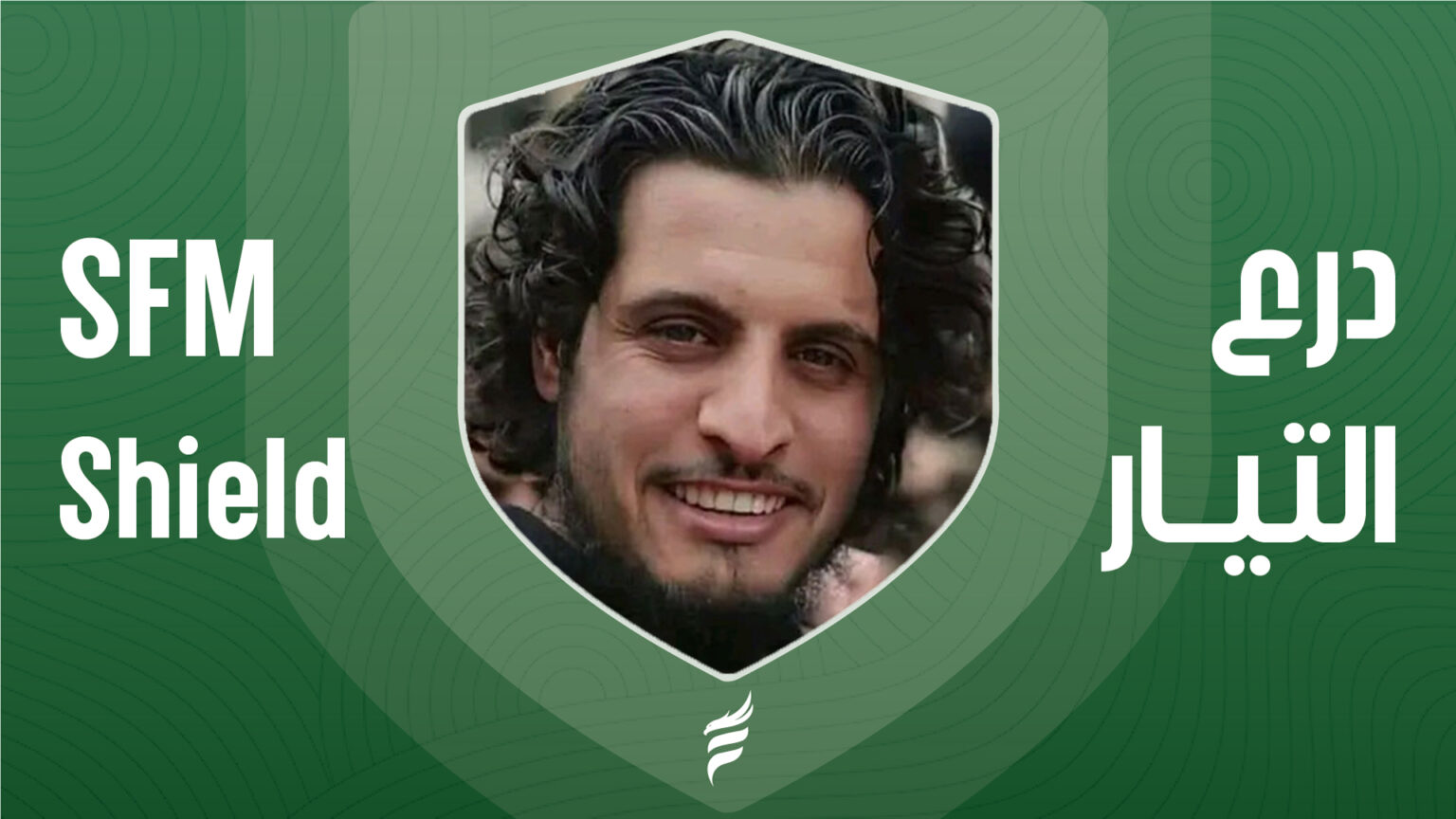
Through the “Shield of the Syrian Future Movement” series, we honor this national figure today, who exemplified exceptional sacrifice, steadfastness, and unwavering belief in the Syrian people’s right to freedom and dignity.
Early Life and Athletic Career:
Abdul Baset Mamdouh al-Sarout was born in the al-Bayada neighborhood of Homs in 1992, to a family of distinguished Golan Heights origin.
He grew up in a simple, humble environment, where his father worked in a modest profession, but he inherited from his family a deep love for his homeland and a strong connection to the land.
From a young age, Al-Sarout displayed exceptional talent in football, quickly rising to prominence as a goalkeeper for Al-Karama, the popular and sporting club of Homs. He soon caught the eye of coaches and was selected to represent the Syrian youth national team in 2007 and 2009.
Throughout his career, he made over 130 appearances, achieving sporting accomplishments that made him a local champion and a promising star expected to reach continental and international levels.
Al-Sarout was distinguished by his towering height, thick black hair, and endearing, cheerful personality, which made him a natural leader among his teammates.
Al-Karama fans had high hopes for him as the future of Syrian goalkeeping, but fate had other plans that would make him one of the most famous sons of Syria in modern times.
The Revolutionary Beginning:
When the spark of the Syrian revolution ignited in mid-March 2011, Abdul Baset al-Sarout was only nineteen years old, but his football fame and widespread popularity did not deter him from his fateful path.
Just days after the first demonstrations demanding freedom and dignity, al-Sarout was at the forefront, putting his fame and image at the service of the Syrian people’s demands.
His exceptional vocal talent became a powerful, peaceful weapon against oppression. With his melodious voice, he led hundreds, then thousands, in chants and songs of the revolution, becoming the “singer of the revolution” and its “nightingale,” as the Syrians affectionately called him.
Videos of him singing and leading the crowds quickly spread online, becoming a visual and auditory icon of the Syrian uprising.
In an unforgettable, timeless scene, al-Sarout stood atop a lamppost near the famous clock tower in Homs, leading tens of thousands in chants for freedom.
In a gesture that embodied the unifying spirit of the Syrian revolution, artist Fadwa Suleiman, from the Alawite sect, joined him on the protest platform, in a patriotic scene that expressed the unity of Syrians and their transcendence of the barriers and divisions that the regime had tried to entrench for decades.
Years of Hell: The Siege of Homs
Homs, dubbed the “capital of the revolution,” quickly became one of the Syrian cities most heavily bombarded, besieged, and destroyed.
Residential neighborhoods were subjected to brutal military campaigns that included artillery and air strikes and mass arrests. The Sarout family was not spared this tragedy.
In late 2011, a bombing that targeted the family home in the Bayada neighborhood killed his brother Walid and his uncle.
A few days later, Sarout himself was shot in the foot while heading to a demonstration, but he refused to leave the protest squares.
As events escalated, the Syrian regime banned him from practicing sports and placed him on wanted lists, in an attempt to silence one of the most influential voices on the Syrian street at that time. From Peaceful Resistance to Armed Action
By 2012, as military operations and massacres against civilians continued, many residents of the rebel-held areas found themselves with no option but to take up arms to defend themselves and their families.
Like many others from Homs, Sarout joined the ranks of the Free Syrian Army and founded the “Martyrs of Bayada Brigade,” named after the neighborhood where he grew up.
Between 2012 and 2014, Sarout, along with his comrades and the people of Homs, endured one of the harshest sieges in modern Syrian history.
The old city was besieged by massive forces supported by tanks and artillery, while residents suffered from severe shortages of food, medicine, and water.
Many were forced to eat weeds to survive, and tunnels became essential for movement and escaping shelling and sniper fire.
Amidst this tragedy, Syrian director Talal Derki documented the experiences of Sarout and his companions in the acclaimed documentary “Return to Homs,” which won significant international awards and became one of the most prominent works documenting the tragedy of the city and the Syrian revolution.
During the siege, Sarout continued to broadcast his messages and appeals to the world to save the besieged civilians. His voice and words remained present in the hearts of Syrians despite the hunger, destruction, and despair that engulfed the city.
Leaving Homs:
On May 8, 2014, after years of siege and fighting, Sarout left the besieged neighborhoods of Old Homs with the last of the fighters and civilians as part of an agreement that led to their transfer to northern Syria.
In footage of those moments, Sarout appeared exhausted and thin after years of hunger and siege, but his will remained unbroken.
Despite his apparent exhaustion, he raised the victory sign amidst a massive popular reception, affirming that the battle for freedom was not over for him.
Martyrdom in the Hama Countryside:
After leaving Homs, Abdul Baset al-Sarout joined the ranks of Jaysh al-Izza, one of the most prominent Free Syrian Army factions in the northern Hama countryside.
He led a fighting group named after his hometown and participated in several battles against Syrian regime forces and their allied militias.
On June 6, 2019, al-Sarout was seriously wounded in a bombing that targeted his position in the Tal Malh area of the northern Hama countryside.
He was transferred to a hospital in Turkey for treatment, but his injuries were critical.
On June 8, 2019, Abdul Baset al-Sarout succumbed to his wounds, joining several members of his family who had preceded him in martyrdom, including four of his brothers, three of his uncles, and his father.
A Timeless Legacy and an Immortal Icon:
Abdul Baset al-Sarout has passed away, but his voice, his smile, his character, and his sacrifices remain etched in the Syrian memory.
Syrians bestowed upon him many titles, including “Guardian of the Revolution,” “Singer of the Revolution,” “Nightingale of the Revolution,” “Icon of the Syrian Revolution,” and “Guardian of Freedom.”
Al-Sarout was not merely a fighter or a singer; he was a national phenomenon, embodying sports, revolutionary activism, and a profound cultural and humanitarian presence.
He maintained his status as a unifying national symbol, his name synonymous with freedom, dignity, and resilience. His story remains alive in the Syrian consciousness as one of the most prominent tales of sacrifice made by Syrians for a better future for their country.
Abdul Baset al-Sarout represented a rare Syrian phenomenon, transcending the narrow affiliations and divisions that the Syrian regime attempted to entrench. He became a unifying national symbol, drawing together Syrians of all backgrounds and affiliations.
His presence remains alive in the national memory as one of the most prominent figures who expressed the aspirations of Syrians for freedom, dignity, and justice.
The Tribute:
We in the Syrian Future Movement, in recognition of Abdul Baset al-Sarout’s unique example of a comprehensive revolutionary who combined sports, art, resistance, and the defense of human dignity, and in recognition of the immense sacrifices he and his family endured for the freedom and dignity of Syria, and because his voice and image remain present in the conscience and national memory of the Syrian people, and in gratitude to the free Syrian figures who contributed to establishing the values of freedom, dignity, and justice,
present the Syrian Future Movement Shield to the martyr Abdul Baset al-Sarout, a symbolic Syrian shield bearing our comprehensive national vision and our approach based on building a state of citizenship, justice, and the rule of law.
In honoring him today, we honor with him an entire generation of Syrians who carried the dreams of freedom and paid a heavy price for it.
May God have mercy on the martyr Abdul Baset Al-Sarout, and reward him on behalf of Syria and its people with the best reward, and make his memory a beacon for future generations, until the free, dignified, and unified Syria that he dreamed of and sacrificed for is achieved.