
The Syrian Future Movement followed with great interest the European Commission’s announcement on Monday, April 20, 2026, of its proposal to the European Council to fully reinstate the Association Agreement signed between the European Union and Syria in 1978.
This agreement, which forms the backbone of economic relations between the two sides, was partially suspended in 2011 in response to the grave human rights violations committed by the ousted Assad regime.
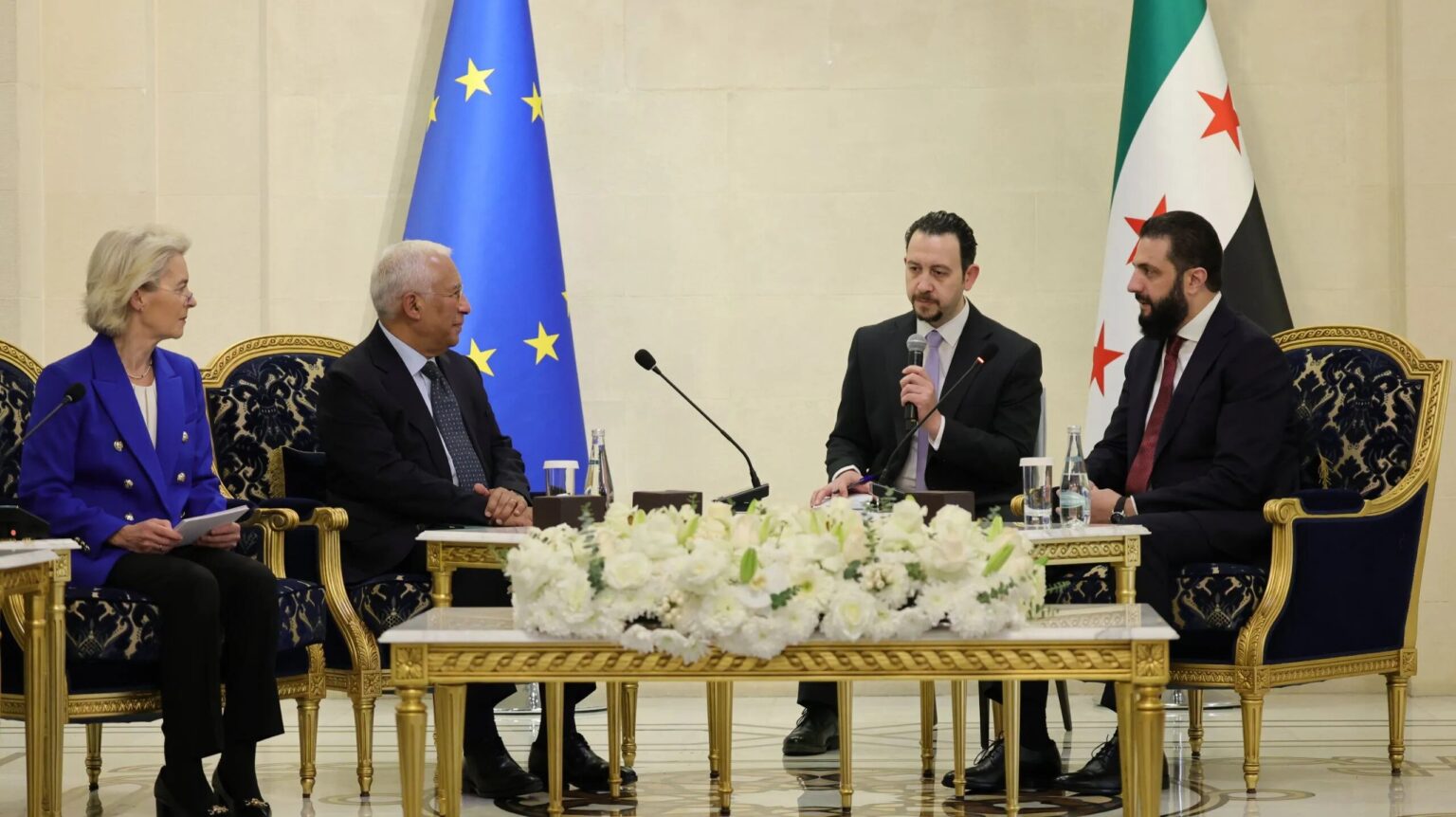
This new European proposal follows a series of positive developments, most notably the European Union’s decision in May 2025 to lift all economic sanctions on Syria, and the visit of European Commission President Ursula von der Leyen to Damascus in January 2026.
The Syrian Future Movement welcomes this European proposal, considering it a historic step that reflects a genuine shift in international policy towards the new Syria and demonstrates the growing recognition of the seriousness of the transitional phase. We view the full resumption of the Cooperation Agreement, which now awaits formal approval from the European Council, as an implicit recognition of the Syrian state’s ability to fulfill its international obligations and paves the way for robust economic and political relations.
This move also contributes to supporting the comprehensive Syrian-led political transition, responding to urgent humanitarian needs, and bolstering economic recovery efforts, in line with the best interests of the Syrian people and the objectives of the transitional phase.
The Syrian Future Movement appreciates this positive development and reiterates its firm and principled stances in support of international efforts to engage with Syria and reintegrate it into the regional and international community. These positions have been published on its official website, most notably in our statement entitled “On the European Union’s Complete Lifting of Sanctions on Syria” (dated May 20, 2025). In that statement, we commended the European Union’s decision to lift sanctions, considering it a historic step reflecting a shift in international policy towards the country after years of economic and political isolation. We emphasized that lifting sanctions on Syrian banks and the energy sector will contribute to improving economic conditions, revitalizing the Syrian pound, and increasing investments.
The Syrian Future Movement views this proposal as a crucial step towards rebuilding Syria. It is not merely a legal document, but a practical tool to support a comprehensive political transition and bolster economic recovery.
This proposal comes within the framework of the European Union’s support for Syria with a financial package of approximately €620 million for 2026 and 2027, encompassing humanitarian aid, early recovery support, and bilateral assistance.
This proposal also constitutes a highly significant political signal ahead of the high-level political dialogue between the European Union and Syria scheduled for May 11, 2026. We believe that reactivating this agreement will open up broad prospects for cooperation in the areas of trade, investment, security, and energy, thereby strengthening Syria’s position as an influential regional player.
The Syrian Future Movement recommends the following:
- Ensuring maximum benefit from the agreement: Developing ambitious national plans to integrate the agreement’s outcomes into development sectors and linking them to reconstruction and poverty reduction priorities.
- Enhancing Transparency in Dealing with European Aid: It is essential to subject EU-funded aid and programs to transparent national and international oversight mechanisms to ensure they reach their intended beneficiaries and prevent any waste or corruption.
- Aligning Domestic Policies with Cooperation Standards: Accelerating business environment reforms, improving the investment climate, and simplifying customs procedures to align with the requirements of the Cooperation and Free Trade Agreement.
- Linking Economic Cooperation to Transitional Justice: Ensuring that economic returns and European aid contribute to funding a national compensation and reparations fund for victims of the former regime, and strengthening national reconciliation programs.
- Building Civil Society Partnerships: Activating the role of Syrian civil society organizations in monitoring and evaluating cooperation projects with the European Union to guarantee their transparency and sustainability.
The Syrian Future Movement reiterates that European openness to Syria is a result of the sacrifices and resilience of the Syrian people, not a gift or favor.
We value this step, which strengthens the path of justice and development, and call for its wise utilization to build the Syria of tomorrow on the foundations of rights, dignity, and equal citizenship. We also remind everyone that international cooperation must remain subservient to the national will, and a tool to empower the Syrian people, not to restrict their freedom.