
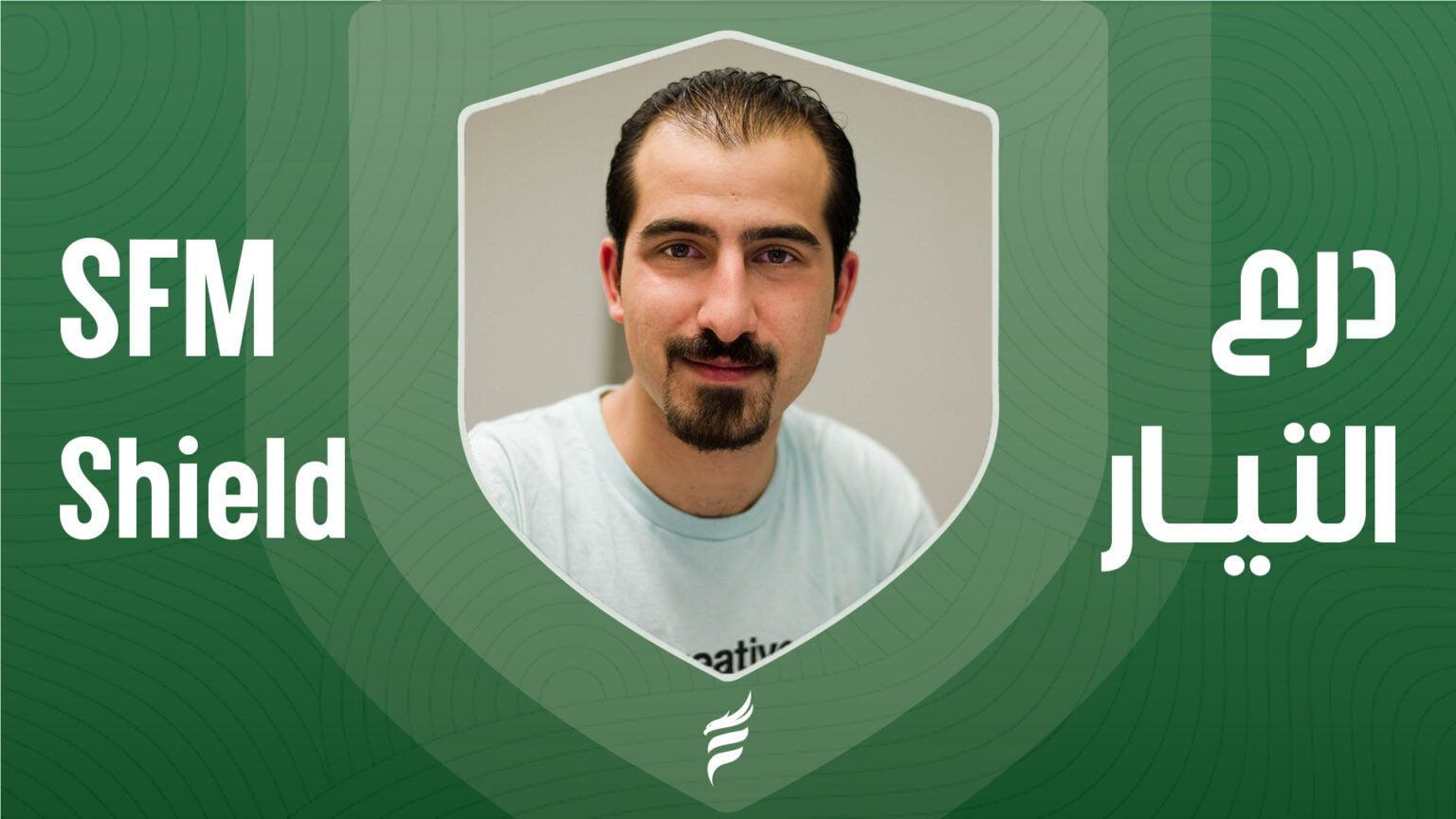
Bassel Khartabil, better known as Bassel Safadi, was born in Damascus on May 22, 1981, to a Palestinian father and a Syrian mother, and holds Palestinian citizenship.
He grew up in a purely Syrian environment and dedicated his life to science, technology, and the pursuit of free knowledge. He became one of the most prominent pioneers of open-source software in Syria and the Arab region.
Bassel specialized in developing open-source software and contributed to major international projects such as Mozilla Firefox, Wikipedia, Open Clip Art, Fabricators, and Charisma. He was a project manager for Creative Commons in Syria and also served as the technical director of Al-Aws Publishing, a research institution specializing in the sciences and arts of archaeology in Syria.
In 2010, he co-founded the first hacker lab in Damascus, Aiki Lab, and served as its technical director, contributing to the dissemination of a culture of digital innovation and open development, and making knowledge and access to it available to Syrians.
He is known for his pioneering role in expanding the free internet space in Syria and opening up opportunities for digital collaboration among Syrian youth.
One of his most prominent projects was creating a 3D model of the ancient city of Palmyra, complete with real-time visualization, in an effort to digitally preserve Syrian heritage for future generations. Following his arrest, on October 21, 2015, he launched the New Palmyra project to continue his work on the 3D model using innovative methods to preserve Syrian cultural memory.
In 2011, Bassel participated in the Creative Commons World Summit in Warsaw, where he was seen as one of the young voices representing a free and open Syria.
On October 22, 2015, the MIT Media Lab offered him a research position at the Civic Media Center, working with Ethan Zuckerman on projects aimed at making Syria’s history digitally accessible to the world.
Bassel was arrested on March 15, 2012, the first anniversary of the Syrian revolution, by Branch 215 of the Military Intelligence Directorate in the Mezzeh district of Damascus. He was interrogated and tortured for several days, his devices and belongings were confiscated, and he was then transferred to Branch 248 of the Criminal Investigation Department, and later to Adra Prison in Damascus.
He was arrested a few days before his wedding to Noura Ghazi, a lawyer and human rights activist. The marriage contract was signed while he was imprisoned.
Their first meeting was on their way back from a peaceful demonstration in Douma, a scene that encapsulated the convergence of love and freedom during the revolution.
In December 2012, he appeared before a military judge without legal representation on charges related to what was termed “endangering state security.”
His arrest was deemed arbitrary by the UN Working Group on Arbitrary Detention, which confirmed that his detention violated the International Covenant on Civil and Political Rights.
International organizations and figures launched extensive campaigns demanding his release, including Mozilla, Wikimedia, the Electronic Frontier Foundation, Creative Commons, and Amnesty International, in addition to global intellectuals and activists. He was included in Foreign Policy magazine’s list of the top 100 global thinkers and received the Index on Censorship’s Digital Freedom Award in 2013.
On October 3, 2015, he was taken to an undisclosed location by order of a military court, where he was executed.
International human rights organizations later confirmed his execution, and Amnesty International issued an official statement mourning his death. Global institutions also established the Bassel Khartabil Fellowship for Free Culture in his honor.
Bassel Khartabil was not a traditional political activist, but a digital activist who believed that freedom of knowledge is an integral part of human freedom.
He insisted on the peaceful nature of the Syrian revolution, rejected violence, and believed that building the future of Syria begins with freedom of speech, knowledge, and openness.
Honoring the Syrian Future Movement:
We in the Syrian Future Movement, believing in the role of intellectuals, scholars, and civil activists in shaping awareness and confronting tyranny, announce the honoring of the Syrian-Palestinian martyr, Bassel Khartabil, known as Bassel Safadi, by awarding him the Movement’s symbolic shield. This is in recognition of his pioneering role in disseminating free knowledge, his support for the peaceful nature of the Syrian revolution, and his technical and cultural contributions that embodied the spirit of the new Syria.
Bassel Safadi has departed physically, but he remains in the conscience of a free Syria, in every scientific project, every platform of knowledge, and every effort that seeks to connect Syria to the world through the digital realm of freedom.
His name will forever stand as a testament that the revolution was not merely a chant in the streets, but also anر intellectual and scientific endeavor, a vision for a future that Syrians deserve.