Introduction:
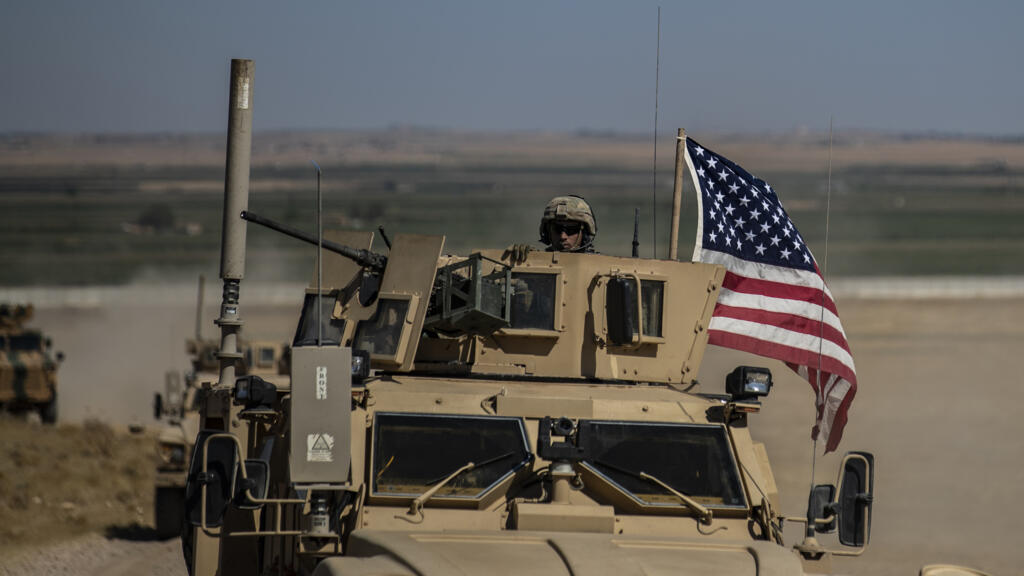
On February 11–12, 2026, U.S. forces completed their orderly and deliberate withdrawal from the strategic al-Tanf base in southeastern Syria, officially handing it over to the Syrian government forces through direct coordination between the two sides, as confirmed by the Syrian Ministry of Defense and U.S. Central Command (CENTCOM).
This event marks a pivotal shift in the U.S. military presence in Syria, nearly a decade after the base was established in 2014 as part of Operation Inherent Resolve to combat the Islamic State (ISIS), with a key role in monitoring Iranian influence and the land corridor to Hezbollah.
The withdrawal comes within the context of broader political and military developments, including the strengthening of U.S.-Syrian relations following the fall of the Assad regime, the decline of Iranian influence in Syria, and escalating regional tensions with Iran.
This analysis aims to deconstruct the four dimensions of the withdrawal and then assess the hypothesis that it is a tactical prelude to a potential US military strike against Iran, based on field realities and official statements available up to February 12, 2026.
Analysis of the Withdrawal: The Four Dimensions
A. The Political Dimension: US Recognition of the New Damascus and the End of the Recognition Requirement:
The handover of the al-Tanf base represents a clear implicit recognition by Washington of the legitimacy of the new Syrian government headed by Ahmed al-Sharaa.
The base was originally established as a symbol of resistance to Iranian influence and support for forces opposed to the former regime. A continued US presence after the fall of Assad would have undermined the legitimacy of the new Damascus government.
Therefore, the coordinated handover reflects a shift in the US perspective, whereby the Syrian leadership is no longer classified as a terrorist group within the Syrian context, but rather as a potential security partner. This coincides with previous meetings at the White House (November 2025) and a partial lifting of sanctions, indicating a successful test of good faith and the granting of executive confidence.
The withdrawal also sends a message to Israel and Jordan that Washington sees Damascus as capable of controlling the borders, thus bolstering full normalization.
B. The Strategic Dimension: Shift from Static Defense to Mobile Offense:
The base lost its primary enemy with the withdrawal of Iranian militias from Syria and the collapse of the land corridor.
Its original mission was dual: combating ISIS and monitoring the Iranian land bridge to Hezbollah.
After the territorial defeat of ISIS (2019) and the Iranian withdrawal, the base became a static defensive burden against mobile cells.
The withdrawal reflected a strategic shift toward mobile offensive operations from rear bases in Jordan (such as Tower 22) and Iraq, while maintaining the capability for rapid response against ISIS.
The timing of the transfer of ISIS detainees from SDF prisons to Iraq also suggests a comprehensive deal: Syria takes the territory, and America takes the “dangerous figures.”
C. The Geopolitical Dimension: Closing the Iranian Corridor and the Rise of an Alternative Axis:
The withdrawal definitively closes the Iranian land corridor through Syria, for which al-Tanf had served as a “block.” The control exerted by the new Syrian government (not allied with Iran) means Tehran has lost this leverage permanently. An alternative axis (Damascus-Amman-Baghdad) is emerging as a geopolitical alternative, with potential agreements for managing border crossings.
Washington maintains a nearby presence (22 km into Jordan), which implies a “withdrawal from Syria but with eyes on the border.”
The timing also coincides with nuclear negotiations in Amman, suggesting a US-Iranian exchange: the withdrawal of a military pressure tactic in exchange for Iranian de-escalation.
D. The Geopolitical Dimension: Restoring Full Sovereignty and Paving the Way for a Broader Withdrawal:
The withdrawal ended the “state within a state” in the 55 km buffer zone and restored sovereignty over the border triangle (Syria-Iraq-Jordan), while also dismantling the Rukban camp as a humanitarian/political tool.
This appears to reduce the risk of direct confrontation with Iran and paves the way for a larger withdrawal from northeastern Syria (oil fields and the SDF), especially after the agreements to integrate the SDF into the Syrian army. The new Syrian army is also being tested in securing the vast area, and its effectiveness will determine whether it gains further international legitimacy or avoids a power vacuum that could allow ISIS to re-emerge.
Assessing the “withdrawal as a prelude to an Iranian strike” hypothesis:
This hypothesis is supported by strong tactical evidence, including:
The preemptive withdrawal of personnel from bases in Qatar (Al Udeid) and Bahrain weeks ago, in response to explicit Iranian threats to target US bases in the host countries if Iran were attacked.
It is also supported by Israeli and Western assessments of a possible imminent attack.
However, specifically regarding the Tanf base, this hypothesis is contradicted by the fact that the withdrawal was organized, public, and a sovereign handover (transfer to Jordan), not a covert escape. The base had essentially lost its purpose after the Iranian withdrawal, and it coincided with a previous Iranian attack (via militias) that went unanswered by the US, indicating an unwillingness to engage in a protracted conflict.
Summary:
The focus is on reducing strategic burdens, not preparing for a direct strike. The withdrawal, as it appears, is not a direct prelude to an attack.
Rather, it is an overlap between two processes:
- A preemptive reduction of vulnerabilities (Qatar and Bahrain) before a potential escalation with Iran.
- The closure of an expired strategic file (al-Tanf) after its mission was completed. The timing is not coincidental; America does not want to guard an exposed desert base while preparing for a major battle.
This reflects a strategic reduction of burdens while maintaining a rapid response capability against ISIS.
Conclusion:
The withdrawal from al-Tanf represents the end of a geopolitical era: Syria has regained its sovereignty, Iran has lost its corridor, and America has transformed a military burden into a political card to support the new government.
What comes next depends on Damascus’s ability to secure its borders and the extent of Iranian-American escalation. The northeast remains the biggest challenge to a complete withdrawal, requiring the rapid integration of the SDF and enhanced security coordination with Jordan and Iraq to quickly fill any potential security vacuum and prevent the resurgence of ISIS.