
Analytical Reading:
The relationship between Syria and Hezbollah exemplifies the complex regional alliances in the Middle East, forged by shared interests in confronting Israel and robust Iranian support.
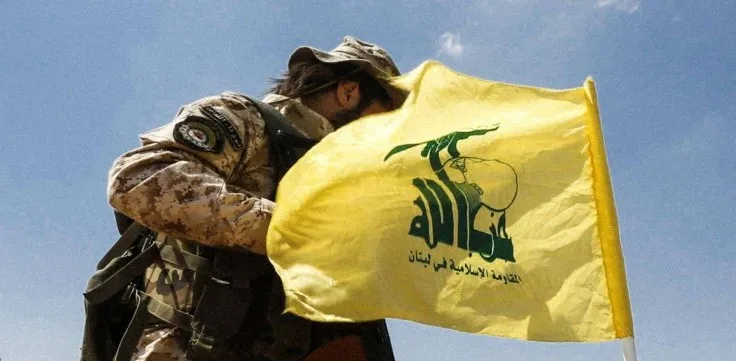
This partnership began in the 1980s when Hafez al-Assad’s regime supported the establishment of Hezbollah after a period of conflict stemming from strained relations with Iran. Hezbollah was envisioned as a resistance force against the Israeli occupation of Lebanon, serving as a tool for indirect pressure on Israel without direct involvement.
Syria became the primary land conduit for Iranian arms shipments to Hezbollah, bolstering its military capabilities and establishing it as a key component of the Iranian “axis of resistance.”
With the outbreak of the Syrian revolution in 2011, the alliance evolved into direct military cooperation. Hezbollah deployed thousands of fighters to support Bashar al-Assad’s regime against the popular uprising, contributing to the suppression of the revolt and human rights abuses, as documented in UN reports. Its role was crucial in battles such as Qusayr in 2013, where it helped the regime regain control of vital areas.
In return, Hezbollah received logistical and training support, further enhancing its regional influence. However, this intervention resulted in significant human losses for Hezbollah, with thousands of its members killed, and sparked popular resentment in Lebanon and Syria, where it was perceived as a sectarian intervention that deepened social divisions.
Recent Developments: From the Fall to Security Tensions:
With the fall of the Assad regime on December 8, 2014, relations entered a phase of open hostility, reflecting a radical shift in regional balances of power. Following the formation of a new Syrian transitional government, the Iranian supply routes that had been providing Hezbollah with weapons and drugs like Captagon were officially severed.
In the months that followed, the Syrian-Lebanese border witnessed an escalation in security tensions, as the new Syrian army launched operations against Hezbollah positions, destroying facilities and closing smuggling routes.
The Syrian government also reiterated its rejection of any Hezbollah activity within its territory, deeming it a threat to national unity. For its part, Hezbollah denied involvement in Syria, attempting to distance itself from Syrian accusations of sabotage operations, but acknowledged losing its land supply routes after the fall of Assad.
The latest development came in January 2026, with the arrest of a security cell in the Mezzeh district of Damascus, accused of launching missile and drone attacks on the area and its military airport.
The Syrian Interior Ministry announced that the seized weapons, including missiles and drones, originated from Hezbollah, pointing to links with “external parties” without directly accusing the party, thus leaving room for various interpretations.
Hezbollah quickly denied any connection to the cell, deeming the accusations “arbitrary” and asserting that it has no activity or ties with groups inside Syria.
In its statement, the party expressed its support for the stability and unity of Syria, indicating an attempt to de-escalate tensions. This incident comes within the context of a complex regional security situation, where Syria has become part of an international security coalition comprising 90 countries, with extensive intelligence channels established, including cooperation with the United States to counter the influence of Iran and Hezbollah.
Furthermore, Israeli strikes on border crossings in January 2026 hampered Hezbollah’s attempts to retrieve its weapons from Syria, exacerbating its logistical vulnerabilities.
Situation Assessment:
The current hostility reflects a shift in the balance of power, bolstering the influence of Turkey and Sunni states at the expense of Iran.
Damascus had adopted a pragmatic approach focused on reconstruction and improving international relations, leveraging Turkish support to consolidate its control.
However, Hezbollah remains a primary adversary due to its association with the ousted regime and its role in suppressing the uprising.
For Hezbollah, the loss of Syrian support represents a severe blow, coupled with geographic and military isolation following its losses to Israel.
This weakening increases internal pressure in Lebanon, where some are calling for the disarmament of Hezbollah and its integration into the state. Iran is also attempting indirect communication with Damascus through intermediaries such as Turkey and Qatar, but prefers to wait and assess the stability of the new regime.
In the context of the Mezzeh incident, there appear to be attempts to draw the two sides into a confrontation, perhaps by Israel, which seeks to pit its enemies against each other to exacerbate the rift. However, Syria’s policy of “hinting”—indirect accusations—may open a new chapter, especially given Hezbollah’s statement supporting stability.
Furthermore, Hezbollah wields potential influence through thousands of remnants of the former regime (displaced elements of the ousted regime residing in Lebanon), with rumors circulating that a thousand of them are preparing for war scenarios, supported by external parties.
The party also controls the file of Syrian detainees in Lebanese state prisons and may obstruct their release as a bargaining chip through the military court, which it monopolizes, in addition to its members in the Lebanese parliament and its ally, Nabih Berri, head of the Amal Movement and the parliament. However, a recent Lebanese-Syrian agreement on January 30, 2026, suggests the possibility of de-escalation. The Lebanese cabinet approved the transfer of approximately 300 convicted Syrian prisoners from Lebanese prisons to Syria to complete their sentences, subject to their consent. This followed months of negotiations aimed at alleviating overcrowding in Lebanese prisons and enhancing security coordination between the two countries.
This agreement, which includes prisoners who have served at least 10 years on serious Lebanese charges, represents a practical step towards resolving shared humanitarian issues, although other matters remain unresolved, such as the fate of Lebanese missing persons in former Syrian prisons.
Finally, between risks and opportunities:
This tension could reshape the regional map. If the Syrian regime succeeds in achieving economic stability and implementing reforms, it might align itself with the Sunni-Turkish axis, potentially leading to normalization with Israel or security agreements, thus isolating Hezbollah and weakening Iran. However, if Damascus fails to transition to a stable government, internal tensions could resurface, allowing Hezbollah to exploit the chaos and reassert its role as a significant regional player.
In the worst-case scenario, the anticipated border escalation between Syria and Lebanon could lead to conflict.Regionally, especially with the intervention of Israel or Turkey.
However, in the best-case scenario, good may emerge from this evil. Exploiting the Syrian policy of appeasement and Hezbollah’s conciliatory approach could lead to successful dialogue regarding Syrian detainees and remnants of the old regime—as demonstrated by the recent agreement on prisoner transfer—leading to a decrease in hostility. This would positively impact the Lebanese domestic scene, making Hezbollah part of an internal Lebanese dialogue aimed at disarming itself, while Syria rebuilds itself as a stable state.
However, hostility between Hezbollah and the new Syria is not in the interest of either party. Syria cannot afford to provoke Hezbollah and exploit its leverage against it, nor can Hezbollah withstand Damascus’s wrath. Therefore, the search remains for a way to avert the specter of hostility. Just as Syria experienced supporting Hezbollah during the Assad era, a choice that proved burdensome for the Syrian people, the option of hostility is equally burdensome. Perhaps remaining cautious is the most likely and best scenario at present.