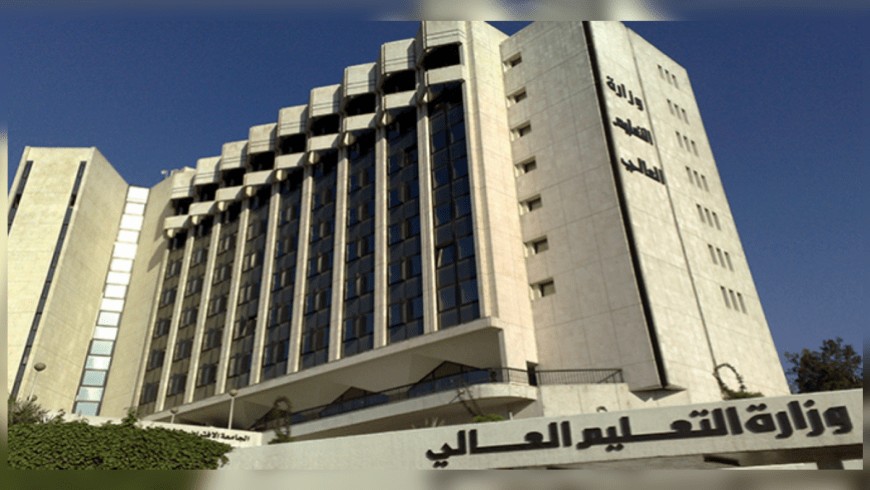
Subject: Higher Education Council Resolutions No. 198 and No. 207 of 2026
Executive Summary:
Resolutions 198 and 207/2026 represent a significant development in the policy for reintegrating students affected by the conflict, following the fall of the former regime in December 2024.
They also expand the scope of Presidential Decree 95/2025 to explicitly include those returning after “complete liberation” (from abroad or remote areas), while removing time limits on interruption and facilitating transfers and late registration.
While this step appears positive in promoting transitional justice and social stability, it faces serious structural challenges in terms of capacity and academic quality. Success requires a rapid transition to a comprehensive structural reform that combines digitalization, international partnerships, and sustainable funding.
General Context and Legislative Sequence After the Fall of the Regime:
The fall of Bashar al-Assad’s regime led to the restructuring of the higher education sector, which had suffered extensive infrastructure destruction (more than 40% of university facilities were damaged, according to previous estimates), mass academic displacement, and a generational disruption of education. The transitional authority, led by President Ahmed al-Sharaa, initiated a series of corrective measures focused on “restoring social cohesion through education”:
Presidential Decree No. 95 of 2025 (issued in June 2025):
The basic framework allows for the return of students who had been interrupted by the revolution since the 2010-2011 academic year, at both the undergraduate and graduate levels.
It includes resuming previous enrollment in public and private universities, granting an exceptional year to students who had exhausted their allowed study period, and the possibility of progressing to higher years based on previous coursework (up to eight remaining courses).
Subsequent executive decisions during 2025:
- A. Repeated extensions of registration deadlines (until January 2026 in some cases).
- B. Mechanisms for accrediting previous courses (Resolution 364/2025 and similar mechanisms in October 2025).
- C. Cancellation of university hosting and mandatory return to home universities.
- D. Partial recognition of certificates from previously liberated areas (Resolution 92/2025).
- E. Extensions for the registration of students who had conditionally applied for the 2024-2025 exams.
The two current resolutions (198 and 207/2026):
- A. 198: Allows unconditional transfer based on the duration of the interruption, explicitly including students returning after liberation who studied at foreign universities, provided that the transfer procedures are completed according to the applicable regulations.
- B. 207: Allows the completion of registration for those accepted between 2011 and 2024 (who were unable to register due to circumstances), in their original specializations, without counting previous years as failures or towards the scholarship period, provided that they have not previously registered with the same secondary school certificate.
This sequence reflects a shift from a temporary relief policy to a long-term human capital reconstruction strategy.
Strategic and Social Advantages:
- Reintegration of a large generation, with some estimates suggesting hundreds of thousands of students were cut off (with examples such as the return of approximately 20,000 students to Damascus University alone after 14 years). These two decisions reduce the risk of social and economic marginalization among young people.
- Encouragement of return and reduction of brain drain, as they target returnees from the diaspora (Turkey, Europe, the Gulf), thus promoting demographic and economic stability.
- Embodiment of transitional justice, as it addresses the legacy of discrimination and collective punishment against students who opposed the government or were geographically cut off, and enshrines the principle of “no collective punishment” in public policy.
- Enhancement of national efficiency, as it re-employs previously qualified human resources and reduces the educational gap that threatens sustainable development and productivity in the medium term.
Direct Disadvantages and Risks:
- Immediate structural pressure on the system: Universities suffer from a severe shortage of laboratories, libraries, staff, and housing. Mass return also leads to overcrowded classrooms and a decline in the quality of teaching.
- Challenges of academic accreditation and credibility: Accrediting courses from foreign universities or former regions requires rigorous standards, and inaccuracies threaten the international credibility of Syrian degrees.
- Risks of inequality and tensions: It may be perceived as favoring newly returned students at the expense of those who remained within the country, generating social divisions.
- Lack of fundamental reform: Focusing on “administrative settlement” without addressing outdated curricula, governance, or digital transformation.
Key challenges (short and medium term):
- Capacity and funding: Resource shortages necessitate immediate international support without raising tuition fees.
- Psychosocial integration: A generation that has been disconnected for years needs integrated academic rehabilitation and psychosocial support programs.
- Geographical and administrative unification: Ensuring the inclusion of students in the self-administered areas and the newly liberated northwest within a unified national framework.
- Transparency and corruption: Risks of favoritism in accreditation and transfers.
- Labor Market Alignment: Failure to update curricula threatens to produce graduates ill-suited to the needs of the new economy.
Recommendations of the Syrian Future Movement:
- National Academic Rehabilitation Program (2026-2030): Intensive bridging courses, Massive Open Online Courses (MOOCs), and twinning partnerships with European/Turkish universities.
- Independent Governance Reform: Establish a national quality assurance and accreditation body (independent of the Ministry), grant greater autonomy to universities, and update curricula to align with the 2030 Sustainable Development Goals and the digital labor market.
- Transitional Funding Strategy: A national higher education fund with contributions from international donors (World Bank, European Union, UNDP), the private sector, and endowments, with tax exemptions for supporters.
- Integrated Psychosocial Support: Collaboration with specialized organizations to provide on-campus counseling services, focusing on returning students and those who have been out of university for an extended period.Public annual reports and external audits.
Proposed Timeline:
- Short-term (2026): Extension of deadlines, initial qualification programs, and digital registration.
- Medium-term (2027-2028): Establishment of the independent body, international partnerships, and a funding mechanism.
- Long-term (2029+): Comprehensive curriculum reform and university autonomy.
Conclusion:
Facilitations 198 and 207/2026 represent a significant step towards addressing a deep educational wound and underscore the transitional authority’s commitment to rebuilding human capital as the cornerstone of stability and development.
However, their success hinges on moving beyond a temporary administrative approach to a modern structural reform that integrates quality, transparency, and innovation. Without this, these facilitations could become a structural burden, exacerbating challenges rather than resolving them.
Finally, we believe that Syria today faces a historic opportunity: transforming the generation of revolution and disruption into a generation of reconstruction. Investing in higher education is a strategic imperative to ensure a sustainable and unified future.