
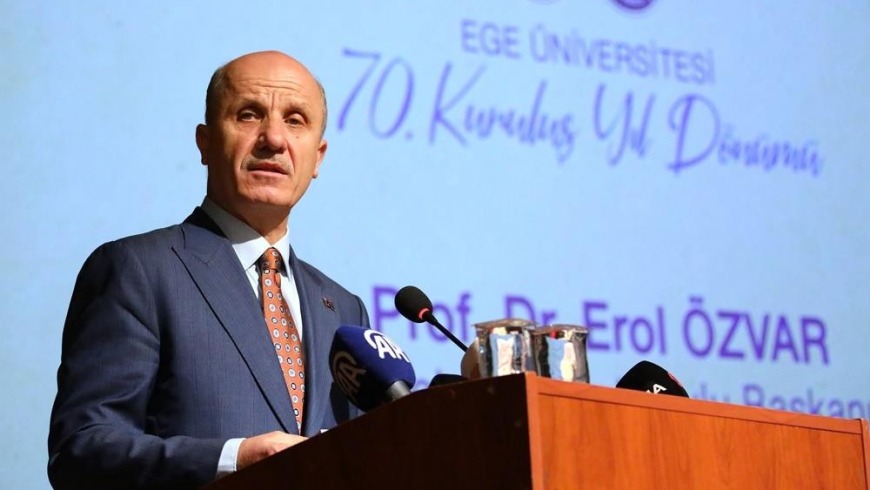
On January 19, 2026, the Turkish Council of Higher Education (YÖK) announced the official recognition by the Syrian government of degrees from Turkish universities operating in northern Syria. This recognition includes diplomas issued by Turkish public universities such as Gaziantep University and the University of Health Sciences in al-Rai, which have served hundreds of Syrian students throughout the years of the protracted conflict.
This announcement came in the context of the formation of a joint Syrian committee to regulate the status of current students and former graduates, emphasizing the principles of equal opportunity and academic fairness. This reflects a significant diplomatic step towards strengthening educational cooperation between the two countries following the radical political changes in Syria and during the transitional phase of rebuilding national institutions.
The Syrian Future Movement welcomes this recognition as a tangible demonstration of the strength of the Syrian national will to overcome the legacy of division and conflict. This measure represents a fundamental step towards unifying the national education system and reintegrating the northern regions into a unified Syrian fabric. We believe that recognizing these certificates affirms the right of every Syrian to quality education, regardless of past political circumstances. It reflects the new Syrian state’s commitment to the principles of social justice, guaranteeing young people equal opportunities to build their future, free from the regional or political discrimination imposed by the former regime. This recognition also takes into account transitional challenges such as resource scarcity and the need to rehabilitate educational infrastructure.
The Syrian Future Movement views this development as a strategic opportunity to strengthen Syria’s full sovereignty over its territory, while maintaining positive cooperation with its neighbors, particularly Turkey, within a framework of respect for shared interests and international principles.
We also believe that integrating these certificates into the Syrian educational system contributes to closing the chapter on a painful past and opens avenues for comprehensive educational reconstruction. This reconstruction must focus on building independent national universities capable of accommodating Syria’s cultural and ethnic diversity, thereby strengthening national unity and preventing any attempts at foreign interference under the guise of education. It is crucial to emphasize that this cooperation should be temporary and phased during the transitional period to avoid any long-term repercussions on national identity.
The Syrian Future Movement emphasizes the necessity of this recognition serving as a gateway to future policies focused on empowering Syrian youth through development programs that ensure the equivalence of degrees to international standards and provide job opportunities and vocational training for graduates.
We stress that, given the economic and social challenges facing Syria, education must become a tool for national advancement, contributing to building a generation capable of leading the reform and development process. This must be done while adhering to the shared values of Syrian identity, which unites Arabs, Kurds, Turkmen, and others, to achieve a prosperous future based on innovation and constructive regional cooperation. This requires addressing the transitional circumstances by allocating emergency budgets to support affected students and establishing digital platforms for distance learning to overcome logistical obstacles.
The Syrian Future Movement calls for expanding this approach to encompass all Syrian regions to ensure the unification of educational curricula and enhance academic quality, while benefiting from international expertise without compromising national sovereignty.
The Syrian Future Movement believes that this recognition reflects a positive shift in Syrian-Turkish relations, which can extend to other areas such as the economy and security, provided that it serves the interests of the Syrian people first and foremost and contributes to building a lasting peace based on justice and equality.
Therefore, we recommend the establishment of a National Transitional Council for Education, comprising representatives from all regions, to formulate long-term policies focused on sustainable development.
The Syrian Future Movement is committed to supporting all governmental and societal efforts to effectively implement this recognition. This will be achieved through the formation of oversight committees, including representatives from students, academics, and civil society, to ensure the transparency of the process and prevent any delays that could hinder the future of young people.
In this context, we call on everyone to look to the future with optimism, envisioning Syria as a model of a recovering state that transforms challenges into opportunities and builds a knowledge-based society that leads the region toward progress and stability.
The Syrian Future Movement recommends the following:
- Developing transitional educational programs that focus on digital skills and innovation to address job shortages during the transitional phase, in partnership with international organizations such as UNESCO to secure funding and expertise without political interference.
- Establishing a national fund to support students affected by war and displacement, covering the costs of equivalency and training, with a focus on marginalized areas to promote social inclusion.
- Establishing a transitional legal framework that defines mechanisms for educational cooperation with neighboring countries, with clear timelines for transitioning to a fully independent Syrian educational model, thus preserving sovereignty under challenging economic conditions.
- Encouraging joint scientific research with regional partners, focusing on reconstruction issues such as renewable energy and sustainable agriculture, to link education with future economic development.
- Strengthening national awareness through media campaigns and educational programs that emphasize the values of unity and tolerance, to address the cultural challenges of the transitional phase and reinforce a unified Syrian identity.