
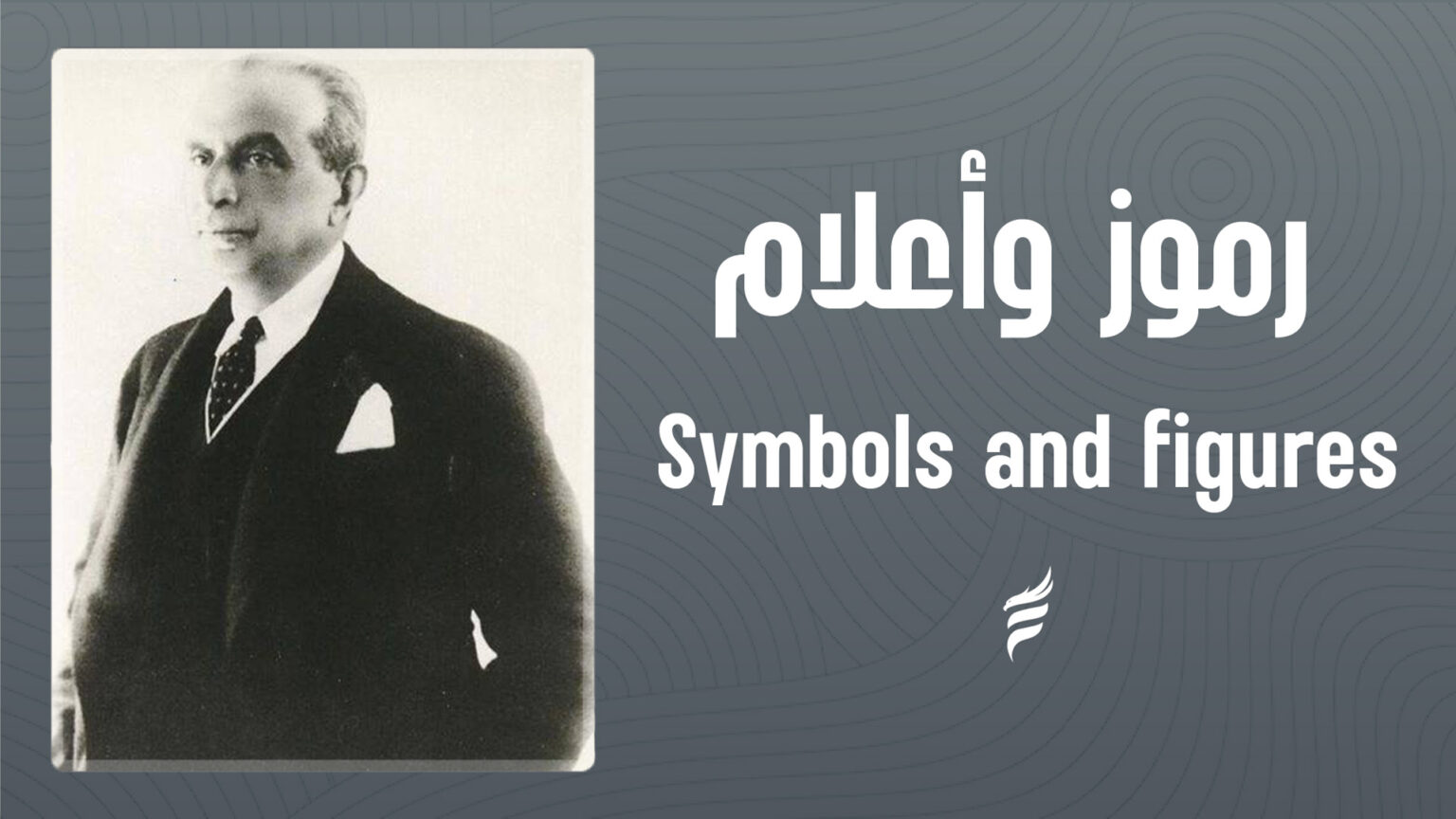
Rashid Pasha Mardam Bey was born in Damascus to a wealthy and prominent Mardam Bey family, whose members were known for their involvement in trade and politics during the Ottoman era.
He studied law at the Law Institute in Istanbul and married the daughter of Sheikh Muhammad al-Munini, the Mufti of Damascus in the late 19th century.
He began his public service career as a member of the Damascus Municipal Council, then as a judge in the Court of Appeals, and later in the Magistrates’ Court, combining legal training with social standing and an early sense of nationalism.
In June 1913, he participated in the First Arab Congress in Paris, which called for greater political participation for Arabs within Ottoman state institutions and for the adoption of a decentralized administrative system for the Arab provinces.
He was among the most prominent voices advocating for the preservation of the Arabic language’s status in the Ottoman Parliament and courts, and for its recognition as an official language of the Sultanate.
This congress came at a pivotal moment following the rise of the Committee of Union and Progress to power, which attempted to accommodate some Arab demands by including Arab figures in the Senate, in an effort to contain the growing nationalist consciousness.
With the end of World War I and the withdrawal of the Ottoman army from Damascus in September 1918, Syria entered the era of nation-building.
The Syrians pledged allegiance to Prince Faisal bin Hussein as their Arab ruler, and he was crowned king on March 8, 1920.
During this period, Rashid Mardam Bey, along with Abdul Rahman Pasha al-Youssef, co-founded the Syrian National Party, which called for the unification of Syria and the establishment of a modern constitutional monarchy.
King Faisal’s reign was short-lived, however, as he fell after the Battle of Maysalun, and the French Mandate was imposed on Syria and Lebanon.
Shortly before Faisal left Damascus, the last government of his reign was formed. Abdul Rahman Pasha al-Youssef was appointed head of the Consultative Council, and Rashid Mardam Bey was appointed as a member representing Damascus.
At the beginning of the French Mandate, Rashid Mardam Bey assumed the presidency of the Department of Religious Endowments (Awqaf) in the State of Damascus, which was then under the authority of the State Governor, Haqqi al-Azm, before later becoming an independent ministry.
This position represented an extension of his role in managing public affairs within the complex political circumstances imposed by the occupation, while maintaining a national presence in administrative institutions.
In March 1924, he participated in founding the Syrian Caliphate Society, which emerged in Damascus following the abolition of the Caliphate in Istanbul.
The Society aimed to find a formula to preserve the unity of the spiritual authority of the Islamic world after the abolition of the Caliphate. It included a select group of Damascus notables, among them its Mufti, Sheikh Ata Allah al-Kasm, Minister Badi’ Mu’ayyad al-Azm, the head of the Ashraf (descendants of the Prophet), Sheikh Ahmad al-Husaybi, and Prince Muhammad Sa’id al-Jaza’iri.
This initiative reflected the concerns of the Syrian elite at the time regarding the region’s political and spiritual identity during a period of redrawing maps.
In the late 1920s, Rashid Mardam Bey retired from political life and devoted himself to the judiciary and managing his family’s estates, of which he was the overseer, until his death in Damascus in 1946 at the age of seventy-six.
He was buried in the Mardam family cemetery in Bab al-Saghir Cemetery, where the names of those who shaped Damascus’s political and social history are interred.
The Syrian Future Movement’s Position:
We in the Syrian Future Movement, as we commemorate the founding statesmen of Syria, recall Rashid Pasha Mardam Bey as one of the symbols of independence and a leading figure of the first Syrian state, a man who combined law, politics, and national action during the founding era.
This article is part of a series on the symbols and leading figures of the Syrian state, within the framework of a documentary project that aims to connect our revolutionary present with a solid national past, and to revive the need to cultivate statesmen who will safeguard the homeland, preserve its achievements, and restore the Syrian state to its former glory and prestige after decades of tyranny and corruption.