
Introduction:
Since 2015, the Syrian Democratic Forces (SDF) have emerged as the most prominent military and political actor in northeastern Syria, based on a model of “democratic self-administration” and a broad alliance with various ethnic and religious groups. The SDF has sought to establish its local and international legitimacy by presenting itself as a guarantor of minority protection against fears of sectarian reprisals or a return to centralized authoritarianism.
In contrast, following the March 10, 2025 agreement, the Syrian Interim Government adopted a multi-layered strategy aimed at dismantling the foundations of this alternative legitimacy by shifting the conflict from a framework of “minority protection” to one of “national sovereignty and state unity.”
This study aims to analyze the tools of this strategy and its impact on the internal balance of power and the internationalization of the Syrian conflict.
This paper employs a comparative analytical approach, based on an examination of field and political developments during 2025–2026, while drawing on literature on state-building and post-conflict management of pluralism.
First: SDF Conferences and Building Alliances Among Constituent Groups:
The SDF sought to broaden its legitimacy base through two main conferences:
- The Conference on the Unity of Constituent Groups (Hasakah – August 2025)
This conference presented the self-administration model as the foundation for a decentralized Syria and considered the SDF the nucleus of a new national army, with symbolic participation from religious leaders of the Druze and Alawite sects.
The conference represented an attempt to transform the alliance of minorities into a political umbrella alternative to the central state. - The Conference on Kurdish Unity (Qamishli – April 2025)
This conference aimed to unify the Kurdish position internally and link it to the Kurdistan Region of Iraq, while demanding a solution to the Kurdish issue within a broad decentralized framework.
Damascus, however, considered these two initiatives a violation of the March 10 Agreement and an attempt to create a parallel legitimacy that would pave the way for consolidating a political and military reality.
Second: The Government’s Strategy for Withdrawing the Minorities’ Support:
The transitional government adopted a gradual approach to dismantle the pretexts upon which the SDF relies:
- Alawites:
Following the coastal unrest in March 2015, the government adopted a combination of security measures, community reconciliation, partial amnesties, and the creation of economic opportunities. This led to the separation of the hardline military faction from the civil demands movement, and weakened the potential for exploiting the Alawite issue politically. - Druze:
Regional security understandings neutralized external support for some militias and paved the way for integrating local forces into the national army, thus returning the Druze issue to the framework of internal sovereignty. - Christians:
Through direct meetings with church authorities and symbolic appointments within the government, Damascus succeeded in restoring the trust of religious institutions and closing the door on an alliance between the SDF and Christian leaders. - The Kurds:
Presidential Decree No. 13 of 2026 marked a significant turning point, constitutionally recognizing Kurdish cultural identity, restoring citizenship to those stripped of it, adopting Kurdish as the national language, and declaring Nowruz an official holiday.
This effectively deprived the Syrian Democratic Forces (SDF) of their most prominent mobilization tools, both domestically and internationally.
Third: Neutralizing the Minorities Issue from Internationalization:
The impact of these measures extends beyond Syria itself, effectively removing the international dimension from the minorities issue.
As constitutional and political guarantees expand, the ability of external powers to justify intervention under the guise of “protecting the components” diminishes.
This shifts the issue from the realm of open international conflict to one of “monitoring and investigation,” implicitly acknowledging the central government’s legitimacy in managing its internal diversity.
This represents a qualitative shift in the balance of legitimacy between Damascus and its adversaries, granting the transitional government an undeclared political green light to complete the project of unifying Syrian territory without the risk of widespread foreign intervention.
Fourth: The Military and Political Dimensions of the Transformation:
Militarily, neutralizing the issue of minorities redefines any potential confrontation with the SDF as an internal sovereign conflict, rather than a struggle to protect threatened groups. This reduces the likelihood of international support for any escalation against the state.
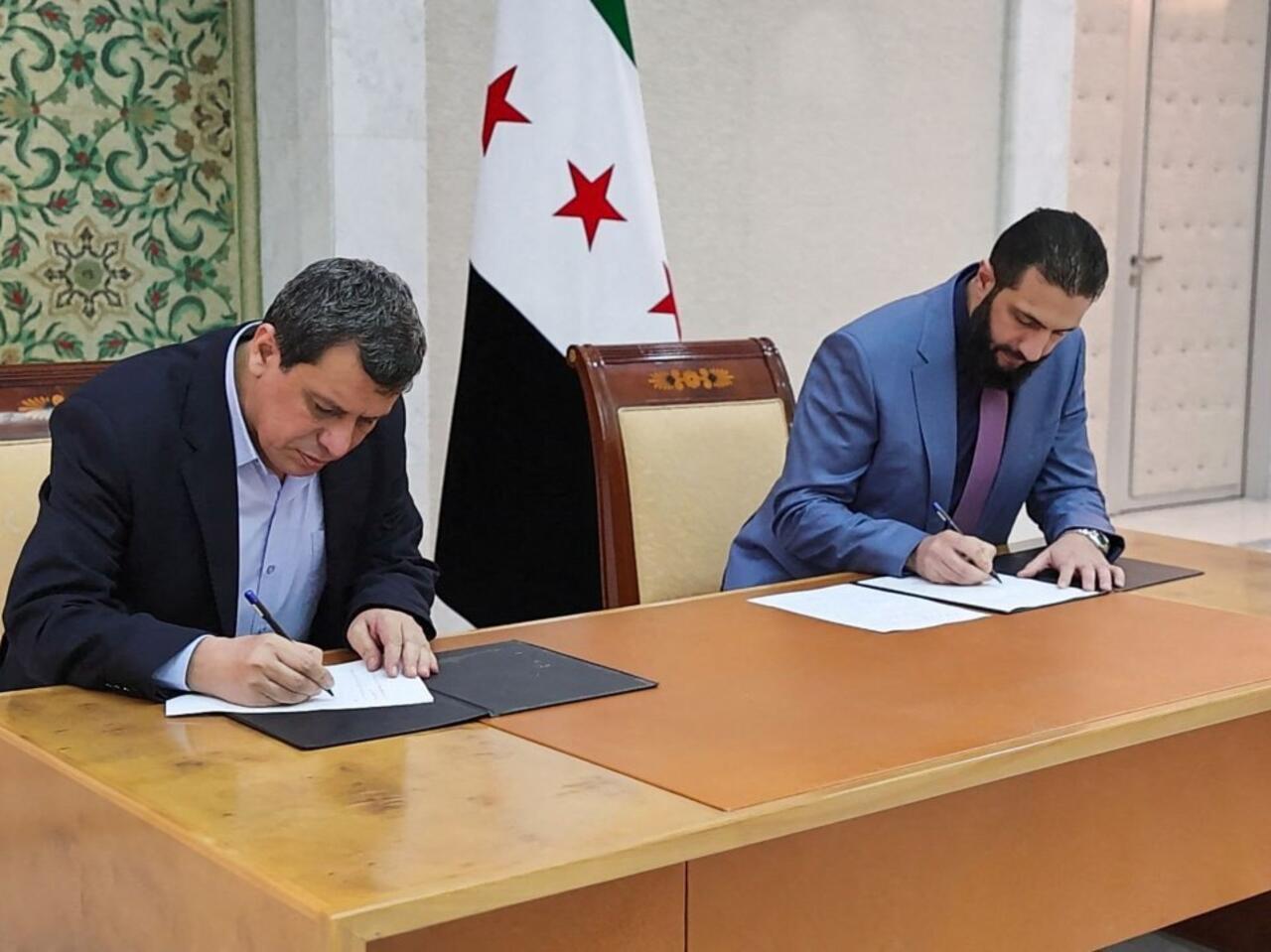
Politically, the transitional leadership’s approach—particularly President Ahmed al-Sharaa’s rhetoric—reflects a shift from a “coalition of constituent groups” model to a “civil society pact” model, aligning with modern post-civil war state-building principles.
Internationally, this approach opens the door for a repositioning of major powers, especially the United States, from a policy of containment to one of supporting stability. This is particularly relevant given the Trump administration’s move to reduce direct military involvement in favor of supporting local regimes capable of enforcing security, controlling borders, and combating terrorism.
Conclusion:
Current data indicates that the Syrian transitional government has largely succeeded in dismantling the political structure upon which the SDF based its justification for its military and administrative independence. With the de-internationalization of the minority issue and the shift in official discourse towards a comprehensive social contract, the strategic initiative moves from decentralized entities to the central state.
However, this path remains contingent on Damascus’s ability to translate the declared guarantees into sustainable policies for transitional justice and political participation, thus preventing a resurgence of the root causes of the conflict.
Recommendations:
- Strengthen constitutional guarantees of equal citizenship to ensure the non-return of sectarian protectionist rhetoric.
- Launch a comprehensive transitional justice program that addresses the grievances of all communities.
- Continue dialogue with community leaders to prevent the re-internationalization of minority issues.
- Leverage international support and visits to convey international messages of support for stability.
In doing so, the Syrian transitional government, headed by President al-Sharaa, has once again shifted the focus from the alliance of minorities to the framework of a citizenship contract, moving towards the unification of the entire Syrian landscape.
References:
- Horowitz, D. Ethnic Groups in Conflict, University of California Press, 1985.
- Lijphart, A. Patterns of Democracy, Yale University Press, 1999.
- Paris, R. & Sisk, T. *
- The Dilemmas of Statebuilding, Routledge, 2009.
- Krasner, S. Sovereignty: Organized Hypocrisy, Princeton University Press, 1999.
- Tilly, C. War, State and Society, Cambridge University Press, 1992.
- International Crisis Group,
- Avoiding the Internationalization of Internal Conflicts, 2020.
- Carnegie Endowment, Post-conflict Social Contracts in the Middle East, 2022.
- UNDP, Governance for Peace Report, 2023.