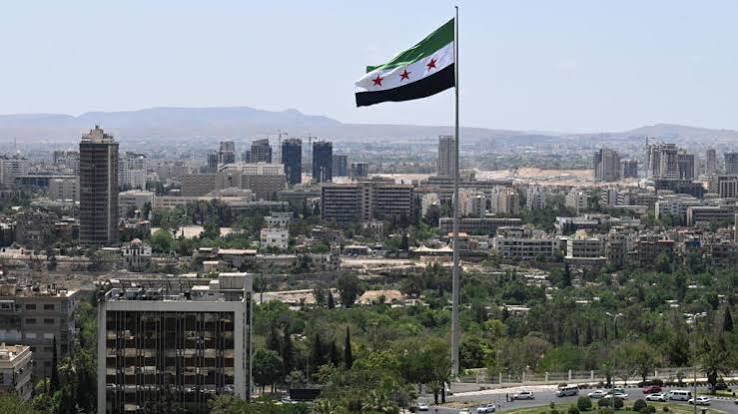

At the beginning of 2026, more than a year after the fall of the previous regime on December 8, 2024, Syria finds itself facing a highly critical geopolitical moment. The challenges are no longer limited to physical reconstruction or reforming the dilapidated state institutions, but rather revolve around a deeper question: Can the nascent Syrian state regain effective sovereignty over its entire territory amidst shifting regional and international power dynamics?
The recent events in Aleppo, particularly the tensions and clashes in the Sheikh Maqsoud and Ashrafieh neighborhoods (since late December 2025 and their significant escalation between January 6-10, 2026), represent a convergence point of several geopolitical spheres:
- The internal sphere: The central government’s ability to establish its legitimate monopoly on armed violence within the borders of major cities, a fundamental prerequisite for the existence of any modern state.
- The northern regional sphere: The relationship with Turkey, which views any independent military presence in northern Syria (especially near its borders) as an existential security threat.
- The broader Middle Eastern sphere: The US position, which has gradually shifted since the beginning of 2025 from implicit support for “stable administrative entities” to a clear preference for the stability of the central government, as evidenced by the lifting of sanctions in December 2025, the intensification of diplomatic contacts with Damascus, and the repeated and explicit statements of the US envoy.
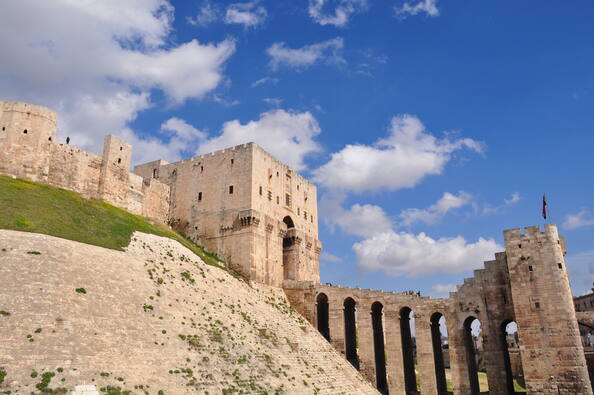
- The international sphere: The decline in Russia’s ability to provide comprehensive protection after the reduction of its influence in Syria following the fall of Bashar al-Assad, contrasted with the return of Arab states (especially most Gulf countries) to the Syrian arena as key players supporting the idea of a unified national state. In this multi-layered context, Aleppo – with its strategic geographical location as a link between western and eastern Syria, and between northern Syria and the interior – has become more than just a city; today, it is a vital indicator of the trajectory of the Syrian state as a whole.
The two main agreements (March 10, 2025, and April 1, 2025) represented an attempt to strike a delicate balance: integrating the various components within a unified national framework while providing reasonable administrative and cultural guarantees.
However, practical implementation faced significant difficulties, leading to a build-up of tensions that culminated in armed confrontation at the beginning of 2026.
The real strategic concern is not the clashes themselves (which are expected in complex transitional phases), but the increasing likelihood that these local crises will transform into a geopolitical knot exploited by external parties to keep Syria in a state of “balance of weakness” or “managed soft partition,” a pattern that history has shown prolongs conflict and prevents lasting stability.
From a geopolitical perspective, any long-term continuation of independent military zones within Syria’s largest economic and historical cities means:
- Weakening the state’s ability to rebuild national trust among its components;
- Disrupting major reconstruction projects that require unified security control;
- Keeping Aleppo – and consequently the Syrian economy – in a state of perpetual fragility;
Opening the door to conflicting regional and international interventions that feed on the resulting vacuum. The Syrian Future Movement, based on its national and civic vision, believes that the correct path lies neither in open military escalation nor in a return to the model of “parallel entities,” but rather in rebuilding trust through a balanced political and security process that achieves three simultaneous objectives:
- Restoring the state’s full sovereignty over its territory.
- Guaranteeing the legitimate cultural and administrative rights of all components within an inclusive national framework.
- Removing Syria from the cycle of regional and international conflicts that feed on its divisions.
Here, we recommend the following steps as urgent national priorities at this stage:
- An immediate declaration of a comprehensive and reciprocal ceasefire in Aleppo, to be extended later to the entire Syrian territory in a serious and guaranteed manner, with the opening of permanent and sustainable humanitarian corridors under joint (local-international) supervision.
- The formation of a joint national committee (representing the central government, local councils, and all components) to oversee the implementation of the March and April 2025 agreements within a specific and clear timeframe.
- The launch of a broad national dialogue in Damascus or Aleppo, with the participation of representatives from all Syrian parties, with the aim of reaching a national consensus document on the form of the state and administrative decentralization, or what we have called service-based decentralization, in the future constitution.
- Calling upon the relevant international and regional parties (the United States, Turkey, Russia, and the Gulf states) to support this process politically and financially, instead of supporting any temporary reality that hinders state-building.
- Launching a rapid and visible reconstruction project starting in Aleppo, focusing on the damaged neighborhoods, as a tangible sign that the state is working for the benefit of all its citizens. Aleppo is not merely a city divided among different factions; today, it is the geopolitical key to the future of Syria, whether as a unified state or as a collection of fragile entities. This was highlighted by President Ahmed al-Shara in his recent meeting with the governor of Aleppo a few days ago.
The strategic choice before us is clear: either we succeed in transforming this crisis into a starting point for genuine national unity, or we allow it to become a chronic problem that will delay—and perhaps even hinder—the building of a modern Syrian state for decades to come.
Ultimately, the decision is a political, strategic, and, above all, moral one.
We believe that the Syrian people, with all their components, including their social, political, and financial leaders, have the capacity to make the right choice.