Introduction:
Businessman Mohammad Hamsho stands out as a prime example of the complexities of the economic and political landscape in Syria. His name was closely linked to the ousted Assad regime, as he was considered one of the “economic arms” of Maher al-Assad, the brother of the deposed president.
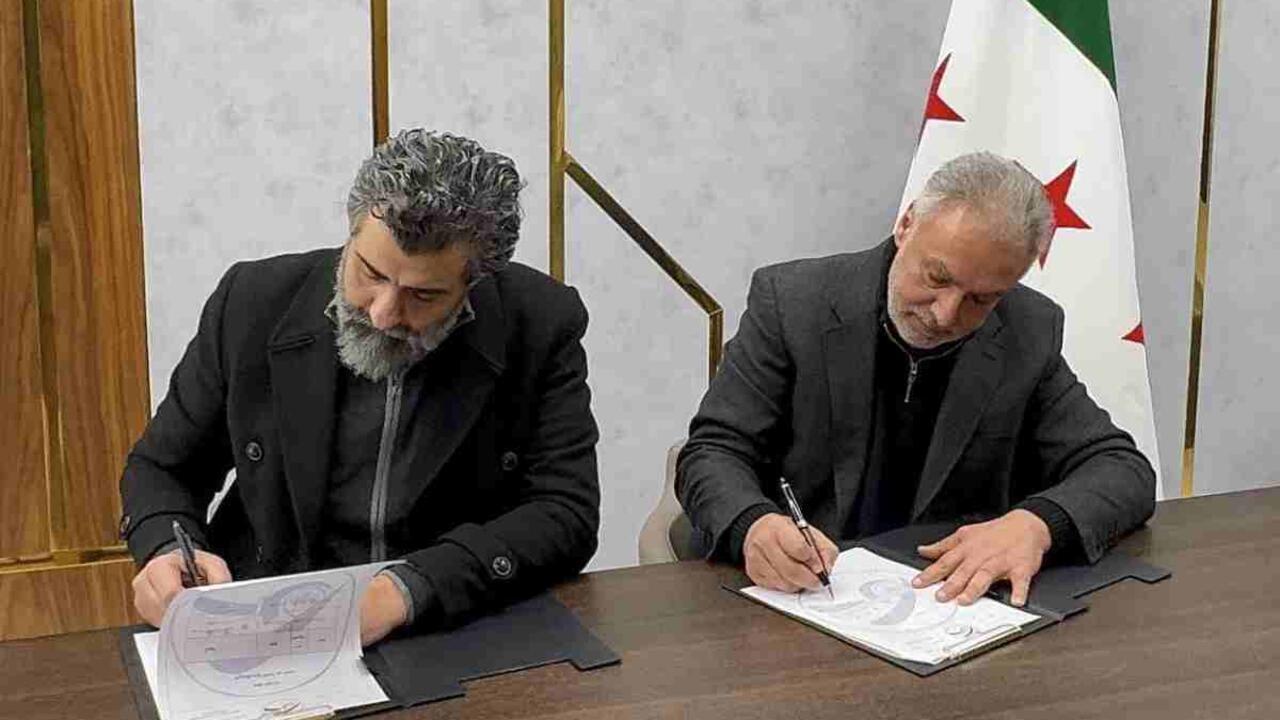
However, in January 2026, after a year and a half of political upheaval, Hamsho returned to Damascus and signed a comprehensive settlement agreement with the interim government.
This agreement, which reportedly included a payment of approximately one billion US dollars as a settlement, aimed to regulate his business operations and solidify his legal status, along with his commitment to contribute to reconstruction efforts.
Biography:
Mohammad Saber Hamsho was born on May 20, 1966, in Damascus, the capital of Syria, to a modest family.
His father was an employee at the Ministry of Education, and the family had no history of wealth or traditional bourgeois status.
Hamsho earned a bachelor’s degree in electronic engineering from Damascus University in the early 1990s and began his career as an engineer in a government institution. However, his rapid rise wasn’t solely due to his technical skills, but also to his personal connections.
In the mid-1990s, specifically in 1995, Hamsho began working for a computer and communications equipment company owned by Mudar Hawija, the son of Major General Ibrahim Hawija, who was then head of the Air Force Intelligence Directorate.
This connection, forged during his university studies, opened doors to government tenders for him.
By 2005, Hamsho had earned a Master of Business Administration (MBA) from the Higher Institute of Business Administration (HIBA) in Damascus, further solidifying his position as a professional businessman.
In 1989, he had founded the Hamsho International Group, which grew to include approximately 20 subsidiaries and affiliates, spanning sectors such as telecommunications, advertising, artistic production, and metal industries.
For example, he was the agent for Thuraya in Syria, founded Syria International for Artistic Production, and the Sham Press news website, in addition to his partnership in Al-Dunya TV. He also held official positions, such as Secretary of the Damascus Chamber of Commerce in 2014, Chairman of the Metals and Smelting Council in 2015, and Chairman of the Syrian-Chinese Business Council in 2014.
Economic Rise, Power Ties, and Investment Opportunities:
Hamsho’s career took a dramatic turn with the outbreak of the Syrian revolution in March 2011. While he was initially perceived as a successful businessman, his true rise to prominence stemmed from his close relationship with Maher al-Assad, commander of the Fourth Division.
According to US Treasury reports in August 2011, he acted as a front for illicit financial transactions on behalf of Maher al-Assad, enabling him to secure lucrative government contracts.
In 2012, he became a member of the Syrian People’s Assembly and was re-elected in 2016, before his membership was revoked in October 2014 due to his Turkish citizenship, according to a previous decision by the Assembly.
Hamsho expanded his investments to include vital sectors:
1- In telecommunications, he founded the landline company “Buraq,” which was valued at tens of millions of Syrian pounds by 2010.
2- In the metal industries, he became the owner of iron and steel smelting plants, with “Syria Metal Industries” producing approximately 500,000 tons annually before the revolution.
3- He also entered the healthcare sector with “Sham Medical Care,” in which he owns 50% of the shares, valued at 5 million Syrian pounds, according to Syrian trade records.
Hamsho relied on partnerships with figures such as Ammar Saati, who helped him gain access to Bashar and Maher al-Assad.
By 2015, Hamsho controlled approximately 10% of the Syrian metals market, profiting from the devastation caused by the war.
Role in the Former Regime, Financial Support, and International Sanctions:
Hamsho was one of the most prominent financiers of the former regime during the revolution (2011-2014).
According to a US Treasury report in August 2011, he was sanctioned for “providing support services to the regime” and was considered a “war profiteer.”
In June 2011, the European Union imposed sanctions on him and his family members (his wife, Rania al-Dabbas, and his children, Ahmad, Omar, Ali, and Sumaya), designating him a “leading businessman supporting the regime.”
He was also included in the US Caesar Act in June 2020, which targets 39 Syrian figures, including Assad himself.
The accusations include money laundering, as he allegedly collaborated with his brother-in-law, Ruslan al-Khayyat, to evade sanctions.
He was also involved with “mining committees,” where his companies purchased scrap metal from buildings destroyed by regime bombings, worth millions of dollars annually.
In December 2024, a cocaine manufacturing facility was discovered in his palace, linked to the Captagon trade, which, according to UN reports, reached $57 billion globally in 2023. He also established a security company to protect drug shipments, which made him a target of British sanctions in January 2015.
Post-Regime Fall: Return to Settlement
With Assad’s fall in December 2024, Hamsho fled to Beirut, but returned in January 2025 after a settlement with the transitional government.
The agreement, signed in March 2025, included a $1 billion ransom payment in exchange for the release of his frozen assets (imposed in November 2024) and his reintegration into the economy.
Hamsho also committed to contributing to reconstruction, with European aid amounting to €2.5 billion for the period 2025-2026, according to the sanctions relief agreements.
Conclusion:
Hamsho represents the paradox of post-Assad Syria:
On the one hand, the country needs capital for reconstruction, with damages estimated at $400 billion according to the World Bank in 2024. On the other hand, the reintegration of former businessmen threatens a return to sectarianism and corruption.
Furthermore, in the context of European visits and talks with Israel in 2025, culminating in the Paris meeting in January 2026, the national dialogue must include transitional justice, encompassing cases like that of Mohammad Hamsho and others, as Syria transitions from a phase of tyranny to one of cautious hope.
By 2026, it appears the new regime has chosen to build stability on the path of justice, through the creation of mutually beneficial compromises. The year is running, and the wheels of development and reconstruction are turning.
The Syrian people, weary of war, deserve a genuine state. In light of the statement issued by the National Commission for Transitional Justice, which affirms that economic settlements do not absolve perpetrators of crimes from accountability nor grant permanent legal immunity,
we in the Syrian Future Movement recommend the following:
1- Strengthening the independence of the National Commission for Transitional Justice through international and popular oversight mechanisms.
2- Conducting transparent and independent judicial investigations into Hamsho and his ilk to ensure they do not escape punishment and to prevent the collapse of the reconciliation process.
3- Allocating recovered funds to victim compensation and reconstruction funds, and encouraging national dialogue to draft laws that prevent the reinstatement of figures from the former regime without genuine accountability. This will bolster confidence in the transitional phase and prevent a repetition of past mistakes.
The question remains: Will Hamsho be part of the solution or a symbol of a return to the past?
Perhaps the answer depends on the strength of the new institutions on the one hand, and on the vigilance of the Syrian people, who have proven that they are very informed and diligently follow all the details and generalities within the framework of building the future Syria and the Syrian future.