
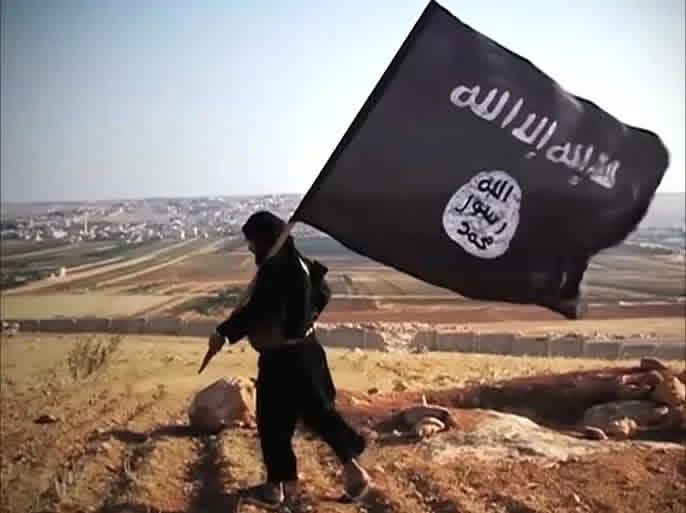
The recent statement issued by ISIS offers nothing new in terms of intellectual content or legal methodology. It merely reproduces the same discourse based on takfir (excommunication), the legitimization of violence, and the elimination of the other. However, it is extremely dangerous in terms of its political timing and its attempt to directly exploit the transitional phase that Syria is undergoing.
The language used in the statement is based on collective takfir, making no distinction between individuals. It explicitly and unambiguously permits bloodshed, while crudely employing the vocabulary of creed and religion to serve a nihilistic project that has no relation to the spirit or objectives of Islam. This discourse is the hallmark of Kharijite organizations throughout history, and not a recent or exceptional phenomenon.
From a legal and scholarly perspective, wholesale takfir is invalid according to the consensus of the Sunni community. Judgment of disbelief cannot be based on conjecture, job affiliation, or presumed intention, as established by the imams of Islam, most notably Imam al-Nawawi, who clearly stated: “A Muslim is not declared an unbeliever for a sin or an error in interpretation.” Furthermore, linking military service to disbelief is a flawed analogy! The army, in reality, is an organizational institution for protecting society and maintaining security, not a religious doctrine. Therefore, it does not confer disbelief or faith. Thus, applying the concept of “tyranny” to the state institution contradicts the principles of Islamic jurisprudence and the objectives of Islamic law, and clashes with the very essence of human society.
As for the explicit justification of bloodshed in the statement, through the open call for killing with phrases like “a bullet to the head or a knife to the neck,” this is a clear admission of premeditated murder and conclusive proof of this organization’s adherence to the Kharijite ideology, whom the Prophet Muhammad described as “passing through Islam as an arrow passes through its target.”
In addition, issuing a fatwa for killing without due process represents a complete dismantling of the concept of justice, a destruction of the Islamic state they advocate, and a transformation of religion into a mere tool for chaos and bloodshed!
Politically, this statement cannot be separated from a series of pivotal developments on the Syrian scene recently, most notably the lifting of sanctions and the Caesar Act on Syria. This carries implications for the beginning of recovery, the restoration of the state, and the return of international legitimacy—an environment that has long been a nightmare for extremist organizations, which thrive in chaos and are stifled in an atmosphere of stability.
The statement also comes in the context of the explicit threat issued by US President Donald Trump against ISIS. This threat is direct and not merely symbolic, stemming from a clear understanding that any resurgence of the organization threatens not only Syria but also regional and international security.
This context becomes even clearer with President al-Sharaa’s recent visit to the United States, and the political and security implications it held regarding international recognition, security coordination, and the reintegration of Syria into the global defense and security system. This explains the state of panic and the bloody rhetoric employed by the organization.
Therefore, this statement must be approached with a serious security perspective, not an ideological one. ISIS is an opportunistic organization that relies on sleeper cells and exploits fragile and volatile areas. However, it is also ideologically bankrupt, lacking popular support, and religiously and socially rejected in Syria.
The real danger it poses today lies not in its direct military capabilities, but in its attempts to forge temporary alliances, infiltrate crisis zones, and find fertile ground in areas suffering from security vulnerabilities or political vacuums. This includes certain hotspots in Suwaida, northeastern Syria, and perhaps the Syrian coast, particularly in areas where the state has not yet fully established its authority and consolidated its institutional and security presence.
Therefore, the ISIS threat is not so much a declaration of strength as it is a declaration of fear of the state’s return. This necessitates a comprehensive approach from Syria, based on strengthening proactive intelligence, dismantling cells before they can act, protecting sensitive sites, and not relying solely on military solutions. This must be done in parallel with activating the intellectual and religious role of moral guidance, which we discussed recently in the Syrian Future Movement, as well as the role of moderate scholars and institutional religious discourse. Furthermore, it requires exposing ISIS ideology through scholarly analysis, not mere media condemnation.
This stage also demands the continuation of state-building efforts, international engagement, and the consolidation of legitimacy, because a stable state is the primary enemy of extremist organizations, not the other way around. This must be accompanied by a responsible media discourse that avoids exaggeration and propaganda, instead exposing the linguistic, legal, and political fallacies of ISIS’s rhetoric.
In this context, the Syrian Future Movement reiterates its previous stance and early warnings regarding ISIS’s attempts to reposition itself after liberation, as outlined in its article published on its official website entitled: “ISIS Activity in Post-Liberation Syria: A Reading of the Times, Operations, and Transformations.” This article clearly indicated the organization’s shift from a logic of control to one of attrition, relying on threatening statements as a substitute for battlefield achievements—a position entirely consistent with its latest pronouncement.
In short, ISIS’s pronouncements do not reflect strength, but rather a moment of desperation in the face of a new Syrian state emerging from sanctions, regaining its legitimacy, and facing international security intervention. This stands in stark contrast to an organization rejected by the people, condemned by Islamic law, besieged by security forces, and politically isolated.
The new Syria, having overthrown the regime of tyranny, is capable, through the will of its people and its institutions, of dismantling the last vestiges of extremism, regardless of the guise of its slogans or the changing tactics it employs.