
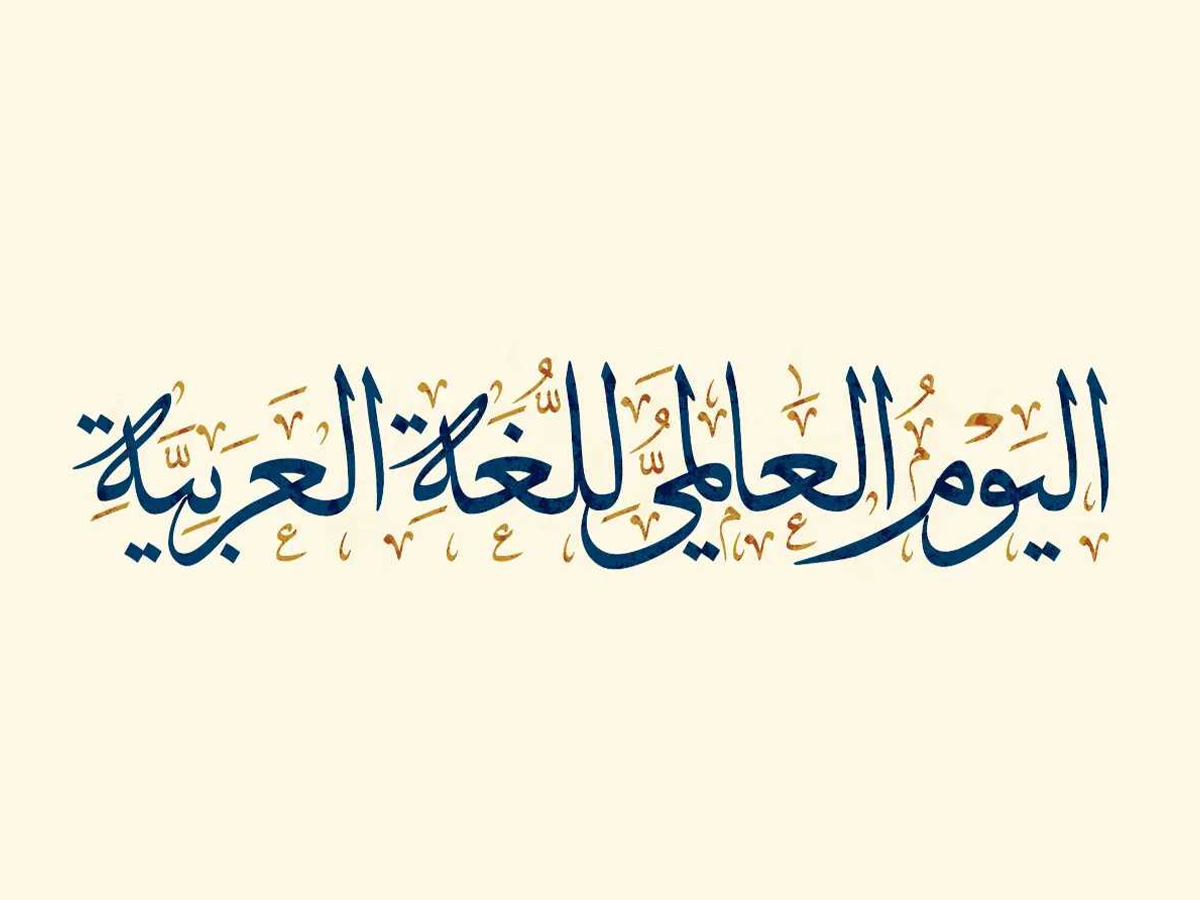
The Syrian Future Movement commemorates World Arabic Language Day, adopted by the United Nations on December 18th to mark its 1973 resolution adopting Arabic as an official international working language, as a cultural and civilizational occasion that transcends the linguistic dimension to the very essence of identity, consciousness, and the state.
The Syrian Future Movement believes that the Arabic language is a tool for communication, a vessel of history, a carrier of knowledge, a pillar of the Syrian society’s cultural formation, and an essential element in building a modern state based on citizenship, the rule of law, pluralism, and openness to the world.
From this perspective, preserving and developing Arabic is an integral part of the project to rebuild Syria on solid institutional and scientific foundations.
In light of the transitional phase that Syria is undergoing, the Syrian Future Movement affirms that the advancement of the Arabic language cannot be achieved through symbolic discourse alone, but rather through clear public policies that include:
- Modernizing educational curricula and strengthening the status of Arabic as a language of science, knowledge, and intellectual production.
- Supporting scientific research, translation, and integration between Arabic and other world languages.
- Protecting the Arabic language from politicization and exclusion, and establishing it as a unifying space for all Syrians.
- Linking linguistic identity to the project of a modern civil state, not to a mentality of isolation or an ideological invocation of the past.
The Syrian Future Movement believes that the status of the Arabic language in international forums reflects a heightened national responsibility: to restore Syria’s natural role as a cultural and intellectual actor in its Arab and international environment, and to contribute to the production of knowledge, not merely its consumption.
The Syrian Future Movement considers the celebration of World Arabic Language Day a reminder that building the future begins with the word, and that a state that respects its language, develops its education, and protects its cultural diversity is best positioned to regain the trust of its citizens and forge a new social contract based on awareness, dignity, and free belonging.