

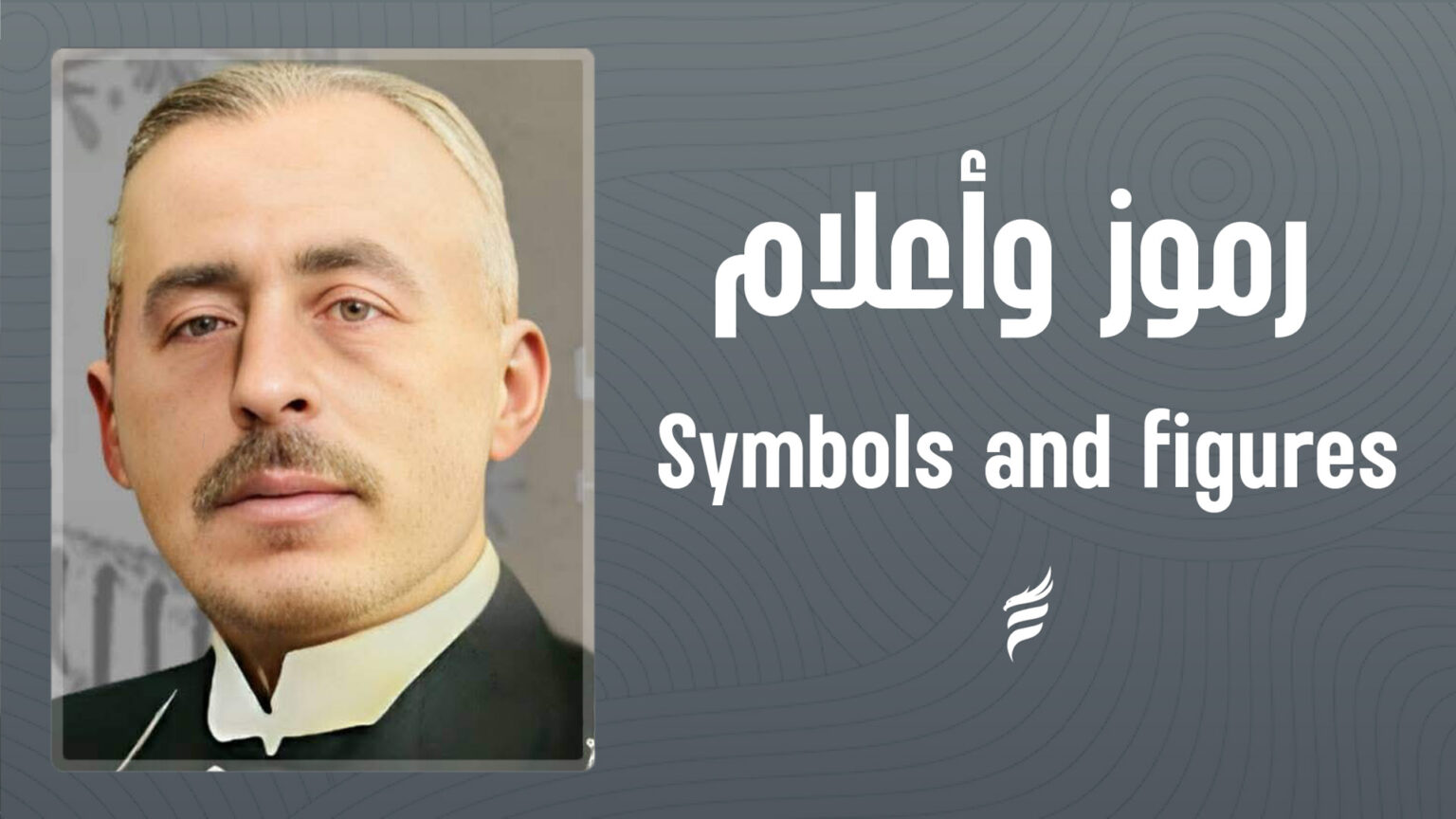
Early Life, Education, and Intellectual Development:
Ihsanullah al-Jabiri was born in Aleppo in 1879 to a distinguished scholarly family whose elders held prominent religious and social positions, most notably the office of Mufti and the head of the Ashraf (descendants of the Prophet) in Aleppo. He received his early education in his hometown before moving to Istanbul to study administrative and political sciences. He later graduated from the Faculty of Law with a doctorate.
He became involved early on in the activities of Arab youth in Istanbul and was imprisoned several times due to his connection with Arab societies and his nationalist activities, including on charges of receiving letters from the reformist thinker Abd al-Rahman al-Kawakibi.
Administrative and Diplomatic Work in Istanbul:
Al-Jabiri practiced law between 1902 and 1904 and won a prize for poetry in Turkish during his time in Istanbul.
Through his family connections, he entered the Ottoman civil service, serving as an interpreter for the Ministry of Public Security, then as a senior clerk, eventually becoming the head of the General Police Coordination Department, and later the secretary to Sultan Mehmed V and then Sultan Mehmed VI.
In 1913, he participated in the Paris Conference, which formulated Arab demands within the Ottoman Empire, thus strengthening his presence in Arab political circles.
The Faisal Era and Syrian Independence:
After the fall of the Ottoman Empire, al-Jabiri returned to Syria at the invitation of King Faisal. He was appointed mayor of Aleppo in 1919 and later a member of the Consultative Council.
He participated in the declaration of Syrian independence as Chief Secretary and Head of the Royal Court of King Faisal. He was present at the Battle of Maysalun in 1920 before leaving with King Faisal after the French occupation.
The Mandate authorities sentenced him to death and confiscated his property. He then moved to Europe to continue his political activism in defense of Syrian independence.
Political Struggle Abroad: Geneva, Paris, and the Arab Conferences:
He received an invitation from General Gouraud to negotiate, but the dialogue did not yield any results. He moved to Geneva, where he participated in the Syrian-Palestinian Congress alongside Shakib Arslan, Suleiman Kanaan, and Riad al-Solh, continuing his activism until the end of 1923.
He then traveled to Amman at the invitation of Sharif Hussein, from where he managed to enter Syria clandestinely and founded the Human Rights Society, which attracted thousands of young Syrians. The People’s Party and later the National Bloc emerged from this society.
With the escalation of his nationalist activities, the Mandate authorities sentenced him to death for the second time. He left for Turkey and then Switzerland, where, in Geneva, he and Prince Shakib Arslan founded the magazine “Al-Shaab Al-Arabi” (The Arab People) to defend the Syrian and Arab cause.
Return to Syria and Assuming Public Office:
After the 1936 treaty and the issuance of a general amnesty, he returned to Syria and was appointed governor of Latakia for two years, in direct confrontation with the Mandate authorities.
Towards the end of the nationalist era, he was arrested and placed under house arrest in Ain Toura, Lebanon, for four years. He then returned to Aleppo and was elected as a representative for his city after the death of his brother, Saadallah al-Jabiri. He chaired the Foreign Affairs Committee during his term as a member of parliament, and was re-elected in 1954, heading the National Gathering.
Upon the union between Syria and Egypt, he assumed the presidency of the Federation of Arab States.
After retiring from politics, he lived in Cairo until his death. His body was transported to Amman and then to Aleppo, where he was buried in 1980.
Personality, Thought, and National Legacy:
Ihsanullah al-Jabiri possessed an exceptional memory and meticulously documented his daily life. He attempted to publish his memoirs several times, but they were lost in Cairo and later stolen during his return voyage to Alexandria.
Among his well-known works are:
- The Power of the State
- The Ideal Socialism
He was praised by leading scholars of his time, including Sheikh Muhammad Ahmad al-Nabhan, who described him as “a devout man who stood firm for the truth.”
He also had one daughter who married former Jordanian Prime Minister Wasfi al-Tal.
The Syrian Future Movement’s Position:
The Syrian Future Movement believes that commemorating the life of Ihsan Allah al-Jabiri is a national duty towards the founding generation who laid the foundations of the modern Syrian state.
The Movement affirms that recalling his legacy of struggle is a call to complete the project of a national state based on:
- Cultural and social diversity
- Freedom and justice
- Knowledge and science
- Political participation
- Building strong institutions in the new Syrian era
Ihsan Allah al-Jabiri’s journey inspires Syrians today in their national transformation, and affirms that the state Syrians dream of can reclaim its civilizational roots when built on the principles of freedom, dignity, and the rule of law.