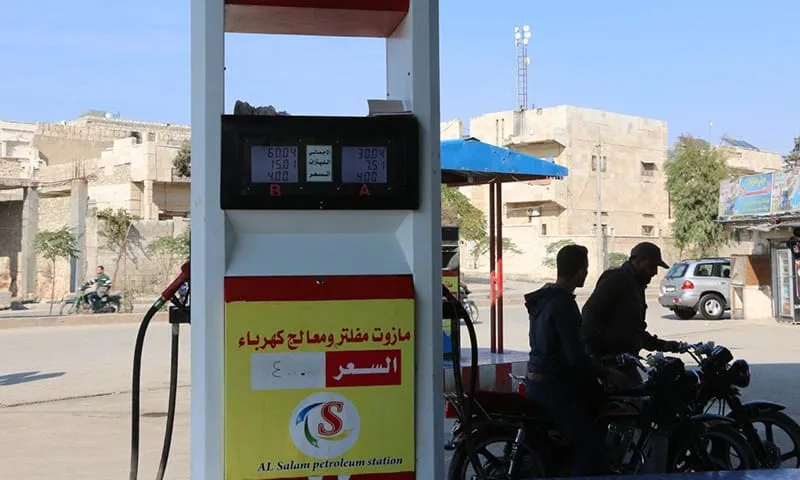
Introduction:
In the context of the transitional phase Syria is undergoing following the removal of Bashar al-Assad’s regime, and as a prelude to implementing the so-called “March Agreement,” the decision to reduce fuel prices represents a pivotal moment in regulating the relationship between the state and its citizens, reshaping the social support system, and restructuring the national economy.
This decision appears inextricably linked to other related decisions, from raising electricity prices to altering subsidy mechanisms, thus necessitating a thorough economic and philosophical analysis.
This paper aims to analyze the specific implications of this decision from an economic and political perspective, then examine its consequences for citizens, and offer practical recommendations aligned with the standards of transition and sustainable development, as envisioned by the Syrian Future Movement.
Theoretical and Philosophical Framework of Transitional Economics:
Political economy literature indicates that a transitional economy gradually shifts from a broad-based public subsidy model to a more targeted and beneficial model, moving towards a free or semi-free market. In the Syrian case, as Samer Abboud and Ferdinand Arslanian emphasize, the “transition criterion” includes price liberalization, increased institutional efficiency, and a deepening of the social market.
From a philosophical perspective, the decision reflects a shift from the concept of a “subsidized welfare state” to a “structured market state,” where general subsidies are replaced by targeted subsidies, and prices become a regulatory tool rather than a deterrent or incentive.
In this context, reducing fuel prices—though seemingly contradictory given the increase in electricity prices—can be interpreted as a strategic step toward restoring social equilibrium before fully transitioning to price liberalization.
Decision Analysis: Its Economic Context:
- Financial and Budgetary Dimensions:
World Bank reports indicate that subsidies in the Syrian budget reached approximately 42% of total public spending in some years, before decreasing to about 19% in the 2023 budget under the previous regime.
Reducing fuel prices, if implemented within the framework of subsidy restructuring, alleviates pressure on public finances and allows the state to direct resources towards reconstruction and service priorities.
From an economic perspective, it can be argued that this enhances the “sustainability factor” of the subsidy policy, rather than perpetuating it through unsustainable methods. - Efficiency of Resource Allocation:
Fuel subsidies often benefit those who drive vehicles or consume more than they need, and are not exclusively for the poor or those in need.
Therefore, eliminating or reducing subsidies increases the efficiency of resource allocation and curbs tax evasion and the black market. Reducing fuel prices—if accompanied by effective oversight—can redirect subsidies from fuel to public transportation and productive sectors, thereby increasing its developmental impact. - Impact on the Market, Transportation, and Inflation:
Reducing fuel prices could immediately translate into lower transportation costs, thus mitigating inflationary pressures on transportation-related goods and services.
This is crucial during the transition to restructured economic systems.
However, it must be emphasized that the true impact hinges on exchange rate stability and transparent pricing. Otherwise, the nominal reduction may be rendered ineffective or compensated for by market increases.
Furthermore, reducing prices without addressing structural issues in the energy sector could lead to increased consumption without corresponding productivity gains, thus undermining efficiency. - The Political and Social Dimension:
From a political perspective, the decision sends a clear signal to citizens that the state is capable of alleviating burdens and intends to transition to a more equitable approach to subsidies.
In the period preceding the full transition to the new government, this signal is important for calming public discontent and preparing society for broader changes. Socially, the decision sends a message that support is not given without limits, nor is it granted as an absolute right, but rather is redesigned according to standards and regulations.
This requires trust and accountability; otherwise, support becomes a tool mired in corruption or the black market.
Impact on Syrian Citizens:
For city dwellers, a reduction in fuel prices could directly translate into lower heating and transportation costs, easing the burden on commuting and daily work, and perhaps slightly reducing the overall cost of transportation-related goods.
However, without regulating public transportation fares or ensuring equitable distribution, this benefit could accrue primarily to the wealthy or private car owners, while a large segment of the poor who do not own vehicles are directly neglected.
In rural areas, where fuel is used for irrigation, heating, and agriculture, the impact is relatively greater.
A price reduction could improve farmers’ ability to operate water pumps and lower production costs, potentially leading to lower local prices for some agricultural products.
But these gains could be negated if transportation and distribution networks remain weak or if fuel is diverted to smuggling or the informal market.
The poor and those with limited incomes are often the first to suffer from price increases or service disruptions. Therefore, reducing fuel prices is a positive step, provided that it is implemented with the assurance that the real support reaches the poor, and not just benefits the middle or upper classes.
If the decision is made without accompanying transitional programs for direct support, the poor may not feel its impact as intended.
Conclusion:
In light of the above, the Economic Office offers the following recommendations that the Syrian Future Movement can adopt or submit to decision-makers:
- Linking the reduction in fuel prices to a targeted support program for the most vulnerable segments of society through:
Launching a cash transfer mechanism or support card directed to low-income families, while simultaneously reducing overall fuel subsidies.
Ensuring that the minimum benefit reaches those with limited incomes, not just private car owners. - Ensuring pricing transparency and effective oversight through:
Publishing the full text of the official decision and defining distribution and monitoring standards for fuel stations.
Establishing an independent oversight unit or involving the civil sector to monitor fuel distribution and the market, and curb smuggling and speculation. - Utilizing the temporary price reduction as a stepping stone towards broader reform in the energy and transportation sectors by:
Using the fuel price reduction as a prelude to a public transportation reform program (modernizing buses, promoting renewable energy).
Linking the decision to reducing electricity subsidies and directing the surplus towards investments in renewable energy and infrastructure. - Linking the reform to exchange rates and macroeconomic stability:
Accompanying the fuel price reduction with measures to stabilize the Syrian pound and stimulate local production, so that the reduction is not negated by a general rise in prices.
Working with international and regional partners (within the framework of reconstruction) to inject resources that are alternatives to total subsidies. - Planning carefully phased changes to avoid social shocks by:
Adopting a timetable for the gradual removal or reduction of subsidies over periods, while monitoring their impact; rather than an immediate and complete abandonment.
Involving civil society in impact assessments and preparing periodic reports on the results, which will enhance trust and facilitate the transition.
The reduction in fuel prices in Syria is part of a larger political and economic system that represents the state’s shift from a broad, untargeted subsidy model to a more equitable and efficient economy in the post-Assad era.
From this perspective, it can be interpreted as a signal of intent to redefine the relationship between citizens and the state, and the possibility of redistributing resources in a more sustainable way.
However, its true effectiveness depends on the institutional framework: transparency, oversight, effective targeting of the poor, and monetary and economic stability. If these elements are absent, price reductions may become merely partial adjustments with no real impact on citizens’ lives, and could even fuel resentment if linked to increases in other sectors such as electricity or transportation.
Therefore, the recommendations above constitute a roadmap that should be integrated into a broader transformation strategy encompassing energy, transportation, social support, and macroeconomic stability.
the reviewer:
Seifan, S. (2010). The Road to Economic Reform in Syria. Syria Studies, Vol. 2 No. 3.
Abboud, S. & Arslanian, F. (2009). Syria’s Economy and the Transition Paradigm. Syria Studies, Vol. 1 No. 4.
Almohamed, S. & Birner, R. (2019). “The Role of Subsidy Policies in Triggering the Uprising in Syria”. Scholars Journal of Economics, Business and Management, Vol. 6 Issue 10.
Lee, J. D., Nashin, J., Tabti, B. & Troug, H. (2025). Reforming Energy Subsidies in the Arab Region. IMF Notes 2025/003.
World Bank. (2023). SYRIA – ECONOMIC UPDATE [PDF].