
Introduction:
Syrian foreign relations have witnessed waves of tension and rupture in recent years, due to the years of revolution and the accompanying regional crises.
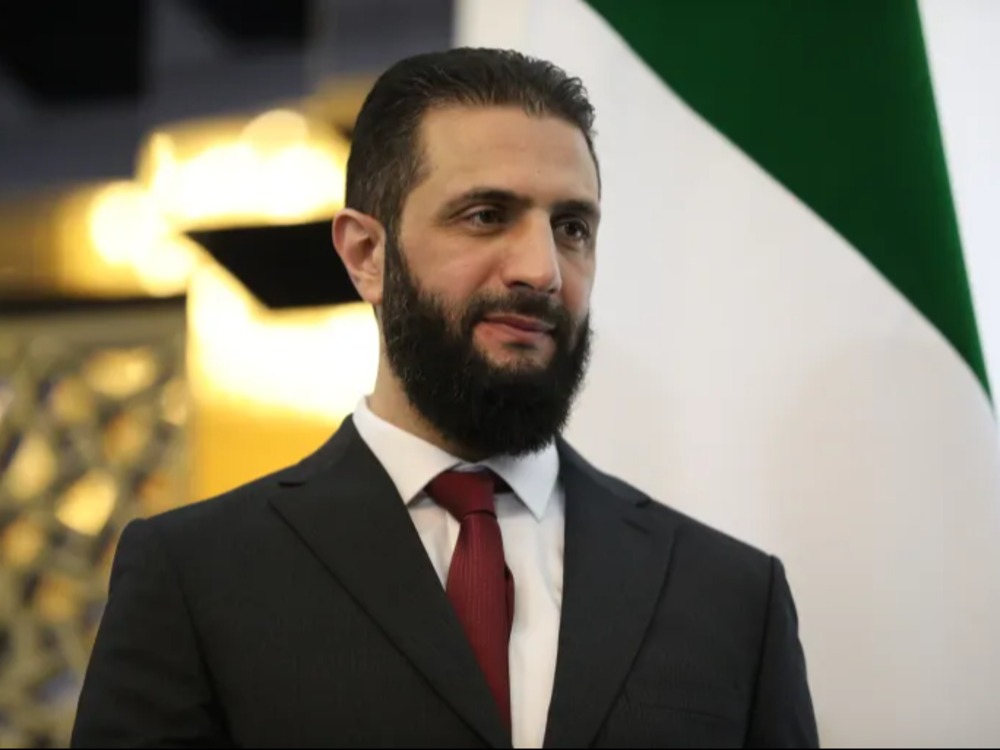
In this context, President Ahmed al-Sharaa’s visit to the Kingdom of Saudi Arabia marks a significant turning point in regional openness and the rebuilding of bridges of dialogue and strategic cooperation. This visit carries two fundamental dimensions: political-strategic and economic-developmental, and raises vital questions about how Syrian society and the national interest can benefit from this shift.
This paper aims to analyze the dimensions of the visit, anticipate its repercussions on Syrian domestic and foreign policy, and offer a practical vision for how to utilize this opportunity to promote development, social justice, and the integration of civil society in reconstruction projects.
The Political-Strategic Context:
The visit comes after a long period of Syrian isolation from some regional capitals, during which Syrian society suffered the effects of diplomatic isolation on the economy and social stability. In this context, the visit reflects several important indicators:
- Recognition of Syria’s regional role: Opening dialogue with the Kingdom of Saudi Arabia highlights the desire of the regional and international community to bring Syria back to the negotiating table, which can be leveraged to reaffirm national sovereignty and independence.
- Opportunities to stabilize regional security: Through strategic coordination, the visit can contribute to easing tensions on the borders and creating areas of cooperation with Syria’s neighbors, thus alleviating security pressures and allowing resources to be focused on domestic development.
- Maintaining national independence: While the visit presents an opportunity, it must be viewed from a national perspective that ensures initiatives do not become tools of pressure or power blocs, that the interests of the Syrian citizen remain paramount, and that this visit serves as a compass for internal solutions to the issues of the Syrian Democratic Forces (SDF) and the Suwayda region.
Economic and developmental dimensions:
The visit is not limited to political meetings but also includes strategic discussions in the economic, investment, and infrastructure sectors.
The following points can be drawn:
- Revitalizing the economy: Opening relations with Saudi Arabia can unlock investment opportunities in infrastructure, energy, agriculture, and tourism. This will boost job creation, reduce unemployment, and restore confidence in Syrian economic institutions.
- Investing in expertise and technology: Through potential partnerships, technology and expertise can be transferred in areas such as renewable energy, healthcare, and education, thereby enhancing the efficiency of local projects.
- Promoting transparency and accountability: The Syrian Future Movement proposes that any investments be accompanied by civil oversight mechanisms to ensure that projects serve the national interest and are not exploited for narrow, elitist interests.
The social and humanitarian dimension:
The Syrian Future Movement believes that external engagement must translate into tangible benefits for citizens.
Here, we can focus on:
- Social justice: Investment projects must ensure that benefits are distributed equitably across all regions, reducing economic disparities and strengthening social cohesion.
- Supporting vulnerable groups: Any external cooperation or funding must include programs to support families affected by the war, the elderly, and people with disabilities. Civil Society Participation: Engaging local associations and civil society in monitoring project implementation to ensure effective spending and the achievement of the Sustainable Development Goals.
Conclusion:
President al-Sharaa’s visit to Saudi Arabia presents an opportunity to restructure regional relations and leverage them to serve Syria and its citizens. From the perspective of the Syrian Future Movement, this openness constitutes a test of the credibility of national policies and an opportunity to reaffirm that economic, social, and political development is a priority, and that any external cooperation must reflect the values of justice, equality, and the supreme national interest.
We view this event as a call to activate civil engagement, involve society, and protect citizens’ rights within any national project for the reconstruction of Syria and the building of a stable and sustainable future.
Therefore, the Syrian Future Movement recommends the following:
- Preparing an official follow-up report: Analyzing the visit’s outcomes periodically, with recommendations for public policies that link foreign relations and domestic development.
- Launching civil and economic initiatives: Encouraging small and medium-sized enterprises that rely on foreign investment, while ensuring transparency and accountability.
- Media Focus: Developing media content that highlights how regional openness impacts the daily lives of Syrian citizens, moving beyond narrow political rhetoric.
- Assessing National Independence: All initiatives emphasize that national decision-making remains in the hands of the Syrian people, while protecting their interests from any external pressures.
- Seminars and Analytical Workshops: Organizing meetings between economic and political experts and civil society representatives to discuss investment and reconstruction opportunities, and to create an intellectual space for presenting future visions.