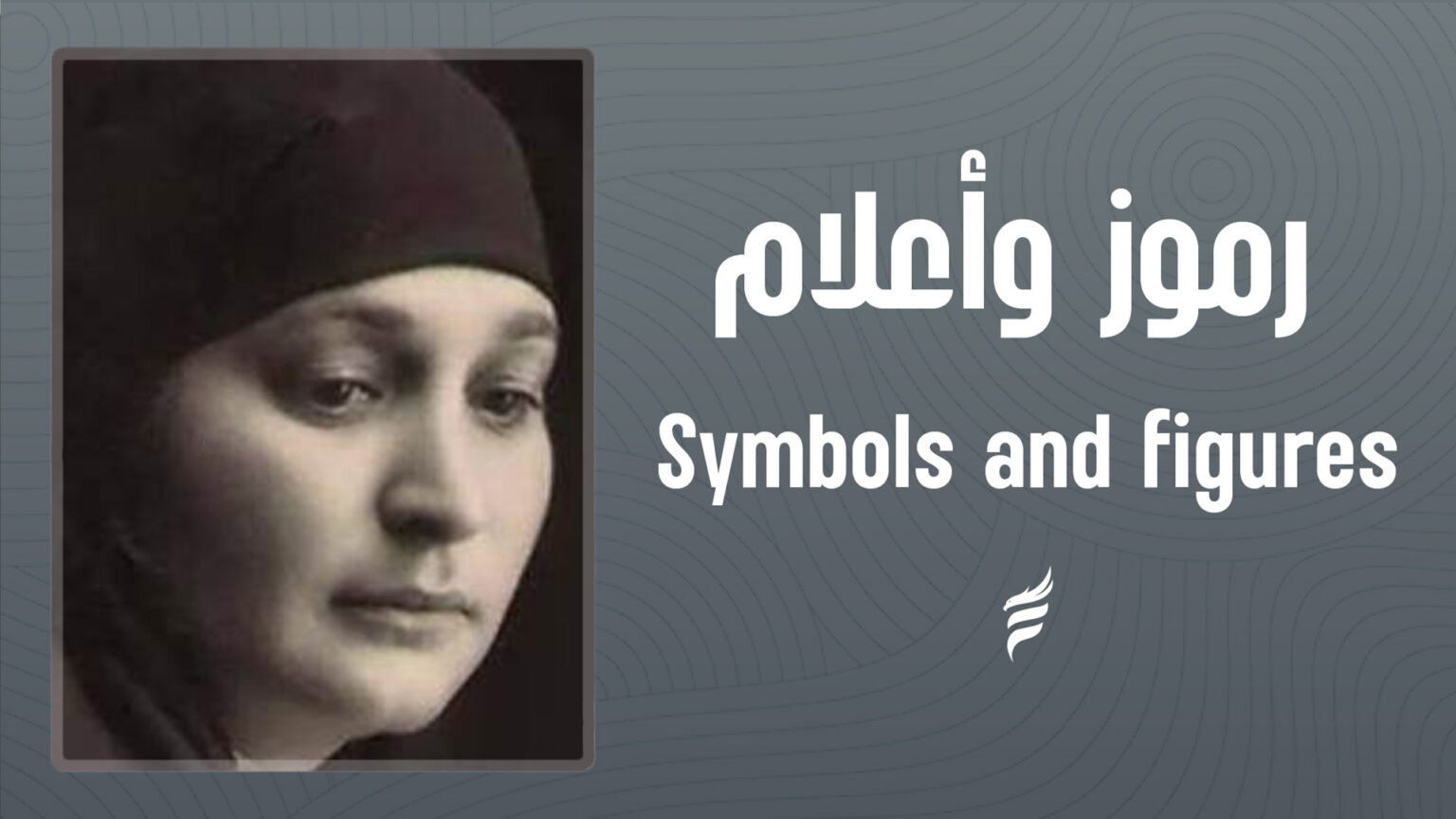
Early Life and Education:
Nazik al-Abid was born in Damascus in 1898 to a prominent political family of Ma’arra origins (from the city of Ma’arra al-Nu’man in present-day Idlib Governorate).
She lived in the Midan neighborhood outside the walls of Old Damascus. Her father, Mustafa Pasha al-Abid, was the governor of Karak and then Mosul, while her uncle, Ahmed Izzat Pasha al-Abid, was an advisor to Sultan Abdul Hamid II.
She studied in schools in Damascus and Mosul, learning German and French from private tutors.
After her father was exiled to Turkey following the coup against Sultan Abdul Hamid, she enrolled at the American School in Izmir, where she mastered the arts of photography and drawing.
Intellectual Beginnings and Participation in Journalism:
Nazik al-Abid was one of the first Syrian women to be influenced by the feminist renaissance of the early twentieth century. She joined the staff of Al-Arous magazine, founded by the writer Mary Ajami in 1910. This magazine was the first Arab magazine to explicitly call for the liberation of women and society from stagnation. She wrote her articles under pseudonyms alongside prominent writers from the Levant, such as Gibran Khalil Gibran, Elia Abu Madi, Ahmad Shawqi, Abbas Mahmoud Al-Akkad, and Ma’ruf Al-Rusafi. She was one of the bold female voices who paved the way for a new era of social awareness in the Levant.
Establishing Educational Associations and Projects:
After the fall of Ottoman rule, Nazik returned to Damascus and launched the Nour Al-Fayhaa Association for Girls’ Education, publishing a magazine bearing the same name in 1920.
She met with Prince Faisal bin Hussein, the country’s ruler at the time, and presented him with a project for a school for the daughters of martyrs. He agreed to support her, allocating her land on Al-Salihiyah Road and providing her with a monthly stipend of 75 dinars.
With the encouragement of Queen Huzaima bint Nasser, she also established the Red Star Society, a predecessor to the Syrian Red Crescent. This Society cared for the wounded of World War I and was directly linked to the International Red Cross.
National Role and Participation in the Battle of Maysalun:
In 1919, Nazik al-Abed participated in the reception of the American King-Crane Commission as a representative of the Syrian Women’s Movement, expressing her rejection of the French Mandate.
In the summer of 1920, she volunteered to join the Battle of Maysalun alongside Minister of War Yusuf al-Azma. She wore a military uniform and walked the streets of Damascus, holding a veil over her face, encouraging the soldiers to persevere.
Prince Faisal awarded her the title of “Honorary General” in recognition of her bravery, despite the objections of some clerics who she perceived as having a limited view of the role of women. She responded to them with her famous words:
“I am going to a holy jihad, not a nightclub!”
Syrians at the time nicknamed her “Khawla bint al-Azwar” and “Syria’s Joan of Arc” in recognition of her heroic stances in defense of the nation’s independence.
Post-Maysalun and Humanitarian Activism:
After the French occupation of Damascus, Nazik sought refuge in Istanbul and then Amman before returning to her homeland.
The Mandate authorities attempted to entice her by supporting her school on the condition that she cooperate with them, but she bravely refused.
She later moved to Beirut after marrying the Lebanese notable Muhammad Jamil Bayhum and continued her social activism, founding the League of Working Women and the Cultural Brothers Association. Following the 1948 Palestine War, she established the Palestinian Refugee Insurance Association, and was elected chair of its board of directors.
Death and National Legacy:
Nazik al-Abed died in Beirut in 1959, at the age of 72, after a rich struggle and humanitarian career that made her one of the most prominent figures of the modern Arab Renaissance.
The Syrian Future Movement’s Position:
Commemorating Nazik al-Abed is not merely a revival of a bygone history, but rather a renewal of the spirit of the modern Syrian state, founded by women and men who believed in freedom, sovereignty, and justice.
The Syrian Future Movement believes that its national and intellectual heritage represents an inspiring beacon on the path to building a new Syria that embraces its social and cultural diversity and promotes the spirit of citizenship and equal participation among its sons and daughters.