
Introduction:
Since the fall of the Bashar al-Assad regime in December 2024, Syria is witnessing a critical transitional phase characterized by complex humanitarian, political, and economic challenges. The return of millions of refugees and internally displaced persons to their homes, along with the adoption of a new constitutional declaration promoting equality, has raised hopes for national recovery.
However, this recovery faces significant obstacles, most notably the international funding crisis. The United Nations High Commissioner for Refugees (UNHCR) warned yesterday, Tuesday, September 2, 2025, that international funding for 2025 covers only 22% of humanitarian needs in Syria. This article aims to analyze the funding crisis in the context of the political and humanitarian transformations in Syria, and to present our recommendations at the Syrian Future Movement and a forward-looking vision to support recovery.
Historical Context:
The Syrian revolution began in March 2011, when peaceful protests against the Assad regime turned into a devastating armed conflict. The conflict has killed hundreds of thousands and displaced more than 12 million people, including 5.6 million refugees in neighboring countries and 6.7 million internally displaced persons, according to a 2023 UNHCR statement. The war has also destroyed infrastructure and led to the collapse of the Syrian economy, with GDP declining by 60% between 2010 and 2020. The humanitarian crisis was exacerbated by international sanctions, a lack of funding, and regional crises, leaving 90% of Syrians living below the poverty line by 2023.
On December 8, 2024, the offensive launched by rebel factions ended the Assad regime’s rule, a development Syrians refer to as the “liberation of Syria.” This transition led to the return of more than 2.5 million people, including 850,000 refugees and 1.7 million internally displaced persons, by August. However, these returns face challenges due to ongoing hostilities in areas such as As-Suwayda and northeastern Syria, and a lack of funding that threatens the sustainability of recovery.
Funding Crisis Analysis:
Kelly Clements, Deputy High Commissioner for Refugees, noted that international funding for 2025 covers only 22% of UNHCR’s needs in Syria, compared to 60% in 2015-2018, 40% in 2020-2022, and 30% in 2023. This decline reflects a decline in international commitment to the Syrian crisis, as international attention has been diverted to other crises such as the war in Ukraine and the climate crisis. As a result, UNHCR has been forced to reduce its staff by 30%, reducing its ability to provide vital services such as cash assistance, healthcare, and education.
The impact of the funding shortfall has been:
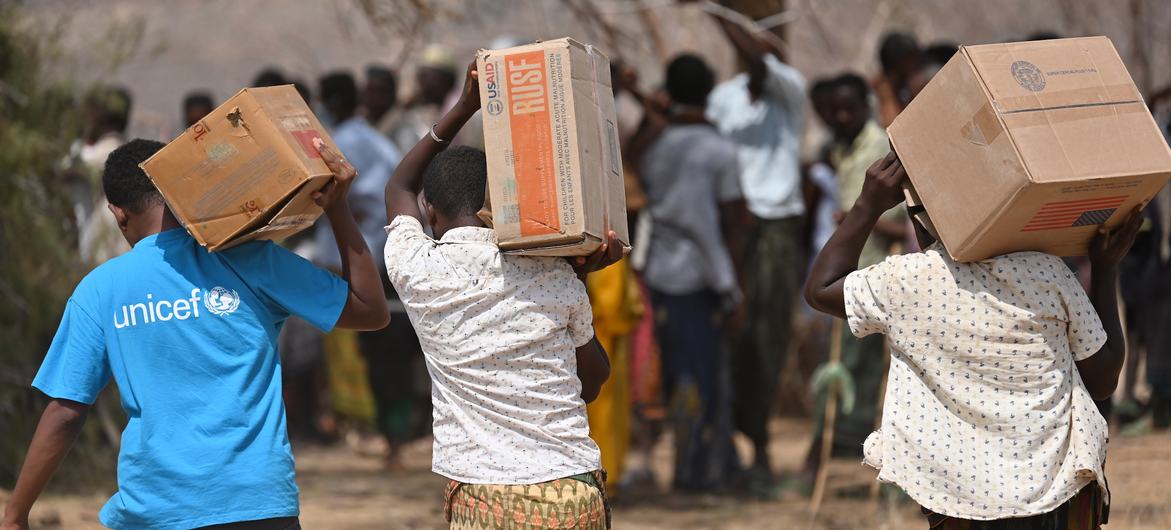
- Food security: The World Food Programme (WFP) halted food assistance in January 2024 due to a funding shortfall, affecting 5.5 million people. As a result, 56% of former beneficiaries suffer from inadequate food consumption.
- Reintegration: Returnees face difficulties securing housing, legal documentation, and employment. In areas such as As-Suwayda, 190,000 people were displaced in July 2025 due to tensions, increasing pressure on limited resources.
- Infrastructure: The war has destroyed 70% of Syria’s infrastructure, including hospitals and schools, and international support for reconstruction remains limited due to sanctions and a lack of funding. Despite the challenges, UNHCR has taken steps to support returnees, such as launching the “Syria is Home” platform to provide information on legal and social services, opening a civil registry center in Maarat al-Numan, and rehabilitating health facilities. The European Union also provided €235 million in June 2025, including an additional €20 million for northeast Syria, with the launch of a humanitarian airlift from Dubai and truck convoys from Denmark.
However, the Regional Response Plan, which requires $4.9 billion to support 6.1 million refugees and 6.8 million host communities, still has a funding gap of 65.5%.
Funding Crisis Analysis:
Kelly Clements, Deputy High Commissioner for Refugees, noted that international funding for 2025 covers only 22% of UNHCR’s needs in Syria, compared to 60% in 2015-2018, 40% in 2020-2022, and 30% in 2023. This decline reflects a decline in international commitment to the Syrian crisis, as international attention has been diverted to other crises such as the war in Ukraine and the climate crisis. As a result, UNHCR has been forced to reduce its staff by 30%, reducing its ability to provide vital services such as cash assistance, healthcare, and education.
Thus, the current challenges facing Syria can be divided into:
- Economic Crisis: The Syrian economy is suffering from high inflation (200% in 2024) and the depreciation of the Syrian pound, making returnees highly dependent on aid.
- Security: Continuing tensions in areas such as Sweida and northeastern Syria hinder the delivery of aid and affect the stability of returnees.
- International Sanctions: Despite calls to lift sanctions to support recovery, Western sanctions continue to hinder reconstruction investments, increasing reliance on humanitarian aid.
- Lack of Coordination: The absence of a unified international strategy to support Syria’s transition hinders the effective distribution of aid.
Forward-looking Vision:
Based on the current situation, three possible scenarios can be envisioned for Syria by 2030:
- Sustainable Recovery: If international funding increases to 70% of needs, sanctions are effectively lifted, and the security situation stabilizes, Syria could witness a gradual recovery, with the reintegration of 4-5 million refugees and IDPs and the reconstruction of 30% of the infrastructure.
- Humanitarian Failure: Continued underfunding and sanctions could exacerbate the humanitarian crisis, with limited refugee returns (1-2 million) and poverty rates increasing to 95%.
- Ongoing Conflict: If security tensions escalate and the transitional government fails to achieve stability, Syria could relapse into a cycle of violence, preventing refugee returns and increasing displacement.
Therefore, we, at the Economic Office of the Syrian Future Movement, recommend the following:
- Increased International Funding: Donor countries, particularly the European Union and the United States, should increase financial pledges to cover at least 70% of the needs of the Regional Response Plan. This can be achieved by holding an international donor conference later this year under the auspices of the United Nations.
- Strictly lift sanctions, linking the lifting of sanctions to the transitional government’s progress in promoting human rights and governance. This will encourage foreign investment in reconstruction, as the lifting of sanctions is not considered arbitrary or temporary.
- Strengthen infrastructure: Allocate 30% of funding to rehabilitate schools and hospitals, focusing on areas with high concentrations of returnees, such as Aleppo and Damascus.
- Support reintegration: Expand cash assistance and vocational training programs for returnees, in collaboration with local organizations, to reduce dependence on aid.
- Strengthen international coordination: Establish a joint international mechanism led by the United Nations to coordinate aid and reconstruction, with the involvement of the transitional government and Syrian civil society.
Conclusion:
Syria faces a historic opportunity to recover after the fall of the Assad regime, but the international funding crisis threatens the sustainability of this recovery. A 78% funding shortfall is hampering efforts to reintegrate 2.5 million returnees and exposing food security and infrastructure to further deterioration.
By increasing funding, lifting sanctions, and strengthening international coordination, the international community can support Syria in building a stable future. The forward-looking vision indicates that success at this stage depends on a long-term international commitment that goes beyond the humanitarian response to support reconstruction and sustainable development.
References:
- Syria TV (2025). “UNHCR warns: International funding covers only 22% of needs in Syria.”
- UNHCR (2023). “Syria Regional Refugee Response.”
- World Bank (2021). “The Economic Impact of the Syrian Conflict.”
- OCHA (2023). “Syria Humanitarian Needs Overview.”
- WFP (2024). “Syria Food Security Assessment.”
- European Union. (2025). “EU Pledges €235 Million for Syria.”
- Foreign Policy. (2025). “Sanctions and Syria’s Recovery: A Double-Edged Sword.”