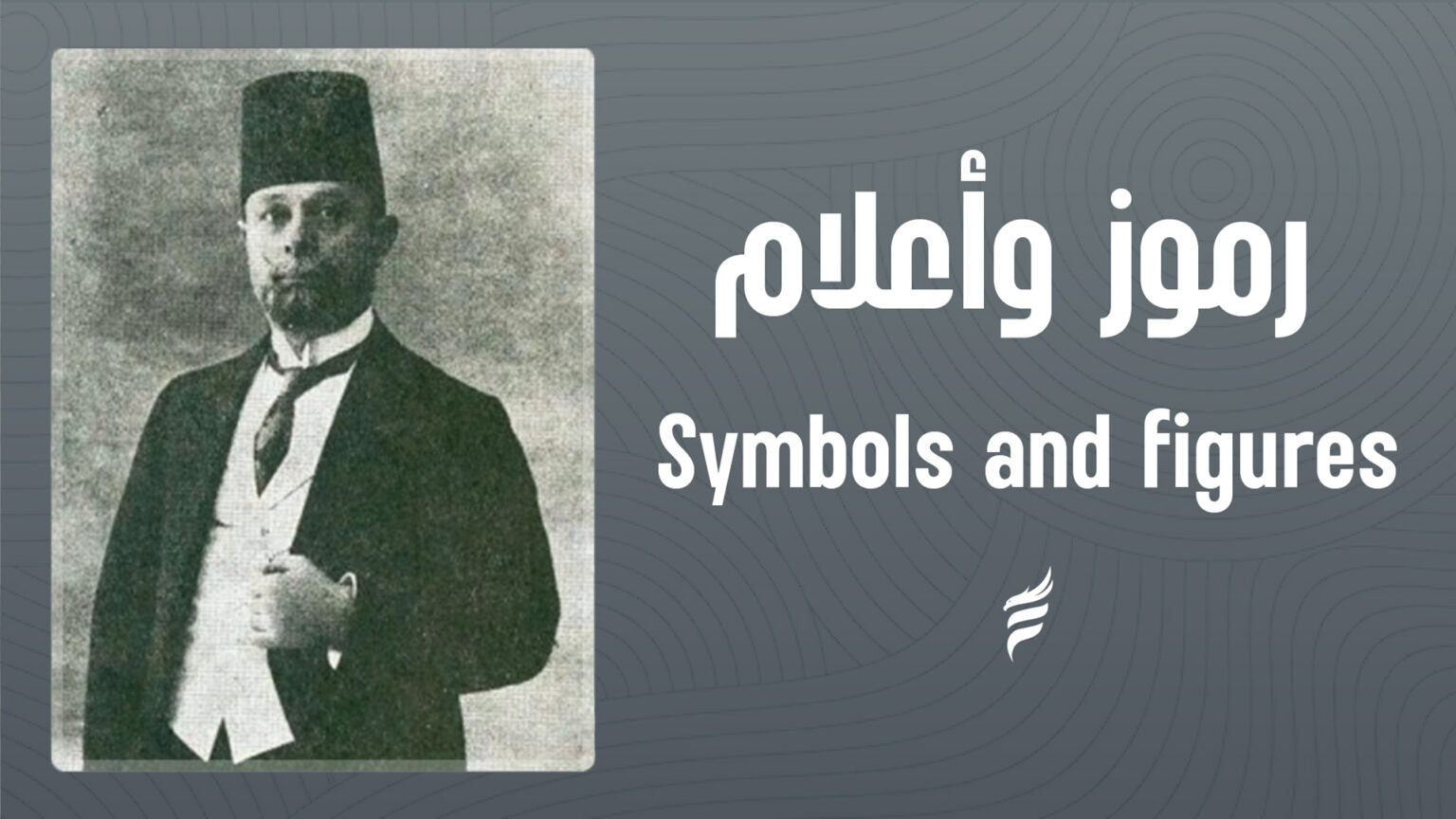
Rashid Talai’ was born in Lebanon in 1877, and belonged to the Druze Banu Ma’rouf clan, which settled in Lebanon, Syria, Jordan, and Palestine.
The leadership of the Banu Ma’rouf clan was linked to the Talai’ family, and one of its most prominent sheikhs was Sheikh Muhammad Talai’, Rashid Talai’s uncle.
Education and Beginnings:
He studied at the Royal School in Istanbul in 1900, then graduated from Dar al-Funun in Istanbul, one of the most important Ottoman universities, from which most of the country’s leading figures graduated.
Ottoman Positions:
He held several high-ranking positions in the Ottoman Empire, most notably:
- Mutasarrif of Hawran.
- Mutasarrif of Tripoli, Syria.
- Mutasarrif of Latakia.
He also founded the “Free Assistance” Association in Jerusalem and, along with Prince Adel Arslan and Colonel Fuad Salim, supported the revolutionaries in Egypt against the British occupation.
With the Faisalite Kingdom:
After the Turkish withdrawal from the Arab lands, Rashid Tali’ joined King Faisal bin Hussein in Damascus based on a special telegram recommended by the Syrian nationalist Muhammad al-Shuraiqi.
- He was appointed military governor of the Hama region.
- He served as Director of the Interior (Minister of the Interior) in the first government formed by King Faisal.
- He was transferred to Aleppo as governor.
With the fall of the Faisalite Kingdom following the French occupation, he left Syria for Transjordan, where he founded the Arab Independence Party.
First Jordanian Prime Minister:
With the arrival of Prince Abdullah bin Hussein in Transjordan, Rashid Tali’ was tasked with forming the first Jordanian government on April 11, 1921, under the name “Council of Advisors.”
- His first government: April 11 to July 5, 1921.
- His second government: July 5 to August 15, 1921.
His government faced severe British pressure, including the suspension of financial allocations, accusations of turning Jordan into a base for rebels against the French in Syria, and accusations of attempting to assassinate the French General Gouraud.
All of this forced Rashid Tali’ to resign on June 23, 1921.
National Role and End:
Rashid Tali’ is considered one of the most prominent Arab figures of the early twentieth century, and the driving force behind independence activities against French colonialism in Syria.
He was known for his comprehensive qualities, high morals, and wise management.
He died in September 1926 in the village of Al-Shabaki in As-Suwayda Governorate, where a memorial was erected in his honor at the initiative of the village’s residents, who witnessed a major battle during the Great Syrian Revolt, and of whom he was one of its most prominent leaders.
Lessons Learned from His Experience:
- Rashid Talai’s biography reflects the richness of the Syrian people, with its diverse components, particularly the active role of the Druze community in establishing the first Syrian state.
- His experience demonstrates the difficulty of balancing administrative and political work under the influence of an imposed foreign authority.
- It confirms that studying these historical models helps Syrians today draw lessons in building a modern, independent state capable of protecting the interests of its people.
The Syrian Future Movement’s Position:
We, in the Syrian Future Movement, believe that commemorating Rashid Talai’ opens doors for us to understand the process of building the Syrian state and inspires us to continue working for a new Syria, one governed by freedom, sovereignty, and justice.