Introduction:
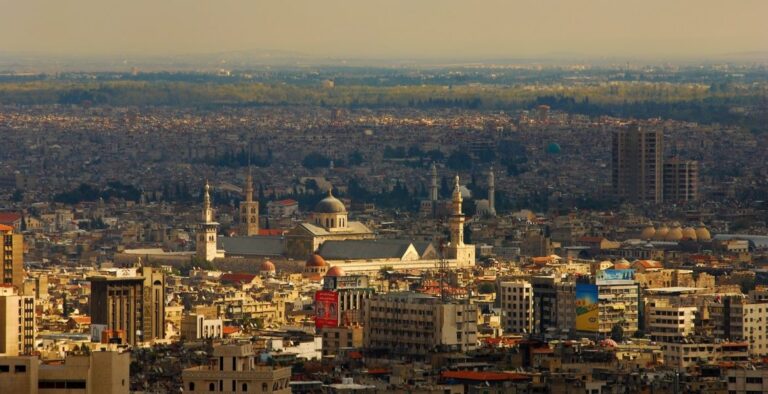
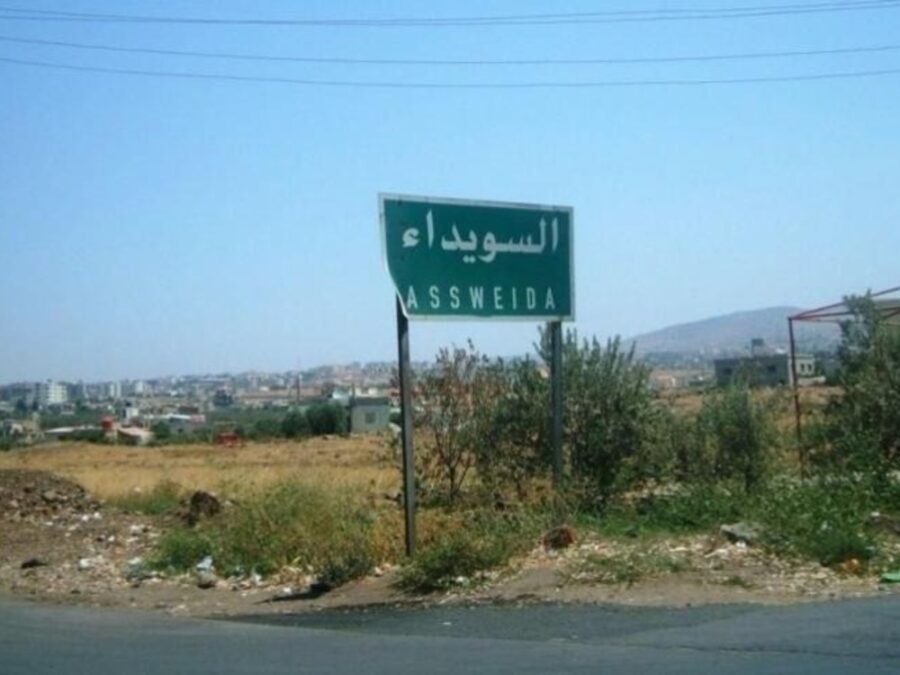
The Suwayda Governorate, located in southern Syria near the border with Jordan, is one of the most prominent Druze regions in the world. Druze constitute the majority of its population (approximately 90%), with other Bedouin and Arab minorities. It has a long history of relative autonomy and resistance to central authorities.
Since the French Mandate, Suwayda has led revolts, such as the Great Syrian Revolt of 1925, led by Sultan al-Atrash, reflecting a legacy of adherence to autonomy and the defense of identity.
With the outbreak of the Syrian revolution in March 2011, Suwayda entered a complex phase of strategic neutrality, intermittent protests, and self-defense against external and internal threats.
This analysis covers the evolution of its role from 2011 to the current demonstrations in August 2025, demanding the right to self-determination, based on intertwined political, economic, and social contexts.
From 2011 to 2014:
The Syrian revolution erupted in Daraa, neighboring Sweida, but Sweida’s response was different.
Initially, Druze leaders maintained relative neutrality toward the Baathist regime led by Bashar al-Assad, fearing sectarianism or a security collapse.
However, the province witnessed small protests in 2011-2012, often elite and anti-regime, demanding civil rights and economic reforms.
These protests were limited by government repression, which included arrests and the use of heavy weapons, but they did not escalate into armed confrontations as in Homs or Idlib.
By 2013-2014, Sweida began forming self-defense militias, such as the “Men of Dignity,” to counter the threat of terrorist groups like ISIS, which attempted to advance southward.
This neutrality was not absolute; Druze largely refused to join the regular army, sometimes leading to clashes with Assad’s forces. The governorate suffered from economic decline due to the war, with high unemployment and service disruptions, but it maintained relative stability compared to other regions.
At this stage, Sweida represented a model of a “suppressed revolution,” where political demands were secondary to survival.
From 2015 to 2022:
As the war escalated, Sweida became a relative safe haven, but it faced multiple challenges.
In 2015, ISIS attacked Druze villages, prompting the community to strengthen its local defenses. The Druze refused to fully support the regime, and the governorate witnessed protests against compulsory conscription, with dozens killed in clashes with security forces. By 2018, with the regime in control of most of the south, Assad attempted to assert his authority, but Sweida maintained its de facto autonomy through local militias.
Economically, the situation was exacerbated by international sanctions and corruption, leading to sporadic protests in 2020-2022 against the lifting of fuel and bread subsidies. These protests were non-sectarian, focused on daily life, and reflected a growing rejection of the regime without engaging in armed conflict.
At the same time, voices began to call for autonomy or federalism, inspired by the history of the Great Revolution, but these remained limited due to fear of escalation.
From 2023-2024:
2023 witnessed a dramatic shift. In August, widespread demonstrations erupted in Sweida due to the deteriorating economy, demanding the overthrow of Assad and the implementation of UN Security Council Resolution 2254. These protests were peaceful, organized, and prominently included women, with slogans such as “freedom” and the expulsion of Iranians and Russians.
The protests continued for months, with Baath Party offices closed and statues of Assad removed, establishing Sweida as a “Druze revolution” independent of the northern opposition.
In 2024, protests continued despite pressure, rejecting separatist projects and focusing on a national political solution.
However, with the fall of the Assad regime in December 2024 (as indicated by post-Assad reports), Sweida celebrated the liberation of Syria with the rest of the Syrian people. However, the voice of one of the elders, Hikmat al-Hijri, soon became louder against the new leadership in Damascus, rejecting the constitutional declaration, the national dialogue, and all paths of transitional leadership. His position then became one of confrontation with a new Islamist government led by Hay’at Tahrir al-Sham (HTS), which had taken control of Damascus.
Sweida was thus divided into two camps: one supported the project of building a new state, and the other refused to recognize the Damascus government, despite Sheikh al-Hijri’s reception of Governor Mustafa al-Bakour and demands for democratic reforms and the expulsion of foreign fighters. This led to the formation of a local military council to administer the region.
In 2025:
In July 2025, violent clashes erupted between Druze and Bedouin militias, followed by intervention from the new government in Damascus. These clashes began as a dispute over land and resources, but quickly turned into a sectarian conflict.
Hundreds were killed, tens of thousands were displaced, and Israel intervened with airstrikes to support the Druze, claiming to protect minorities. This led to a humanitarian crisis marked by shortages of food, water, and electricity, with reports of attacks on hospitals and the killing of children.
By August 2025, the protests had evolved into explicit demands for self-determination, with the largest demonstrations since the clashes. Hundreds gathered in the city of Sweida demanding independence or autonomy.
These demands are inspired by Druze history, but they raise fears of Syria’s fragmentation, with the government rejecting any secession, describing it as a foreign conspiracy.
Conclusion:
The demands for self-determination in Sweida may represent a challenge to national unity, but they are also an opportunity to rebuild Syria on a just federal basis. With ongoing clashes and foreign interventions, the future remains uncertain. Resolving the conflict requires a national dialogue that guarantees the rights of minorities without fragmentation, otherwise it could lead to further collapse.