
Introduction:
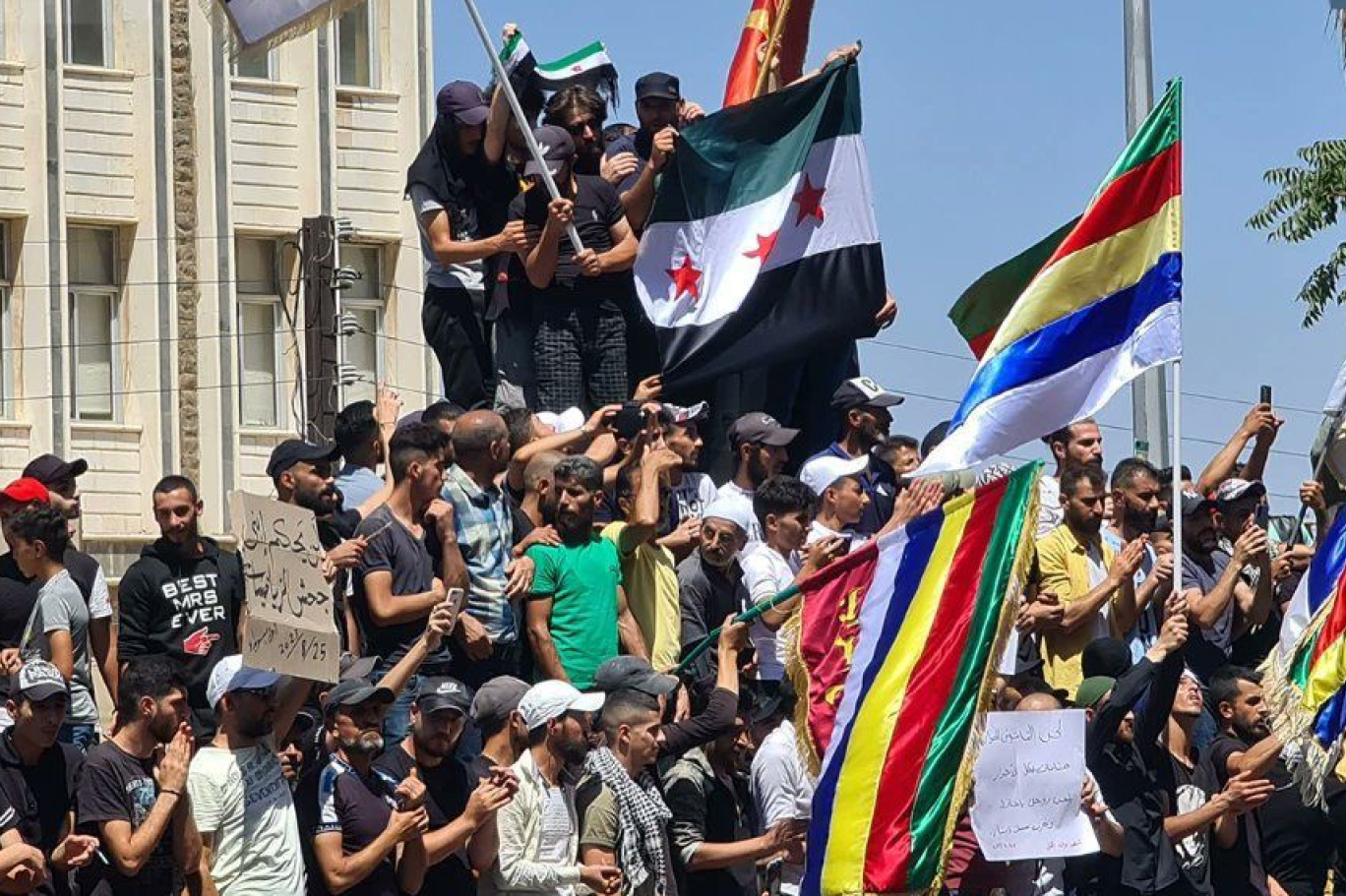
This paper offers a preliminary assessment of the outcome of the Sweida file in light of the recent escalation and reviews the new Syrian approach to dealing with the local situation within an intertwined regional context.
The analysis focuses on indicators of shifts in Damascus’s rhetoric and tools. It places this within the context of the recent tripartite meeting in Amman, which was reconvened today, Tuesday, August 12, 2025, in Jordan. This meeting is likely to mark the beginning of a regional repositioning in dealing with the Syrian file.
The paper aims to anticipate potential scenarios, based on private information I have received, without offering direct recommendations. This is consistent with the nature of “situation assessment” papers, which focus on analyzing trends and assessing the options available to decision-makers.
In light of the faltering efforts at internal dialogue with the Druze leadership in Sweida, particularly after the statements of the three Sheikhs of the Mind, which adopted a confrontational language with the government in Damascus, Damascus is moving toward reformulating its approach to the file, adopting a more stringent approach internally and a more balanced approach externally. A delegation of Suwayda notables was supposed to participate in the Jordan meeting. However, recent statements by Druze religious authorities have prompted Damascus to reassess its position, which, according to our sources, will lead to the adoption of the following steps:
First: Internal rift and restructuring of local authority
- Information indicates the possibility of replacing the current governor, Mustafa al-Bakour, with a more hardline figure, as part of ending Damascus’s previous policy of “extending a hand.”
- It is expected that the central authorities will take measures to sever relations with the interior of Suwayda, while reducing the scope for local political interaction.
Second: Internationalizing the issue and reducing Israeli influence
- Damascus is content to address the issue through external channels, starting with the Amman meeting today, Tuesday, August 12, 2025, with diplomatic efforts to reduce Israeli influence in the south.
- Russian military movements have been observed from Qamishli towards the south, indicating new security coordination.
Third: Controlling Violations and Besieging Rejecting Leaders
- Damascus is working to stop violations against civilians, while simultaneously besieging Druze leaders who have refused dialogue, with the aim of eliminating the pretexts these leaders use to garner popular support.
Fourth: Imposing a “political sanctuary”
- A proposal is being circulated to impose a “political sanctuary” on Druze leaders, similar to a “religious sanctuary,” to prevent them from engaging in any political activity or holding meetings after the issue is settled.
Fifth: Restructuring Relations with the Residents
- There is a proposal to deport any Druze who wish to leave Sweida, in parallel with convincing influential countries to neutralize Israel.
- Plans are being made to return those who wish to return through the General Security Agency, affiliated with the Ministry of Interior, while opening the door to settlement for armed elements inside Sweida and issuing a general amnesty, without involving the leaders.
- Sheikh al-Balous is expected to play a pivotal role in this process, making him a historical figure.
Sixth: Freezing the File and Opening a New Page with the Local Community
- Damascus has chosen to freeze the file and leave it on the backburner, while seeking to open a new page with the local community after the failure of dialogue with traditional leaders.
Seventh: Potential Transformations in the Druze Scene
- There is talk of a possible visit by Sheikh Muwaffaq Tarif to Damascus, or an international meeting in September with the Syrian president, which could reflect a shift in the public image of the Druze leadership.
Eighth: The Regional-International Dimension: The Tripartite Amman Meeting
In the context of these transformations, a tripartite meeting was held in the Jordanian capital, Amman, on July 19, 2025, which included Syrian Foreign Minister Asaad al-Shaibani, his Jordanian counterpart Ayman Safadi, and US Special Envoy to Syria Tom Barak. The meeting addressed efforts to consolidate the ceasefire in Sweida, the deployment of Syrian security forces, the release of detainees, the promotion of civil peace, and the delivery of humanitarian aid. This meeting reflects Syria’s openness to a regional settlement of the crisis, in parallel with internal restructuring. This opens the door to a dual approach: security-political, domestic-international, in dealing with the Sweida crisis.
The Jordanian capital is scheduled to host a joint Jordanian-Syrian-American meeting today, Tuesday, to discuss the latest developments in Sweida and ways to advance reconstruction efforts and enhance stability.
The meeting will be attended by Jordanian Foreign Minister Ayman Safadi, his Syrian counterpart Asaad al-Shibani, and the US Special Envoy to Syria, along with representatives of relevant institutions from the three countries. This is a continuation of the discussions hosted by Amman on July 19, 2025, which focused on consolidating the ceasefire in Sweida Governorate and resolving the crisis there with the entry of state institutions into Sweida.
Conclusion:
Damascus’s recent behavior toward Sweida demonstrates a combination of security discipline and symbolic flexibility, reflecting a shift in its approach to dealing with pockets of protest amid fragile internal balances and increasing regional pressures. In contrast, the tripartite meeting in Amman appears to be an indication of the beginning of a regional reengineering of the Syrian file, which may open the way for new arrangements that go beyond traditional security approaches.
While options remain open to multiple scenarios, despite the existence of a specific vision, Damascus’s ability to control the local rhythm without exploding and to capitalize on the regional moment without compromising will determine the contours of the next phase in southern Syria, and perhaps in the broader Syrian landscape.
Political Bureau
Article