

Introduction:
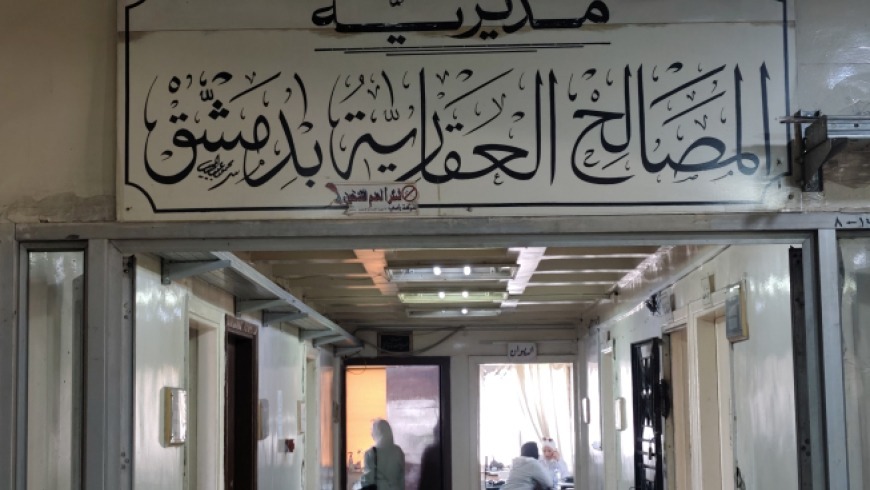
On August 7, 2025, the Ministry of Local Administration and Environment announced the resumption of real estate transfers at the Real Estate Directorates, after a hiatus of several months. The decision also abolished the bank deposit requirement, which required buyers to deposit 50% of the property’s value in an approved bank.
The decision also included abolishing the security clearance requirement and reducing the current value of the property by 30% for tax purposes, while granting citizens the right to object to the assessment.
This decision comes within a highly complex political and social context, as Syria continues to suffer from geographic and institutional divisions, a lack of trust between citizens and the state, and legal challenges related to property ownership.
This paper aims to analyze the decision from a critical perspective and provide practical recommendations for adapting it to local contexts, while ensuring justice and the rights of displaced persons.
First, the political and social context of the decision:
Since 2011, Syria has witnessed radical transformations in its political and social structure, most notably:
- The geographic and political division between regime-controlled and opposition-controlled areas, leading to divergent legal and administrative frameworks.
- Forced displacement and loss of real estate documents, with UN estimates indicating that more than half of the population has been internally or externally displaced.
- The use of security approvals as a monitoring tool, making the transfer of property in regime-controlled areas more tied to political loyalty than a legal procedure.
- The absence of an independent judiciary, which weakens citizens’ ability to object or appeal administrative decisions that affect their basic rights.
Second, an analysis of the decision from a legal and economic perspective:
From a legal perspective, abolishing the bank deposit and security approval requirements represents a shift in the philosophy of real estate management and restores respect for the principle of freedom of contract.
The reduction in the market value of real estate also reflects an implicit recognition that previous estimates were unrealistic and gives citizens a margin for objection, enhancing transparency.
However, fundamental legal issues remain:
- The lack of guarantees to protect the rights of displaced persons and internally displaced persons.
- The decision could be used to establish ownership tainted by seizure or fraud, in the absence of independent judicial oversight.
Economically, the decision has direct impacts on the real estate market, including:
- Stimulating buying and selling activity, especially in light of the scarcity of liquidity.
- Reducing indirect costs associated with bank deposits and withdrawals.
- Enhancing confidence in the land registry, which is vital in a post-conflict environment.
However, these effects remain limited in areas outside regime control, such as Sweida and northeastern Syria, where there are no official real estate institutions or a unified property registry.
Third, recommendations for adapting the decision to local contexts:
In an attempt to build a new, unified authority, civil authorities can adopt similar principles in a manner that promotes fairness and transparency:
- Adopting an ethical charter for property transfers that respects the rights of displaced persons and requires the presence of witnesses and community review.
- Forming real estate reconciliation committees, including representatives from local communities and displaced persons, to resolve real estate disputes through a consensual process.
- Documenting every property transfer digitally and openly, to ensure transparency and facilitate future review.
Conclusion:
Although the decision was issued by an official body, it opens a window for discussion about the future of property management in Syria.
Restoring individual property rights and providing legal guarantees to protect them constitutes a fundamental pillar of any national transitional justice and reconstruction project.
Therefore, adapting this decision to local contexts, away from political manipulation, could be a first step toward building independent civil institutions that restore citizen confidence and establish a just legal culture.