Executive Summary:
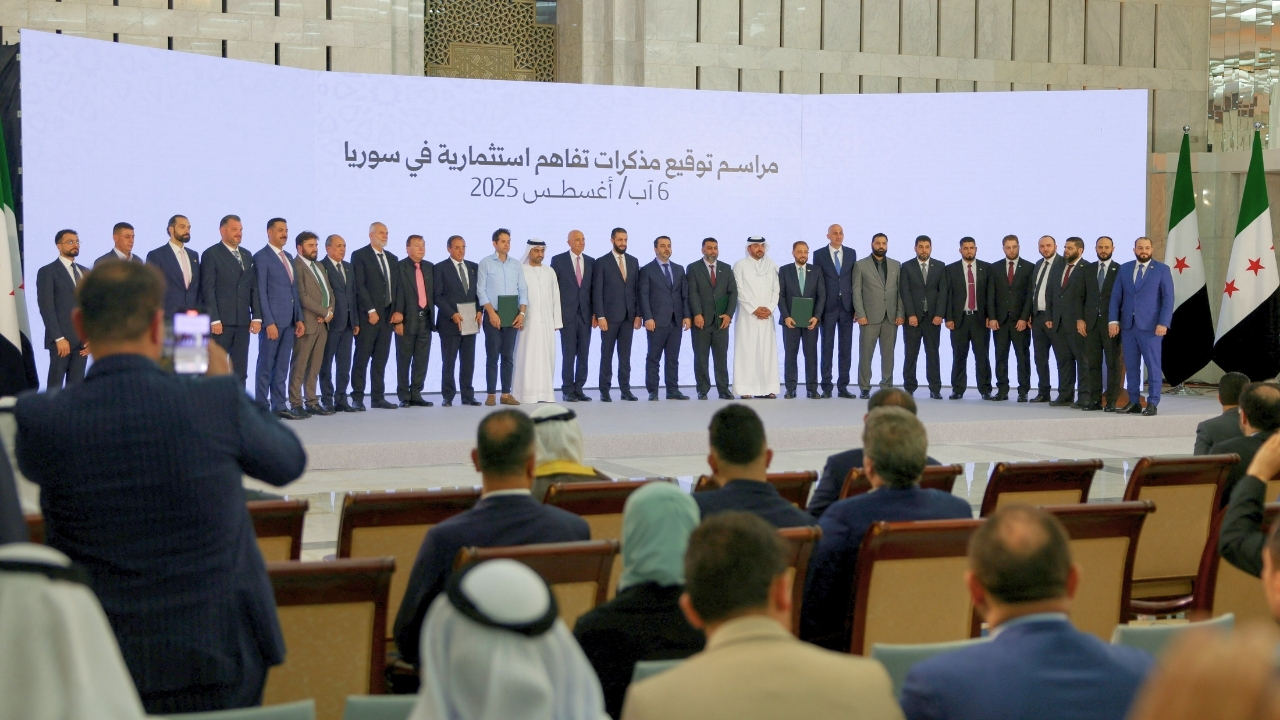
As part of the Syrian government’s efforts to rebuild and stimulate economic growth, memoranda of understanding worth $14 billion were signed with several international companies to implement strategic projects in Damascus.
While the list includes companies with a proven track record, the Italian company Yubaco stands out as a legal and institutional concern.
This paper aims to provide an objective assessment of the contracting companies, with a specific analysis of Yubaco’s case, and propose policies to enhance investment governance in Syria.
Methodology:
The paper adopts a case study approach and uses institutional and legal analysis tools to assess the operational viability and risks associated with the contracting companies.
Data was collected from official sources, media reports, international databases, and Syrian government statements.
General Context:
Post-conflict Syria seeks to rebuild its infrastructure and stimulate the economy by attracting foreign investment. The Syrian government recently signed memoranda of understanding with companies from the UAE, Qatar, Turkey, and Italy to implement projects including the development of Damascus International Airport, the construction of a metro, the construction of towers and commercial centers, and power plants.
Evaluation of Contracting Companies:
Among the contracting companies, the UAE’s National Investment Corporation stands out as an example of institutional competence. It has a strong track record in infrastructure and real estate projects and is one of the most prominent investment institutions in the Gulf. Its participation in the Damascus Metro project reflects a strategic orientation toward long-term investment and demonstrates high operational capacity.
Furthermore, the Turkish companies Cengiz and Kalyon are experienced players in the energy and construction sectors and have implemented major projects inside and outside Turkey, including airports and power plants. Their participation in energy projects in Syria as part of an international coalition enhances their credibility and indicates a desire to engage in reconstruction within clear institutional frameworks.
In contrast, the Italian company “Ubaco” raises serious questions about its contractual eligibility. It is a newly established company, not listed in the databases of major companies in Italy, and has no known record of implementing large construction projects. Furthermore, it offered its shares for public subscription in Syria without obtaining approval from the Securities and Markets Commission, which led to the suspension of the subscription and the opening of an official investigation into potential legal violations.
This behavior weakens its ability to implement a $2 billion project and exposes the government to operational and legal risks, in addition to potentially negatively impacting the country’s image if the project stalls.
Recommendations:
First, the Syrian government should establish an independent unit to audit foreign companies before contracting. This unit should adopt strict international standards to assess institutional merit, including commercial registration, operational capacity, and legal compliance.
Second, transparency and accountability should be enhanced by publishing details of investment contracts to the public and involving civil society in monitoring project implementation, ensuring genuine community confidence in the investment process. Third, it is essential to include clear penalty clauses in contracts and activate the international arbitration mechanism in the event of disputes, to ensure the protection of national interests and avoid legal stumbling blocks.
Conclusion:
Syria’s success in attracting foreign investment depends not only on the size of projects, but also on the quality of partnerships and strict governance. Companies with a proven professional track record, such as the Emirati National Foundation and the Turkish companies Cengiz and Kalyon, represent real opportunities for growth.
Cases such as Yupaco require a review of contracting mechanisms and the application of strict standards to ensure the integrity of the investment process.
Building a sustainable Syrian economy begins with selecting the right partner and establishing a transparent legal and institutional environment that places the national interest above all else.