

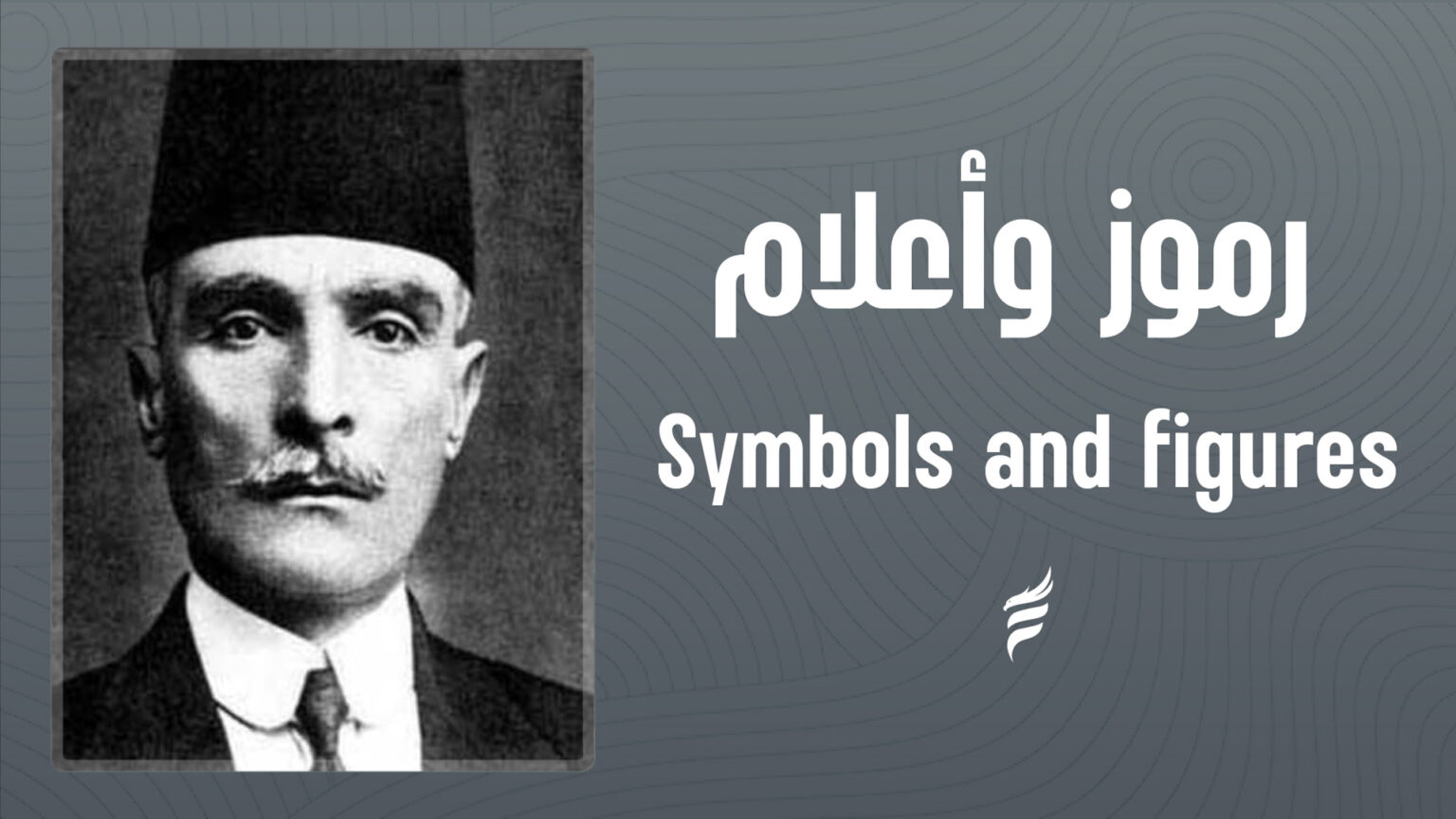
As part of the series on state symbols and flags in Syria, published by the Syrian Future Movement on its official website, we highlight one of the most influential national figures in modern Syrian history: Abdul Ghaffar Pasha al-Atrash. He
embodied the model of a rational, civil leader during a difficult period of national transformation, and served as a link
between Jabal al-Arab and the central state. A National Biography from the Mountain to the State:
- Abdul Ghaffar al-Atrash was born in 1879 in the city of Suwayda, into a prominent political family. His father, Ibrahim Pasha al-Atrash, was one of the most prominent leaders of Jabal al-Arab during the late Ottoman era.
- He received his education at the Amiriya School, demonstrating an early inclination toward political thought and an interest in public affairs, far removed from the militarism that characterized many young men in the mountain at the time.
Participation in the Political Establishment of Syria:
- In 1915, he was elected to the General Council in Damascus, in one of the first experiences of local political representation in the country.
- Following the collapse of the Ottoman Empire, he participated in the Syrian Congress of 1918, which sought to outline the contours of the Syrian national project led by King Faisal bin Hussein.
- He called for the unity of Syria and rejected the colonial partition plans imposed by the Sykes-Picot Agreement between France and Britain.
Resistance to French Colonialism:
- He refused to cooperate with the French Mandate authorities after their entry into Syria.
- He distanced himself from the country to Palestine between 1921 and 1928. He continued to support the Great Syrian Revolution from abroad.
- He did not engage in military action, but he played a political and organizational role in supporting the revolutionaries. He contributed to building political, financial, and media support networks for the revolution, especially those led by his cousin Sultan Pasha al-Atrash in 1925.
At the heart of the Syrian state:
- He returned to Damascus at the end of the revolution and participated in the negotiation phase with the French.
- He played a crucial role in restoring the relationship between Jabal al-Arab and the central Syrian state.
- He served as Vice President of the Syrian Government Council and participated in drafting legislation aimed at strengthening administrative decentralization and expanding popular participation.
- In 1941, he was appointed the first Minister of National Defense in the government of Hassan al-Hakim, after the signing of the partial independence agreement from France. This symbolic position reflected the political elite’s confidence in him.
Regional and leadership role:
- He led an official delegation to Shefa-Amr in Palestine in 1939 to conclude a reconciliation between the Druze families there, which reflected his regional standing and his ability to play an Arab unifying role.
- He represented Syria on several national and international occasions and called for the construction of an army. An independent patriot who distanced himself from foreign influence and factional loyalties.
Honoring and Departure:
- In recognition of his contributions, he was awarded the Order of the Majidi, Third Class, the War Medal, and the title of Pasha. He was also promoted to the rank of Major General in 1939.
- He died on March 9, 1942, and was buried in a grand national funeral attended by senior officials from Syria and Lebanon, as well as tribal sheikhs from various governorates, in a scene symbolizing popular loyalty to a unifying figure.
As we, in the Syrian Future Movement, commemorate the life of the national leader, Abdul Ghaffar Pasha al-Atrash, we reaffirm the need to build a modern Syrian state, inspired by its venerable national symbols, who combined speech and dignity, identity and belonging, state and homeland.
Today, we remember these leaders, not as tales from the past, but as inspiring models for shaping the future, where the new republic is built on the foundations of justice, decentralization, and inclusive citizenship, not loyalty or subordination.