introduction:
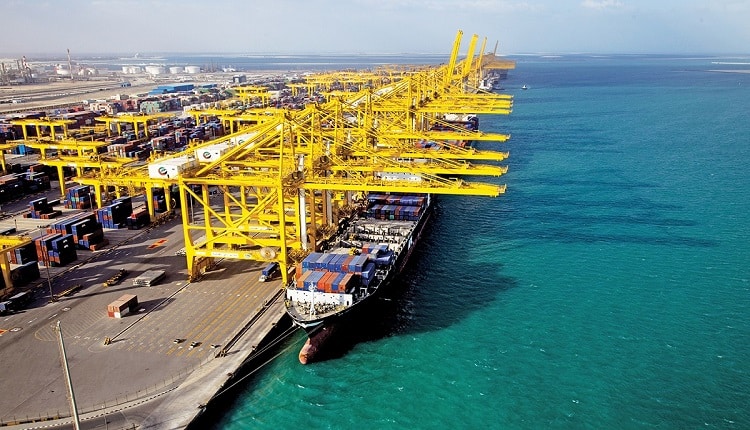
On July 13, 2025, the Syrian Transitional Government signed a strategic economic agreement with DP World, worth $800 million, to develop the port of Tartous and transform it into an industrial logistics hub linking Syria to regional and international markets. The agreement includes the establishment of a multi-purpose terminal, industrial and commercial free zones, and dry ports within the country, in addition to improving infrastructure and related services. This agreement, which was officially attended by President Ahmed al-Sharaa, represents a pivotal step in Syria’s efforts to economically re-establish itself in the region after years of isolation and blockade resulting from the ongoing conflict.
Economic and logistical dimension:
The development of Tartous Port represents a vital turning point in the Syrian economy, given the port’s position as a maritime hub between Europe and Asia and its potential to revitalize regional supply chains. The agreement signals a shift from economic stagnation to a strategic investment logic, but the success of this transformation depends on several factors, most notably:
- The local institutional infrastructure is ready to implement the project efficiently and transparently.
- The agreement should include fair terms that ensure job localization and logistical advantages for local suppliers.
- The project should be aligned with comprehensive national development plans that are not limited to the coast, but extend to connect Tartous to the Syrian interior, both economically and socially.
Logistically, DP World offers advanced expertise in managing dry ports and cargo transit centers, potentially strengthening Syria’s position as a trade corridor between Asia and Europe and restoring it to a regional role it lost during the years of conflict. Sovereignty and Legal Dimension:
The lack of precise details regarding the terms of the agreement, such as the duration of the concession, the percentage of partnership, dispute resolution mechanisms, and the limits of the Emirati company’s involvement in port management, raises legitimate questions about the extent to which Syrian sovereignty over its vital facilities is respected.
The history of major investment contracts in the region, particularly in cases of power transition, demonstrates that weak negotiation or the exclusion of local institutions from the process can result in the squandering of national assets or the creation of parallel investment paths.
Therefore, the current agreement represents a practical test of the new Syrian government’s ability to establish good governance, restore the role of oversight institutions, and enhance transparency in the management of economic affairs. Any failure to address these elements could undermine the transitional government’s legitimacy and reproduce the clientelist networks that prevailed during the previous regime.
Geopolitical dimension and regional repositioning:
Geopolitically, the agreement raises important questions about Syria’s repositioning on the regional map. The move toward an economic partnership with the UAE, rather than traditional allies during the Assad era, such as Russia and Iran, indicates a desire to shift partnerships and break free from the rigid security alignment.
The UAE, as a regional economic actor, possesses soft power to enter transitional arenas without imposing direct agendas. This allows Syria greater negotiating space in its journey to consolidate modern state institutions away from the eastern axis.
However, the influx of Gulf capital into the Syrian economy could reproduce social inequalities if not accompanied by a vision of fair distribution, and could open the door to power struggles within state institutions between various parties.
The success of this partnership remains tied to Syria’s ability to maintain its economic independence and limit interventions without embarking on paths that undermine the solidity of national sovereignty.
Structural challenges and development opportunities:
The agreement faces a number of structural challenges, most notably the fragility of the institutional structure, which is suffering from the effects of war, the lack of specialized administrative capabilities, and the absence of independent economic oversight bodies capable of monitoring the implementation of the agreement and holding the implementing parties accountable.
Unless these obstacles are overcome, the project risks becoming a “super-privilege,” managed through closed offices unrelated to the needs of the people or the conditions of justice.
Conversely, the project offers an opportunity to rebuild the economic and social contract in Syria, if properly utilized, through:
- Ensuring job localization and fair distribution of benefits.
- Launching vocational training programs and transferring administrative and technical knowledge to Syrian youth.
- Integrating the project into a national development plan encompassing all governorates, rather than restricting it to the coast.
- Expanding public accountability and involving the media and civil society organizations in monitoring implementation.
This agreement becomes more than just an infrastructure project; it transforms into a lever for building local capacities, consolidating economic decision-making sovereignty, and strengthening trust between citizens and the state.
Strategic Recommendations:
Based on the overall analysis, the Syrian Future Movement’s Economic Bureau proposes the following:
- Publish the full text of the agreement publicly to establish transparency and avoid any misinterpretations or rumors about its content.
- Form an independent national oversight committee, comprising experts from the economic sectors, municipalities, and civil society, to monitor the project’s implementation and issue periodic reports on the parties’ compliance with the agreement’s terms.
- Issuing a law on major investment partnerships, regulating the relationship between the government and foreign investors, ensuring respect for sovereignty, establishing legal controls for resolving disputes, and specifying concession terms and withdrawal conditions.
- Integrating the Tartous Port Development Project into a comprehensive national economic plan, including linking the coast to the rest of the governorates, stimulating local industries, and activating domestic production lines to serve maritime trade.
- Securing employment and employment for local residents throughout the project’s various phases, and incentivizing local suppliers, to ensure the project’s integration into the Syrian social fabric and prevent the emergence of an isolated or elite economy that serves only a limited group.
- Coordinating with Emirati authorities to establish training and vocational programs targeting Syrian youth, with the aim of building local cadres capable of managing and operating the newly established facilities and avoiding permanent reliance on foreign talent.
- Opening the door to media and human rights organizations to cover the project’s developments and providing a platform for citizens to question and express themselves, thus establishing a culture of community oversight and enhancing confidence in new economic trends.
conclusion:
The agreement signed between Syria and DP World represents a pivotal moment in Syria’s economic and political repositioning, offering an early test of the transitional government’s ability to manage vital issues within a coherent development vision. By establishing the foundations of fair partnership, protecting national assets, and activating oversight institutions, this project can transform from an investment deal into a beacon for building a new economic model in post-conflict Syria.
Ultimately, it is not infrastructure alone that rebuilds the state, but rather the methodology by which it is managed, the position citizens enjoy within it, and the ability to transform opportunities into the foundations of a socio-economic contract that restores Syrians’ confidence in the future.