
Introduction:
In a world awash with conflicts and swept by rapid geopolitical shifts, diplomacy appears to be more than just a soft tool—it becomes the first line of defense for the sovereignty of states and their international standing, especially for nations emerging from wars and internal divisions. This is where the significance of the theme of the fourth edition of the Antalya Diplomacy Forum—“Advancing Diplomacy in a Divided World”—comes into play. It aptly reflects the current global moment and highlights, at the same time, the need for developing countries and those recovering from conflict to adopt a rational and responsible approach in managing their foreign affairs.
First: The New Syria Faces the Test of Diplomacy:
The participation of President Ahmad Al-Shara‘ in this international forum marks a pivotal political moment in the history of the modern Syrian Arab Republic. It directly reflects a strategic shift in the nature of the official discourse—from a rhetoric of confrontation to one of partnership, and from a logic of alignment to a logic of conscious openness.
Through this participation, the new Syria has demonstrated its awareness that international recognition is not granted solely through military victory, but is earned through political legitimacy, diplomatic openness, and a professional international presence. This was embodied by President Al-Shara‘ in his balanced speech, in which he emphasized the importance of respecting the sovereignty of states and dialogue as a fundamental means of resolving crises.
Second: The Vision of the Syrian Future Movement
The Syrian Future Movement believes that diplomacy is not merely a formal function or a procedural path, but a strategic pillar in the post-war phase, for several reasons:
- Restoring Syria’s international legitimacy and affirming its image as a responsible state, not merely a battlefield.
- Attracting investment and enabling reconstruction through relationships built on trust and cooperation.
- Protecting national sovereignty from external pressures by diversifying international partnerships.
- Presenting the new Syrian model as a state that does not follow axis-based politics, but rather builds balanced relations based on mutual respect and shared interests.
From this perspective, we in the Syrian Future Movement consider the forum a true testing ground for emerging Syrian diplomacy, and believe that it should be built upon through the establishment of an active and balanced political presence in all regional and international arenas.
Third: The Prominent Role of Foreign Minister Dr. As‘ad al-Shaybani
Syrian Foreign Minister Dr. As‘ad al-Shaybani has emerged as a key player in this diplomatic transformation, presenting a model of active and pragmatic diplomacy, and rebuilding Syria’s foreign relations based on initiative rather than mere reaction.
Al-Shaybani has worked on:
- Rebuilding trust with the regional environment, particularly through a calculated openness toward Turkey and key Arab countries.
- Activating Syria’s presence in international organizations through qualified delegations and well-composed speeches.
- Strengthening coordination with Syrian communities abroad to serve as a supportive diplomatic arm alongside the official voice of the state.
It can be said that the Syrian Foreign Ministry, under al-Shaybani’s leadership, has become a strategic arm of the state in the phase of restoring balance and establishing regional partnerships based on mutual interests rather than political or ideological legacies.
Fourth: International Models of Diplomacy After War
- Germany after World War II
- Despite its complete destruction, Germany was able to return to the international stage through a new diplomatic approach led by “diplomacy of acknowledging mistakes and reconciliation.” It managed to build strong relationships with France, Western European countries, and then the United States, eventually becoming the driving force of the European Union.
- Rwanda after the Genocide (1994)
- Rwanda relied on reconciliation diplomacy and shared economic interests. It worked on resolving issues with its neighbors and strengthened its partnerships in Africa and globally. It succeeded in building a thriving economy, making it one of the most successful post-conflict experiences.
- Bosnia and Herzegovina after the Dayton Agreement
- Bosnia benefited from international support, but more importantly, it was able to present a unified diplomatic discourse in international forums, despite internal divisions. This allowed it to maintain its territorial unity and resist regional pressures.
- South Africa after the Apartheid System
- Nelson Mandela led a foreign policy based on closing the chapter of the past without forgetting it, and opening up to everyone. This strengthened his country’s global position while maintaining its historical narrative of struggle.
Fifth: Realist Diplomacy as a Tool for Containing Threats and Preventing Explosion:
Amid rising regional tensions, the Israeli threat, whether in the form of a potential war or ongoing military incursions, remains one of the main security and political concerns facing Syria in its transitional phase. Here, the importance of realist diplomacy emerges, not as a political luxury but as a strategic bulwark against regional adventures and the gaps that foreign powers may exploit to impose their agendas.
Adhering to rational and open political discourse, building strong regional relationships, and intensifying Syria’s presence in international forums are all elements that contribute to fortifying Syria’s national decision-making from isolation and complicating the political calculations of any party seeking to target the country, whether through threats of war or limited security breaches.
Israel, which builds a large part of its strategy towards Syria on the assumption of political exposure or the absence of a central state, will find itself facing a more complex equation with the presence of a legitimate authority capable of building political alliances and mobilizing an international stance rejecting any breach of sovereignty.
From this standpoint, the Syrian Future Movement believes that deterrence is not only military but also diplomatic, when Syria becomes an active player in regional balance equations, not merely a margin or testing ground for others’ conflicts.
In conclusion:
The forum in which President Ahmad al-Shara participated was not just an international event but a political platform to announce Syria’s return to the international stage through diplomacy. This calls us to:
- Establish a political institution that rebuilds foreign discourse based on higher national interests.
- Involve Syrian academic and diplomatic elites in formulating the national stance.
- Turn every international forum into a space for promoting Syria’s new narrative based on reconciliation, sovereignty, and openness.
In the Syrian Future Movement, amidst the divided world we live in today, we believe that conscious diplomacy is the most effective path to protect national unity, build an independent regional position, and establish a Syrian identity that unites all of its people.
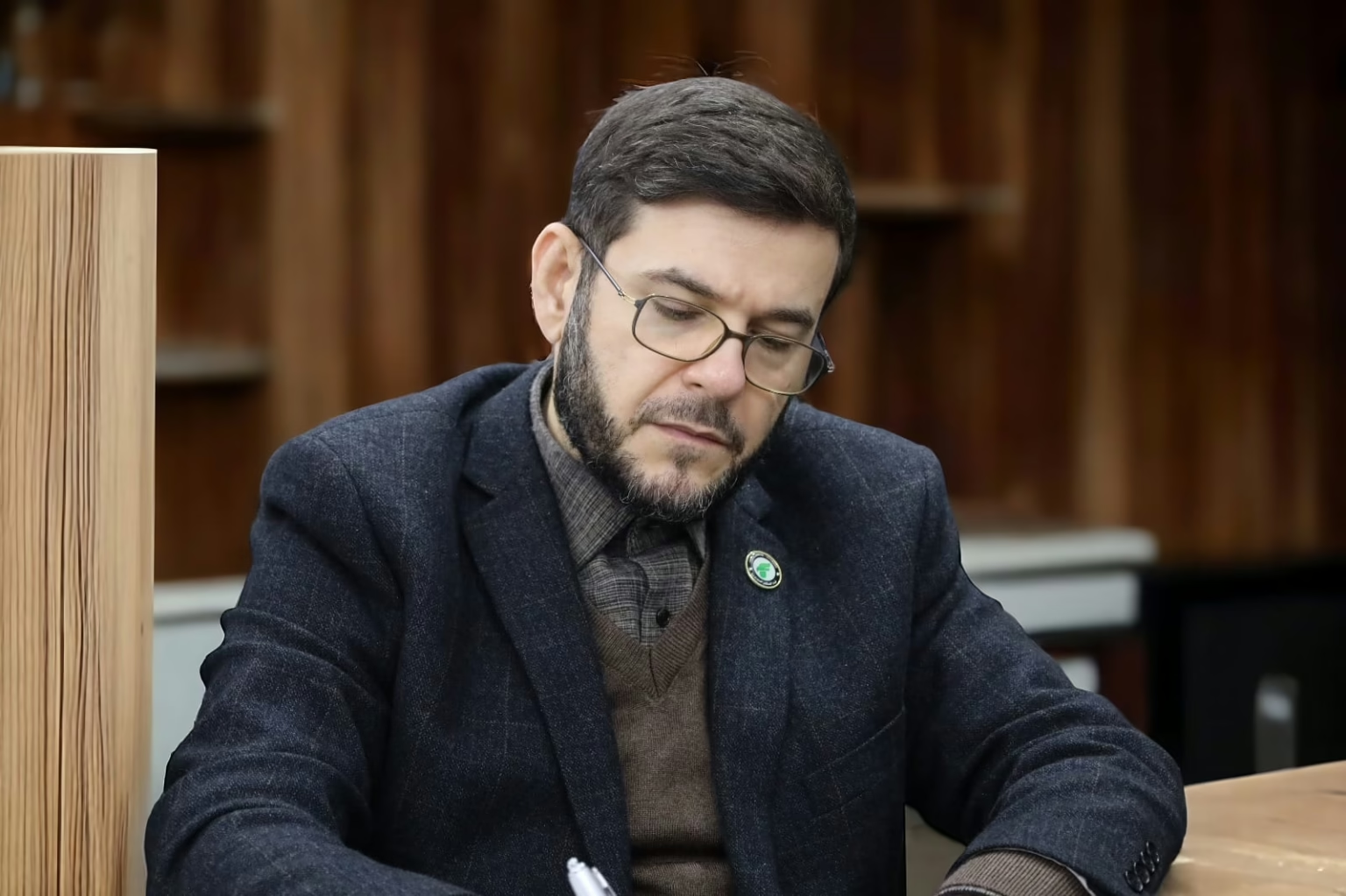
Dr. Zaher Baadarani
Presidency office
Article
Syrian Future Movement (SFM)