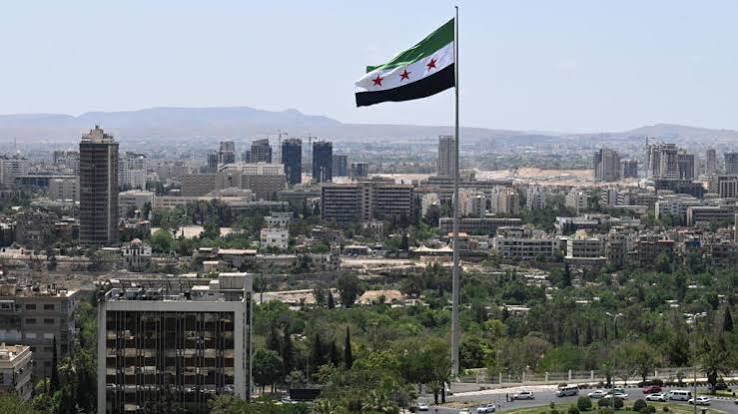

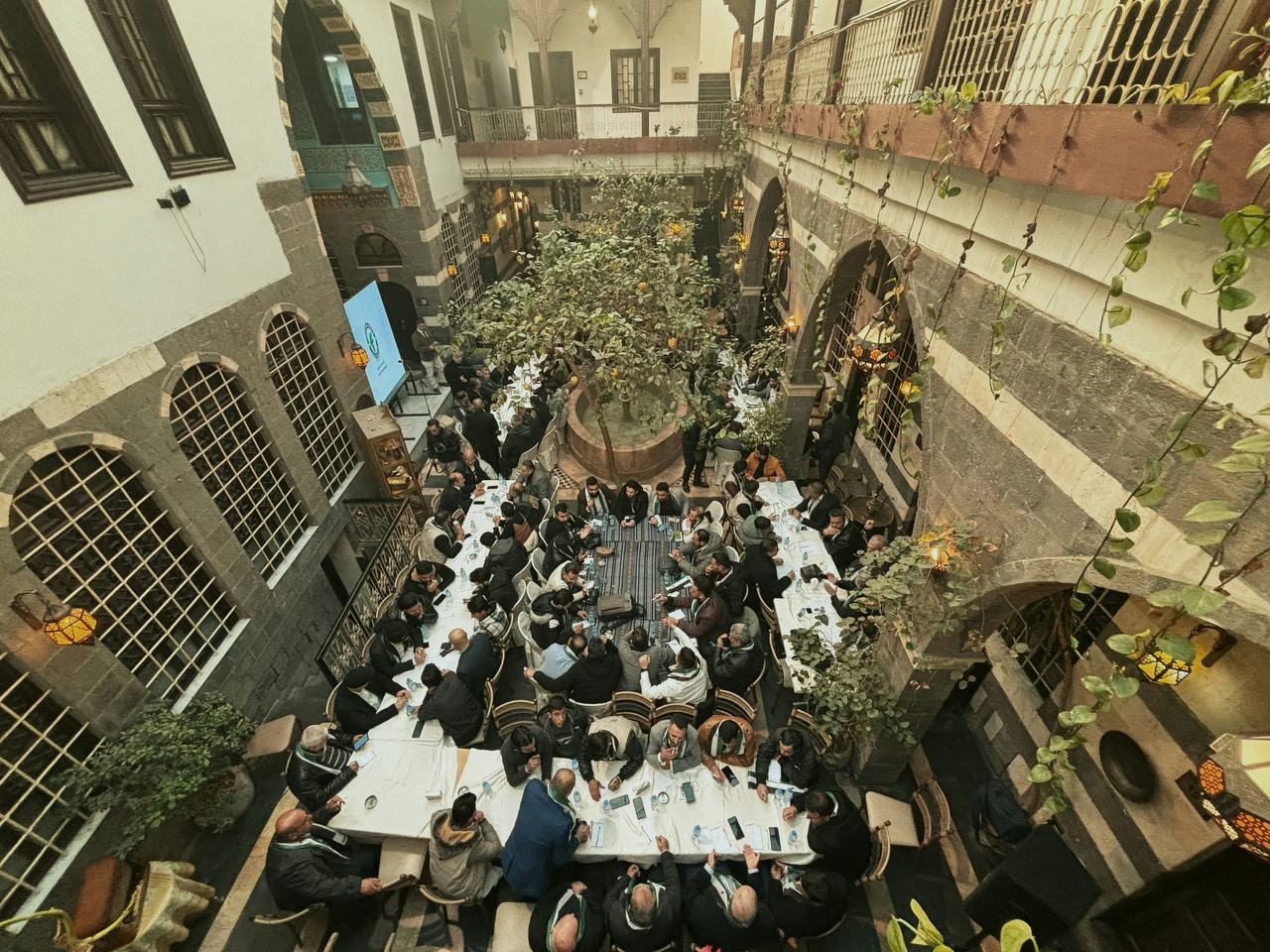
The Syrian Future Movement held a national workshop on Friday, February 21, 2025, at the “Inana” Hotel in the heart of the Syrian capital, Damascus. The workshop brought together various segments of Syrian society, including national political, media, and social figures, as well as representatives of political entities and parties from all governorates, particularly from Damascus and its countryside, in addition to members of the Syrian Future Movement in the north.
Participants were divided into 11 tables, each assigned a specific discussion topic for 60 minutes of joint dialogue.
Each table included 15 national figures, with the goal of producing specific outcomes from each discussion. These outcomes were then compiled as recommendations, organized, and presented to the participants. The Syrian Future Movement aims to adopt these recommendations within its future vision, believing in the importance of collective intelligence, reinforcing the concept of national dialogue, and recognizing the role of workshops in shaping visions and structuring ideas.
The work was completed on Friday, February 28, 2025, by gathering, refining, and linking the outcomes under the main themes assigned to each table. Below is the full text of the recommendations from the “National Workshop,” categorized by table number and topic.
Table No. (01):
National Dialogue Table:
- Activating comprehensive national dialogue.
- Engaging all spectra and components.
- Ensuring the participation of women and youth.
- Adopting competencies and quality.
- Excluding remnants of the former regime and war criminals.
- Involving Syrians abroad.
- Continuing the national dialogue even after the General Conference.
Table No. (02):
Constitution:
- Forming specialized constitutional committees.
- Adopting the 1950 Constitution as a reference point.
- Relying on experts in law and constitutional matters.
- Reviewing the negative repercussions of the 2012 constitution imposed by the former regime and correcting its impacts on the nation and citizens.
- Establishing constitutional guarantees to protect human rights and fundamental freedoms.
- Defining the powers of all authorities.
- Strengthening national identity and coexistence.
- Forming the Constitutional Court from the elected parliament.
Table No. (03):
Civil Movements and Parties:
- Raising societal awareness about the importance and role of political parties and movements.
- Strengthening political pluralism.
- Establishing regulatory laws for the activities of movements and parties.
- Involving civil society in the political process.
- Enhancing transparency and fostering trust between the nation and its citizens.
- Embedding and protecting human rights principles within society.
- Developing policies and programs aimed at improving living conditions.
- Supporting economic development and creating job opportunities.
- Forming parties based on national foundations, free from religious or racial biases.
Table No. (04):
Science and Scientific Research:
- Developing scientific infrastructure and enhancing good governance in research institutions.
- Establishing a national sovereign fund to support science and innovative scientific research.
- Encouraging international research cooperation.
- Supporting research as a solution to practical economic, social, and environmental problems.
- Enhancing the global standing of Syrian researchers, granting awards to outstanding ones, and prioritizing them in government and university appointments.
- Strengthening cooperation between universities, research centers, and various sectors domestically and internationally.
- Supporting research projects that meet societal needs.
Table (05):
Refugees and Internally Displaced Persons:
- Developing a national roadmap for the return of refugees from abroad and internally displaced persons to their original homes.
- Conducting a census of refugees and displaced persons and studying the risks of unplanned returns to cities and rural areas.
- Strengthening cooperation with international organizations and host countries to ensure an organized and safe return of refugees.
- Developing economic support programs to provide sustainable job opportunities for them.
- Supporting small and medium-sized enterprises to promote local economic growth.
- Providing psychological and social support programs for adaptation and integration.
- Improving infrastructure and reconstruction to ensure the stability of returnees.
- Giving special attention to the issue of Syrian detainees in neighboring and regional countries, especially Turkey and Lebanon, as well as in all countries worldwide.
Table No. (06):
Reconstruction:
- Establishing a specialized national sovereign fund.
- Developing strategic plans for the short, medium, and long term.
- Encouraging private investment, granting privileges to investors, and ensuring their rights.
- Focusing on repairing and developing infrastructure and linking it to future projects within reconstruction plans.
- Prioritizing local workforce employment as a strategic goal and providing necessary job opportunities.
- Strengthening cooperation with international organizations and donor countries in the reconstruction process.
- Ensuring the participation of all parties in the reconstruction process to achieve national consensus.
Table No. (07):
International Sanctions:
- Conducting a comprehensive assessment of the impact of international sanctions on the economy and citizens’ lives.
- Activating the role of diplomacy to find swift negotiated solutions for lifting sanctions.
- Forming a community delegation to highlight the impact of sanctions on the people before the international community.
- Mobilizing global figures who support lifting sanctions on Syria to alleviate citizens’ daily suffering.
- Working with the international community, at a minimum, to lift sanctions gradually within specific timeframes.
- Providing necessary legal guarantees to ensure the proper and transparent use of resources during and after the lifting of sanctions.
- Raising public awareness about the negative effects of international sanctions on the stability of the current phase.
- Innovating effective ways to support the economy alongside efforts to lift sanctions, such as prioritizing and encouraging online economic activities.
Table No. (08):
Health:
- Conducting a comprehensive survey of the current healthcare situation.
- Developing the infrastructure of hospitals and health centers.
- Ensuring fair and systematic distribution of hospitals, health centers, and medications in cities, rural areas, and villages based on population density.
- Providing advanced training programs for medical staff and supporting medical research to develop treatments and vaccines.
- Strengthening cooperation with international health organizations to exchange expertise and improve the healthcare system.
- Establishing mechanisms and enacting laws to protect medical personnel, uphold patients’ rights, and ensure the provision of necessary healthcare.
- Developing plans and strategies for managing health crises.
- Automating the healthcare sector to ensure the preservation of medical staff and patient records.
- Focusing on public health, including essential vaccinations.
- Supporting mental health services for recovery from the effects of war.
Table No. (09):
Shuraocratic Transformation:
- Defusing the conflict between the traditional concept of Shura and the contemporary concept of democracy.
- Establishing clear parameters and guidelines for a term agreed upon by both sides, prioritizing popular consent and societal interests over intellectual and political despotism.
- Strengthening mechanisms of transparency and accountability.
- Empowering and supporting civil society, especially unions, in line with the spirit of the constitution and the identity of society.
- Establishing public freedoms, including media and press.
- Encouraging civil society to actively participate in the political process and critique the authorities.
- The separation of powers is a main guarantee for achieving Shuraocratic transformation.
- Judicial independence to ensure justice.
Table No. (10):
Minorities and Majority:
- Ending the use of the terms minorities and majority, replacing them with a consensus-based term that emphasizes citizenship.
- Shifting from demands for various forms of quota allocation to prioritizing technocratic competence.
- Strengthening the concept of dialogue as a national interest for peaceful coexistence.
- Respecting diversity and considering it a cultural asset.
- Establishing effective mechanisms to combat discrimination and racism.
- Seeking common societal ground as a real guarantee to eliminate the minority-majority divide.
Table No. (11):
Youth and Women:
- Strengthening the political and societal role of women and youth, while recognizing the central role of mothers in society.
- Involving women and youth in decision-making and as factors of national stability.
- Changing the stereotypical view of the roles of women and youth in society, and assigning them the responsibilities needed to achieve their leadership roles.
- Encouraging women and youth to engage in political and civil movements and parties.
- Supporting women and youth to take on leadership positions in the state and society.
- Appointing women and youth to diplomatic positions to enhance Syria’s standing in the international community.
- Strengthening the moral resilience of the youth and women’s sectors to achieve the desired goals and outcomes.
The participants in the “National Workshop” have agreed to assign the leadership of the Syrian Future Movement to submit a copy of the recommendations to the Presidency and the Political Bureau of the Syrian Arab Republic, to serve as a contribution from the civil movements in shaping a better future for Syria, in line with the vision and aspirations of the Presidency.