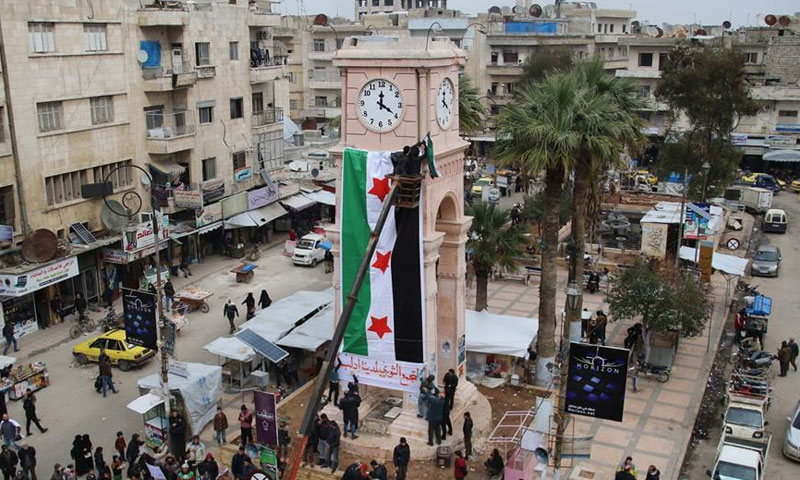
The Syrian Future Movement is following with great interest the news of the “Syrian Dialogue Forum,” held at the Cultural Center in Idlib Governorate on Friday, May 15, 2026, under the auspices of the “Al Sheikh Ahmed Tarmanini Association.” The forum saw the participation of figures from various Syrian governorates, including prominent Alawite figures, reflecting a genuine desire to overcome the painful divisions of the past.
The Syrian Future Movement appreciates this initiative and considers it a practical embodiment of the principle of inclusive national dialogue. It also commends the convening of this forum, whose central theme was “Northwest Syria: Idlib – An Experience of Reconstruction and Success Under Pressure,” as it reflects a shift in discourse from the language of conflict to the language of reconstruction and development.
The Syrian Future Movement also values the broad participation that transcended geographical and sectarian boundaries, including the presence of Alawite figures in the heart of Idlib Governorate, in a scene that represents a microcosm of the unified nation we aspire to.
In this context, the Syrian Future Movement recalls its previous statements, including:
- The “Tripartite Agreement on Suwaida” statement (dated September 16, 2025), in which we welcomed the understandings reached in Suwaida Governorate and considered them a model to be emulated in managing disputes through dialogue.
- The “Suwaida Governor’s Call for National Reconciliation” statement (dated January 20, 2026), in which we stressed that “Syrian-Syrian dialogue is the only way to preserve the country’s unity.”
- The “Rejection of Calls for Secession” statement (dated January 14, 2026), in which we affirmed that any separatist or regional projects do not serve pluralism and diversity, but rather threaten Syria’s unity and integrity.
While the Syrian Future Movement appreciates this step, it warns against the dangers of turning these meetings into mere “media headlines” or exploiting them for narrow political gains. We emphasize that the true success of these gatherings is not measured by the warmth of the reception or the size of the participation, but rather by their ability to produce tangible implementation mechanisms that translate into:
Actionable recommendations that reach decision-makers.
Popular follow-up committees to ensure that ideas do not remain confined to meeting rooms.
Based on its national responsibility, the Syrian Future Movement recommends the following:
- Generalizing and expanding the experience: Working to replicate this forum model in the remaining Syrian governorates (Hasakah, Deir ez-Zor, Raqqa, Daraa) to include all segments of society, while ensuring the presence of representatives from all groups.
- Involving youth and women: It is essential to allocate representation quotas for youth and women in future forums to ensure the inclusiveness of the dialogue and prevent its confinement to traditional elites.
- Linking dialogue to local development: The Syrian government is urged to adopt the recommendations of these forums and translate them into local development plans, particularly in the education, health, and basic services sectors.
- Documenting and disseminating outcomes: Clear and public statements should be issued after each forum, containing the recommendations and proposed mechanisms, to ensure transparency and public follow-up.
In conclusion: The Syrian Future Movement reiterates its full support for every effort that contributes to national reconciliation and building trust among Syrians. It highly values the role of civil society organizations (such as the Al Sheikh Ahmed Tarmanini Association) in sponsoring these initiatives. While we see the “Syrian Dialogue” forum in Idlib as a glimmer of hope, it also reminds us that the road to building a new Syria remains long, and that dialogue without implementation is merely a waste of time.
We hope that these meetings will translate into concrete policies and programs that impact people’s daily lives, so that Idlib truly becomes a model of reconstruction and success, as its title suggests.