
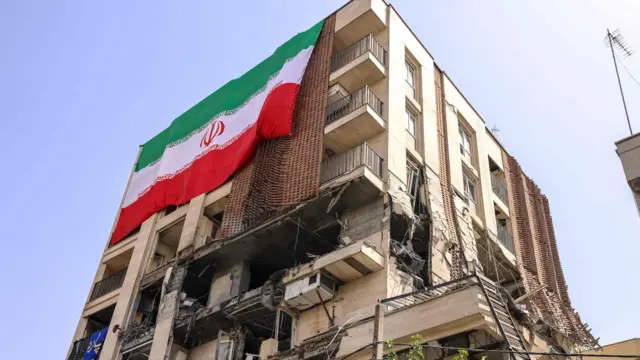
On the morning of February 28, 2026, US President Donald Trump announced—first via Truth Social and then in a televised address—the commencement of “major and sustained combat operations” with Israel against Iran, codenamed Operation Epic Fury and Operation Roaring Lion.
The initial strikes targeted key nuclear facilities (Natanz, Fordow, and Isfahan), ballistic missile sites, and Revolutionary Guard command centers in Tehran, Qom, Kermanshah, and other locations.
The announcement was accompanied by explicit statements calling on the Iranian people to “overthrow the regime” and affirming that the objective included “regime change” if necessary.
This escalation did not occur in a vacuum. It was preceded by failed rounds of negotiations in Geneva (February 2026), the arrival of the aircraft carrier USS Gerald R. Ford in the eastern Mediterranean, and widespread international warnings urging citizens to immediately leave Iran and the surrounding region.
Syria, which entered a transitional phase following the fall of the Assad regime in December 2024, faces both immediate and severe repercussions and long-term strategic opportunities.
Immediate Impacts (First Hours and Days – March 2026):
Intensified Israeli Strikes Inside Syrian Territory:
Since the US announcement, Israel has carried out a series of intensive airstrikes against targets previously linked to Iran inside Syria (ammunition depots, suspicious movements, and remaining radar sites).
Initial reports (as of the evening of February 28) indicate heavy activity in the Damascus countryside, Homs, Deir ez-Zor, and the eastern desert.
Immediate Risks: Falling debris or civilian collateral damage, which could trigger local security tensions or be exploited to incite sectarian rhetoric.
Limited Iranian attempts at retaliation through remaining proxies in Syria:
Despite the significant weakening of the Iranian proxy network in Syria after 2024–2025, small pockets of resistance (particularly in Deir ez-Zor and al-Bukamal) may still attempt to launch drones or short-range missiles toward Israel or former US bases.
The Israeli response would be immediate and severe, presenting the interim government with a rapid test of its ability to control these pockets and prevent them from becoming a pretext for wider escalation.
Immediate economic shock:
Global oil prices would surge (initial forecasts of +20–40% within 72 hours).
A potential jump in the exchange rate of the US dollar against the Syrian pound on the parallel market (could reach 20–35% within days if the escalation continues).
A temporary slowdown in the flow of aid and remittances due to the regional emergency. Medium- and long-term impacts (2026–2030):
A. Major Strategic Opportunities:
- The complete elimination of any possibility of rebuilding Iranian influence in Syria. The ongoing war will destroy Iran’s logistical and financial capacity to reinvest in Syria for years to come.
There is also a golden opportunity for the transitional government to establish effective central control over all territory without organized Iranian resistance. - A gradual decrease in the pace of Israeli military intervention inside Syria. Once Israel achieves its main objectives (destroying Iran’s nuclear and missile capabilities), its need for extensive ground strikes inside Syria will diminish.
There is greater scope for rebuilding trust in the south (Suwayda, Daraa, Quneitra) and reducing sectarian tensions. - Accelerated Regional and International Support:
The Gulf States, Turkey, and the United States will see Syria as a more secure partner after the elimination of the strategic Iranian threat.
Expectation: A significant increase in the volume of investments and economic aid during 2026–2028, provided that relative internal stability is maintained.
B. Key Challenges and Risks:
- A Temporary Peak in Strikes Inside Syrian Territory:
The first weeks and months could witness the highest rate of Israeli strikes since 2024, aimed at eliminating any potential Iranian response through Syrian territory.
There will be significant civilian risks, sectarian tensions, and renewed internal displacement in the southern and eastern regions. - Exploitation of the Security Vacuum by ISIS and Extremist Groups:
The temporary chaos resulting from the escalation could allow ISIS to regroup in the eastern desert and Deir ez-Zor.
Therefore, the transitional government is required to accelerate the building of unified and robust security capabilities within the next few months. - Continued Israeli Pressure to Keep Syria Militarily Weak:
Even after weakening Iran, Israel will seek to prevent any significant Syrian military buildup (especially in the south) for years to come.
Therefore, Damascus faces a significant diplomatic challenge in proving that it is not a threat.
Most Likely Future Scenarios (2026–2030):
- Baseline Scenario (55–65%):
The war ends within a few weeks to months with a significant weakening of Iranian capabilities, leading to a gradual decrease in strikes inside Syria. This allows a transitional government to capitalize on the power vacuum to consolidate its control and attract substantial external support.
This scenario also includes positive economic growth (5–8% annually in the best-case scenario), a gradual return of refugees, and relative stability. - Medium/Negative Scenario (25–35%):
The war drags on or transforms into a protracted, low-intensity conflict. This would mean continued periodic Israeli strikes inside Syria, resulting in a slowdown in investment and internal instability. - Severe Negative Scenario (5–10%):
Iran succeeds in reorganizing its response through remaining proxies or external allies. Syria then becomes a continuous arena for indirect conflict, leading to a return to security and economic chaos.
Conclusion:
The war that began today against Iran represents the most decisive moment in Syria’s modern history since December 2011.
It accelerates the elimination of any Iranian hope of regaining influence in Syria and opens a window of historic strategic opportunity—but it is a very narrow window, fraught with immediate and acute risks.
Success in navigating this phase depends largely on the speed and ability of the transitional government to:
- Unify the factions and security apparatuses as quickly as possible
- Contain sectarian and regional tensions (especially in the south and east)
- Build a smart diplomatic balance with Israel and regional and international powers
Syria today faces a crucial existential test: Will this war transform into the beginning of a phase of stability and genuine reconstruction, or into a new chapter of turmoil and foreign intervention?
Perhaps the answer will emerge in the coming months, not years.