
In the summer of 2019, as the world held its breath awaiting the American “Mother of All Bombs” to resolve the Iranian or North Korean nuclear issues, I wrote a warning that conventional air power, however precise and destructive, is not a “wrecking ball” for deeply entrenched ideological regimes. That year, the Trump administration faced a genuine dilemma in dealing with North Korea: how to deliver a strike that would completely cripple its retaliatory capabilities?
American analyses, particularly those from the RAND Corporation, were clear: the deep, multi-access, and concealed nuclear and military infrastructure rendered a “surgical strike” an illusion. Even a large-scale air campaign might inflict pain, but it wouldn’t guarantee the complete elimination of the ability to respond. The problem, however, was that achieving a complete guarantee of hitting the desired target in North Korea would mean the cost of the strike would reach a politically untenable level.
This illusion is not new; It has been tested repeatedly in the last decade, from North Korea to the Middle East, where past experiences have shown that air superiority and internal militia violence, however intense, are insufficient to topple regimes with deep geographical and security entrenchments; likewise, they are insufficient to defeat ideologically driven militias supported from abroad. The Syrian case is perhaps the clearest example of the limitations of these types of power.
At that stage, the use of tactical nuclear weapons was considered, an option with a very high political cost. The idea of using tactical nuclear weapons was not a “solution,” but rather an indication of the absence of one. Raising the nuclear option was not an expression of a solution, but rather of the dilemma reaching its extreme limits; where the search for “absolute certainty of destruction” becomes evidence of the absence of any practical, usable option to win a battle against a regime hidden beneath thousands of meters of granite. In other words, the moment nuclear weapons are considered is the moment the decision-maker acknowledges that conventional means have failed.
Geography and Corruption: Iran’s Invisible Shields
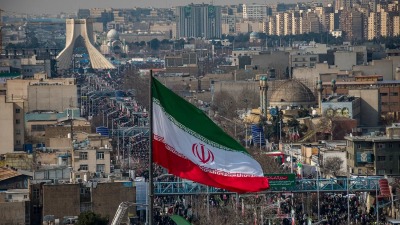
Iran is not merely a “state,” but a “complex geography” governed by deeply entrenched institutional corruption. The Iranian regime is not a conventional target; it is a geography, a system of governance, and a network of control.
Iran’s mountainous geography, which covers an area exceeding 1.6 million square kilometers, forms granite layers that render conventional weapons ineffective. Similarly, the Iranian regime is built on multiple and complex layers: religious, military, security, political, and administrative. At the same time, this authoritarian geography is intertwined with complex networks of corruption and vested interests within the state and economic structures. Corruption in the Iranian regime, while a weakness in its performance, is also a survival mechanism that makes it difficult to track and control resources, while simultaneously ensuring loyalty to the regime. This authoritarian structure is more akin to a cluster structure where coercion is distributed in a decentralized manner, rather than a hierarchical structure dependent on the power of the top.
Therefore, the intense airstrikes launched by the United States and Israel failed to eradicate the Iranian regime, nor did they succeed in dismantling it, as had been planned. The American administration dealt with Iran as it had dealt with Venezuela, believing that removing the head of the regime would lead to its collapse. This was a fundamental miscalculation.
The “After-Strike” Dilemma
Current US analyses, such as the CSIS 2026 report, confirm that the problem lies not in the “first strike,” but in the “after-strike.” A conventional air attack, however powerful, cannot technically destroy the entire military capability and will inevitably leave the Iranian regime with a “remnant” of cruise missiles, drones, and regional proxies.
To ensure that a retaliatory strike does not devastate global energy markets, the attacker needs “absolute dominance” on the ground, something Washington refuses to provide through a ground invasion and cannot achieve through air power. The result is a powerful strike, but without a decisive outcome.
Nationalism Under Fire
As we predicted, the air strikes did not lead to a “popular uprising” that would immediately topple the regime. Instead, the regime exploited the nationalist survival instinct. An external strike, especially one as violent as an air strike, with its widespread damage to infrastructure and disruption of essential services and supplies, allows official propaganda to portray the conflict as a defense of “sovereignty,” not “ideology”; of “the homeland,” not the “ruling regime.” This grants the regime an extension of its lifespan despite its internal decay.
In reality, as many reports indicate, this US-Israeli air attack has led to Iranians rallying around the flag, rather than escalating the Iranian popular uprising, which had reached its peak just before the attack.
From North Korea, not Venezuela, to Iran
The North Korean scenario of 2019 is being repeated almost verbatim in the current crisis with Iran, in terms of military geography and power dynamics. The United States possesses the capability to inflict pain on the Iranian regime, but it lacks the capacity to “execute” it from the air without risking a nuclear catastrophe. Reality demonstrates that the “inertia of geography” and the “resilience of the security establishment” are more powerful than the latest hypersonic missiles.
It seems that the success of the Venezuelan experiment—the kidnapping and arrest of the president—has bolstered the confidence of Americans and Israelis that toppling the Iranian regime is possible by removing its leadership. However, the reality of what transpired during the weeks of the most intense aerial bombardment ever inflicted on a country has proven that the Venezuelan case is the exception, not the rule.
In conclusion: Back to square one.
Regimes that possess strategic depth and underground fortifications cannot be toppled by remote control. The choice facing the major powers today is either to accept a wounded but resilient Iran, or to pursue the “tactical nuclear solution” that everyone fears, or to gamble on “long-term internal erosion,” which is not accelerated by missiles as much as it is hindered by failed military intervention. The airstrikes failed not because they were weak, but because they were asked to do what they could not.
Perhaps the clearest lesson was not only in Iran, but was already clearly demonstrated in Syria, where years of continuous war failed to topple the regime.
The regime and Russia were unable to dismantle the armed Islamist militias; rather, they reshaped the balance of power on the ground.
Between Damascus and Tehran, the same truth is repeated: regimes with geographical and security depth are not toppled from the sky or by militia wars, but rather erode—if they erode at all—from within, as happened with Bashar al-Assad’s regime. However, in Iran, there is no organized political opposition force, nor are there armed militias supported from abroad to weaken the regime. As for the Iranian popular movement, it was aborted by this devastating war waged by those who launched it.
What the 2026 war revealed was not Iran’s strength, but the limitations of its air power itself. When the capacity for destruction exceeds the capacity to control the outcomes, military superiority becomes a strategic dilemma. The question that will remain is whether this air war on Iran increased the likelihood of the Iranian people overthrowing the regime, or whether it contributed to weakening the popular movement and strengthening the regime.