
Executive Summary:
Since late 2024, Syria has witnessed an unprecedented return of internally displaced persons (IDPs) and refugees, primarily to the governorates of Damascus, Aleppo, and Idlib.
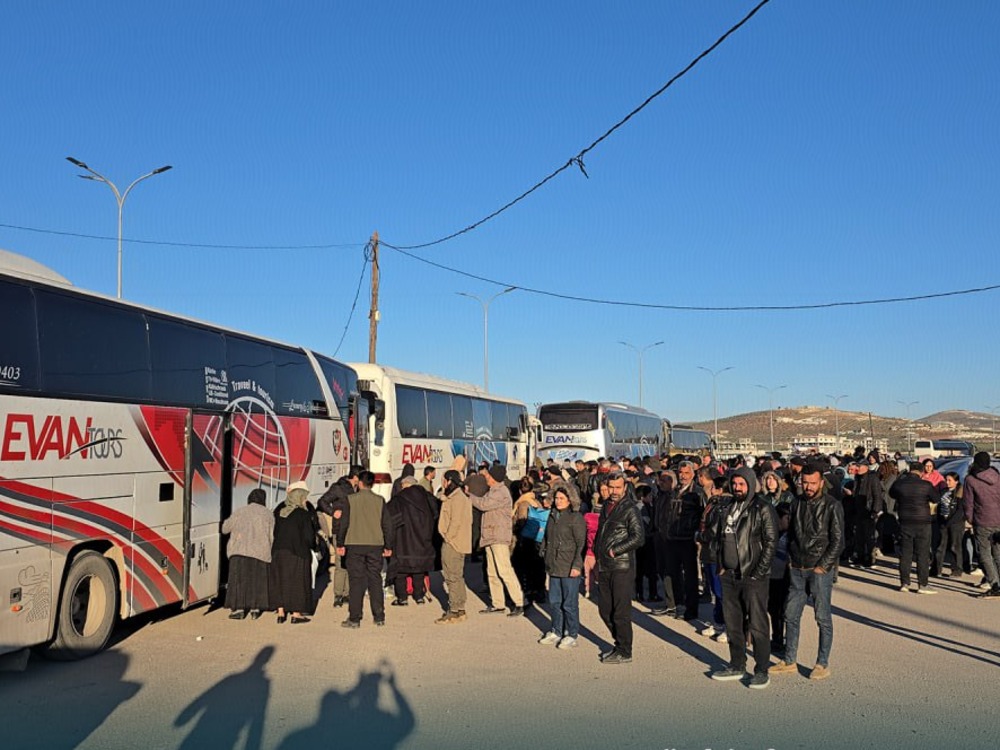
In March 2026, approximately 400 families returned to the Afrin region in the northern Aleppo countryside after eight years of displacement in the Hasakah Governorate.
This research paper, published by the Research and Studies Department of the Syrian Future Movement, aims to analyze this return within its political, security, and humanitarian contexts, based on the latest data and field reports. It presents a critical and actionable vision that contributes to transforming the return from a media event into a sustainable process that guarantees dignity and justice for returnees.
The paper employs a synthetic analytical methodology that combines a review of official documents and reports (from the United Nations, international organizations, and local civil society organizations), an analysis of media discourse and the positions of various actors, and the use of field testimonies from returnees.
The paper concludes that the return to Afrin represents a positive indicator of the beginning of the implementation of political agreements, but it faces three main challenges:
- The danger of landmines and unexploded ordnance.
- Property disputes and property seizures.
- The significant gap between return and the availability of basic services.
The paper offers five strategic recommendations to overcome these challenges, focusing on the transition from relief to early development, and building transitional justice mechanisms that pave the way for genuine national reconciliation.
First, the introduction:
The issue of the return of internally displaced persons (IDPs) and refugees stands out as one of the most prominent indicators of the possibility of stability, and at the same time as one of the most complex and sensitive issues.
Return is a restoration of life, identity, and rights, and a rebuilding of the relationship between the citizen and the state after years of estrangement and forced displacement.
This paper comes at a pivotal historical moment, as the United Nations High Commissioner for Refugees (UNHCR), in its latest update of March 10, 2026, recorded the return of more than 1.5 million Syrians from abroad, and the return of 1.734 million internally displaced persons to their areas of origin.
In this context, the return of 400 families to Afrin constituted a significant event, not only because it reflects the beginning of the resolution of one of the most complex displacement crises (the displaced people of Afrin who were displaced in 2018 following Operation Olive Branch), but also because it is a direct result of the January 29, 2026 agreement between the Syrian government and the Syrian Democratic Forces (SDF).
This paper aims to provide an in-depth reading of this return, going beyond superficial news coverage, to analyze the underlying challenges, anticipate possible scenarios, and formulate practical recommendations based on the movement’s consistent vision of supporting a safe and dignified return as a fundamental right and a necessary prelude to national reconciliation.
Second, Theoretical and Historical Framework – Afrin Between Displacement and Return:
2.1 Afrin – Historical and Geopolitical Background:
The Afrin region is located in the northwestern Aleppo countryside and is one of the predominantly Kurdish areas in Syria, alongside a diverse population (Arabs and Turkmen).
Before 2011, Afrin enjoyed relative stability, but with the escalation of the conflict, it transformed into an arena of regional and international conflict.
On January 20, 2018, Turkey launched Operation Olive Branch, in conjunction with factions of the Free Syrian Army, with the aim of expelling the Kurdish People’s Protection Units (YPG) from the region.
The operation continued until March 24, 2018, and resulted in Turkish forces and allied factions seizing control of the city center of Afrin and several surrounding villages.
This was followed by a mass exodus of more than 150,000 civilians, mostly Kurds, towards SDF-controlled areas in the Tel Rifaat district and the city of Manbij, and then to displacement camps in Hasakah Governorate (Al-Hol, Roj, and Washokani camps).
This context is crucial to understanding that today’s return is not simply a return “after years of displacement,” but rather a return to homes abandoned under the weight of a military operation and amidst a widespread demographic shift that the region witnessed during the years of Turkish and factional control, particularly against Qandil elements. Armed groups brought in Arab families from the Aleppo, Homs, and Hama countryside and settled them in the homes of the displaced.
2.2 January 29, 2026 Agreement:
Following weeks of intense clashes that erupted on January 6, 2026, between government forces and the Syrian Democratic Forces (SDF) in the eastern Aleppo neighborhoods of Sheikh Maqsoud, Ashrafieh, and Bani Zeid, resulting in the displacement of approximately 148,000 people, a ceasefire agreement was reached on January 11, followed by a comprehensive political agreement on January 29, 2026. According to a statement issued by the Presidency of the Republic, the agreement stipulated:
- The withdrawal of the SDF from the city of Aleppo and its western countryside.
- The deployment of the Syrian Army along the Syrian-Turkish border.
- The integration of the institutions of the Autonomous Administration into the Syrian state.
- The reopening of main roads and ensuring the safe return of displaced persons to their areas of origin.
This agreement provided the framework that allowed families from Afrin to return, as safe corridors were established from Hasakah to Afrin through the northern Aleppo countryside, which had come under government control. This was done in coordination with the SDF, which facilitated the movement of returnees from areas under its control.
Third, Analysis of the Current Situation – The Return to Afrin: Between Achievement and Challenge:
3.1 Size and Characteristics of the Return:
According to official Aleppo Governorate sources, a convoy of 400 families from Afrin arrived on Tuesday morning, March 10, 2026, from displacement camps in Hasakah. They were received by Khayro al-Ali al-Dawood, the head of the Afrin region, in the presence of representatives from the local government.
Sources indicate that this is the largest group to return since the January agreement, following the return of approximately 100 families earlier this year.
These families are diverse in their backgrounds, but the majority are Kurdish, with some Arab and Turkmen families who were originally displaced from Afrin in 2018 also present.
Most of the returnees are women, children, and the elderly, as many men remain with the SDF or are missing.
3.2 Main Challenges:
3.2.1 The Danger of Mines and Unexploded Ordnance:
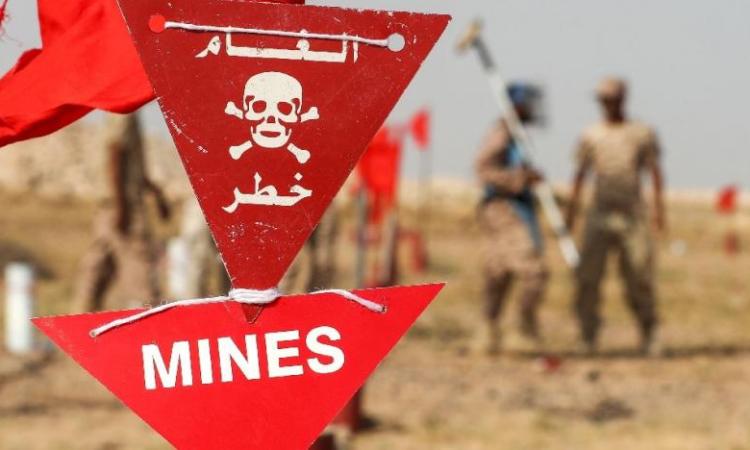
Mines and unexploded ordnance constitute the most serious obstacle on the ground to a safe return. Since the end of hostilities in January 2026, and up to the date of this paper, several tragic incidents have been documented by local networks and international organizations.
The Research and Studies Section relies on the Mine Action Project report issued on March 5, 2026, and registered with the United Nations under number LM/2026/021, which states that in 2025 alone, Syria recorded 872 incidents involving unexploded ordnance, resulting in 639 deaths and 1,124 injuries. Forty-three percent of the victims were children under the age of fifteen. In Afrin alone, the project recorded 47 incidents since the beginning of February 2026, resulting in 32 injuries and 9 deaths, the majority of whom were children playing in agricultural fields or destroyed homes.
Specialized organizations such as HALO Trust and Humanity and Inclusion, in cooperation with the Syrian Mine Action Organization, are working in the region, but the pace of work is slow compared to the scale of the contamination.
According to a report issued by these organizations on March 1, 2026, teams were only able to survey 35% of the estimated contaminated area in the northern Aleppo countryside and Afrin. This is attributed to a lack of funding (the funding gap reached $22 million) and the difficulty of accessing some areas due to the fragile security situation.
3.2.2 Property Seizure and Ownership Disputes:
Field investigations reveal that one of the most distressing problems for returnees is the presence of other families living in their homes, having settled there during their absence. A report issued on March 8, 2026, by the Syrian Return Observatory (a local civil society organization specializing in documenting the return of displaced persons), which surveyed 200 families returning to Afrin, revealed that 137 families (68.5%) returned to their homes only to find them either completely destroyed or severely damaged, while 63 families (31.5%) faced the problem of their homes being occupied by other families.
Of these 63 families, only 22 were able to reclaim their homes through agreements with the occupying families (often in exchange for small financial compensation or a promise of alternative housing), while 41 families remain in temporary shelters or with relatives awaiting a resolution.
The families currently residing in the homes of the returnees originate from previous waves of displacement from the rural areas of Homs, Hama, and Idlib. These families were brought in by armed factions after being displaced from their homes by the Assad regime during the years when the former Syrian National Army controlled the region, as part of the demographic engineering policies implemented in Syria at that time.
Many of these families also consider themselves “displaced” and have nowhere else to go, creating a complex situation that requires a balanced legal and humanitarian intervention.
3.2.3 The Gap Between Return and Basic Services:
Returning home does not mean returning to normal life, as the Afrin region and the northern Aleppo countryside suffer from a near-total collapse of infrastructure and basic services. This analysis is based on a field report prepared by the Syrian Response Team (a local relief organization) on March 9, 2026, covering 15 villages in the Afrin countryside.
The report revealed the following:
In the electricity sector: Electricity is available for only 4 to 6 hours a day, and most families rely on private generators that lack maintenance and sufficient fuel.
In the water sector: 60% of the 87 water wells in the region are out of service due to breakdowns or fuel shortages, forcing residents to buy water from private tankers at exorbitant prices (up to 10,000 Syrian pounds per barrel).
In the education sector: Of the 42 schools in the region, only 18 are partially operational. These schools suffer from severe overcrowding (up to 50 students per class), a shortage of books and stationery, and a lack of heating.
In the health sector: Only two health centers are operating on a limited basis, one in the city of Afrin and the other in the town of Raju. These centers lack essential medicines and specialist doctors.
These figures paint a bleak picture and confirm that returning without swift and comprehensive intervention to rehabilitate services will turn the lives of returnees into a new nightmare and may force some to flee again.
Fourth, the positions of the Syrian Future Movement:
This paper does not emerge from a vacuum, but rather draws upon a body of knowledge and strategic thinking accumulated by the Syrian Future Movement through years of research and political work. This is particularly relevant given the Movement’s previous activity in Afrin, where it established the “Tawajud Educational Schools,” which attracted students who had dropped out of school. The aim here is to document this intellectual heritage and connect it to current analysis.
4.1 The study “Syrian Refugees and the Post-Liberation Question” (May 20, 2025)
On May 24, 2025, the Movement’s Scientific Office published a comprehensive study entitled “Syrian Refugees and the Post-Liberation Question,” available on the official website (https://sfuturem.org/2025/05/syrian-refugees-and-the-post-liberation-question/). The study identified five key challenges to the return of more than 1.5 million refugees and internally displaced persons:
- Legal challenges (property documentation, obtaining civil documents).
- Security challenges (landmines, the presence of remnants of armed groups).
- Service challenges (destroyed infrastructure, collapsed basic services).
- Economic challenges (unemployment, currency collapse, lack of job opportunities).
- Social challenges (demographic change, sectarian tensions).
The study called for the establishment of a supreme national reconstruction authority comprising independent experts and representatives of civil society, and for the development of a specific timetable for rehabilitating infrastructure in the areas of anticipated return, with a clear warning that a return without preparation would result in “double displacement.”
4.2 UNHCR Regional Report 66 on the Situation in Syria (March 2, 2026)
On March 2, 2026, a few days before the return of the Afrin convoy, the Future Movement issued an official statement entitled “A Reading of UNHCR Regional Report 66”
(https://sfuturem.org/2026/03/unhcr-regional-report-66-on-the-situation-in-syria/), in which it welcomed the number of returnees, which exceeded 1.5 million, and called for:
- The formation of joint local-international committees to monitor voluntary returns and guarantee the rights of returnees.
- The issuance of civil documents to returnees within a maximum period of 90 days.
- The immediate commencement of demining in liberated areas, with the allocation of sufficient international resources.
- Linking humanitarian aid to early recovery and reconstruction programs.
This statement confirms that the Syrian Future Movement was aware early on of the complexities of the return issue and offered practical, proactive recommendations. This lends credibility to his current analyses.
5.2 Recommendations:
Recommendation 1:
Launch an Urgent National Mine Clearance Campaign:
The Syrian Future Movement calls on the Syrian government and international organizations (HALO Trust, Humanity and Inclusion, and the Syrian Mine Action Organization) to launch an urgent national mine clearance campaign, focusing on:
- Allocating an emergency budget of $50 million, with the government contributing 20% and the remainder from international donors.
- Expanding the scope of surveys to cover 100% of populated, residential, and agricultural areas in the northern Aleppo countryside, Afrin, and other Syrian areas under government control by the end of 2026.
- Giving absolute priority to areas experiencing large-scale returns.
- Involving trained local teams from the region in survey and awareness campaigns, which will create job opportunities and build trust.
The second recommendation is to establish a fair, centralized mechanism for resolving property disputes:
The Syrian Future Movement calls for the formation of a specialized judicial body to resolve property disputes, as follows:
- Establishing special property courts in each governorate experiencing returns, headed by a specialized judge and including two experts from the local community (selected by the governorate and civil society).
- These courts should operate according to simplified and expedited procedures, with a maximum case resolution period of 60 days.
- The courts should accept all available means of proof (old title deeds, electricity and water bills, witness testimonies, aerial photographs) and issue rulings that are subject to appeal before the Court of Appeal.
In cases where original ownership is established for one party, the other party should be evicted within a reasonable period (not exceeding 30 days), with government assistance provided to the evicted party (temporary alternative housing, financial compensation) if they are also displaced and have nowhere else to go.
We believe this mechanism achieves a delicate balance between the rights of the original owner and the humanitarian situation of the resident party, and prevents the dispute from escalating into a societal conflict.
Recommendation Three: Transitioning from Relief to Early Recovery:
The Syrian Future Movement calls on humanitarian organizations (UNHCR, OCHA, UNDP) and the Syrian government to redirect 40% of the resources allocated to Syria from purely humanitarian aid to early recovery programs, focusing on:
- Rehabilitating basic infrastructure by urgently repairing water and electricity networks in villages and towns experiencing returns, prioritizing schools and health centers.
- Repairing partially damaged housing by providing soft loans (interest-free, with a grace period) or conditional cash grants, supplying building materials at subsidized prices, and training local teams in repair work.
- Fully operating schools by providing books and stationery, ensuring heating, appointing additional teaching staff, and rehabilitating school buildings.
- Supporting health centers by supplying them with essential medicines and medical supplies, ensuring regular salaries for medical staff, and providing ambulances.
Recommendation Four: Guaranteeing Unconditional Voluntary Return Through a National Charter:
The Syrian Future Movement emphasizes that return must remain “voluntary” and “unconditional.”
To guarantee this, we propose:
Establishing a national charter of honor, signed by all political and social forces (parties, civil society organizations, unions, and community leaders), that includes:
- Recognizing the right of every Syrian to return to their home and city, wherever they may be and whatever their affiliation.
- Prohibiting any form of forced displacement or illegal eviction.
- Protecting the rights of all Syrian communities (Arabs, Kurds, Turkmen, Circassians, and Armenians) in their areas of return, and guaranteeing their representation in local administration.
- Establishing a national compensation fund for all those who lost their homes or property due to the war, regardless of who was responsible for the damage.
- Forming local and international monitoring committees to oversee the implementation of this charter and submit periodic reports to the public.
Fifth Recommendation: Transitional Justice as a Basis for National Reconciliation:
The Syrian Future Movement goes beyond relief and administrative measures, emphasizing that physical return without justice remains incomplete and could even be a ticking time bomb.
Therefore, we call for:
- The formation of an independent national fact-finding commission, under the auspices of the United Nations and with the participation of Syrian civil society organizations, tasked with investigating violations related to forced displacement and the destruction of property committed by all parties during the conflict, and identifying those responsible.
- The prosecution of those involved in war crimes and crimes against humanity before competent national or international courts, with guarantees of fair trials and no impunity.
- The launch of a national program for community reconciliation at the local level, encompassing reparations (material and moral), symbolic apologies, commemoration of victims, the establishment of memory museums, and the involvement of returnees and residents in joint projects that rebuild trust.
We believe that transitional justice is a practical necessity to prevent revenge and rebuild the torn social fabric.
Sixth, Conclusion:
The return of 400 families to Afrin represents a pivotal moment in Syria’s post-2024 trajectory. It tests the state and society’s ability to translate political promises into tangible reality and to manage one of the most complex social processes in modern history. This return also tests the international community’s readiness to transition from the relief phase to the recovery and reconstruction phase.
The Syrian Future Movement, through its Research and Studies Department, presents this paper to the government, civil society, and international organizations, hoping it will contribute to transforming the Afrin return into a successful model to be emulated in all Syrian regions.
A safe and dignified return is the cornerstone for building a new Syria, founded on justice, equal citizenship, and dignity for all.
List of references and sources:
- United Nations High Commissioner for Refugees (UNHCR). (10 March 2026). Weekly Statistical Update on the Return of Syrian Refugees. [Available on the UNHCR website]
- United Nations Office for the Coordination of Humanitarian Affairs (OCHA). (14 January 2026). Report on Displacement in Aleppo. [Available on the OCHA website]
- Mine Monitoring Project. (5 March 2026). Annual Report 2025: Mine and Unexploded Ordnance Incidents in Syria. (Document LM/2026/021).
- Syrian Return Observatory. (8 March 2026). Survey of Returnees to Afrin: Challenges and Needs.
- Syrian Response Team. (9 March 2026). Field Report on Basic Services in Rural Afrin.
- Syrian Future Current. (24 May 2025). Syrian Refugees and the Post-Liberation Question. Scientific Office. [https://sfuturem.org/2025/05/syrian-refugees-and-the-post-liberation-question/]
- Syrian Future Movement. (March 2, 2026). Position on UNHCR Regional Report 66. [https://sfuturem.org/2026/03/unhcr-regional-report-66-on-the-situation-in-syria/]
- Presidency of the Syrian Arab Republic. (January 29, 2026). Text of the agreement between the Syrian government and the Syrian Democratic Forces.