
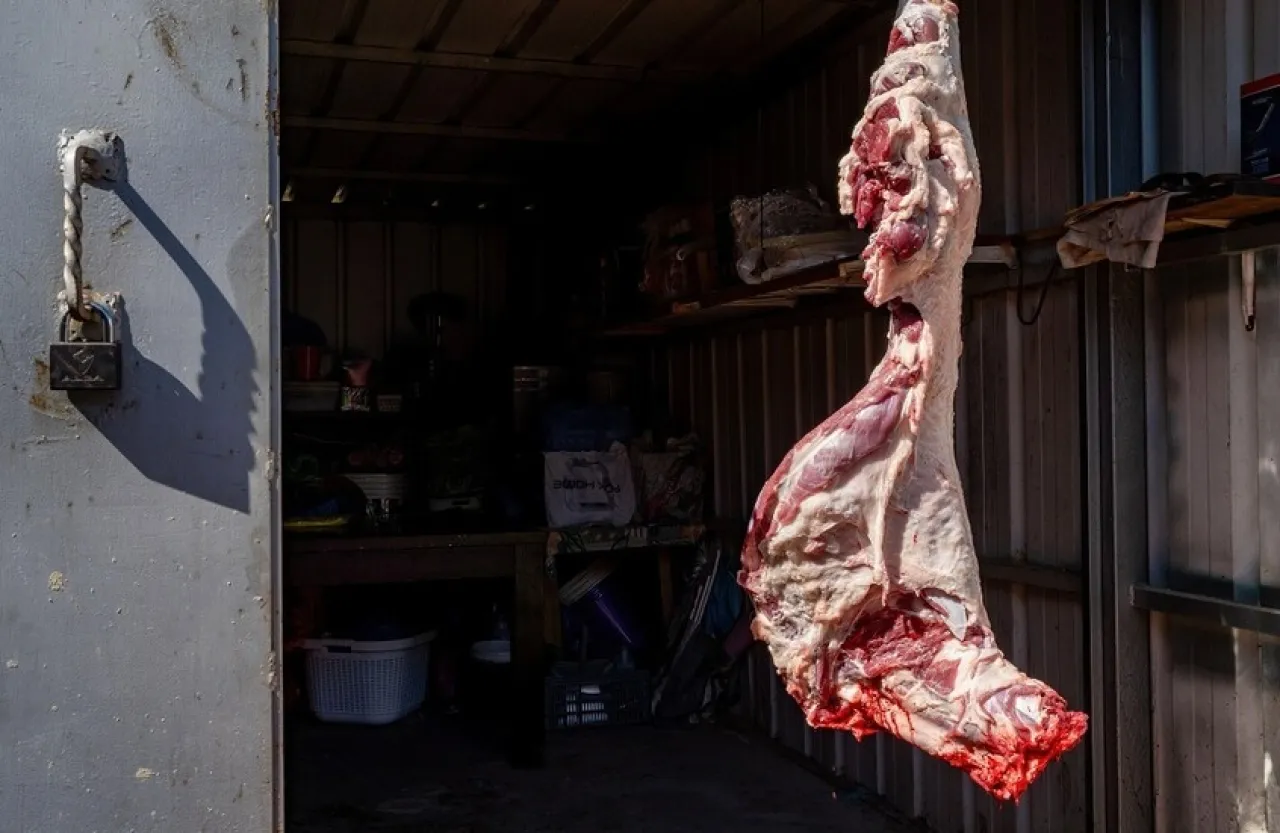
The Syrian Future Movement is closely following the announcement issued by Jordanian Minister of Agriculture, Dr. Saeb Khraisat, on March 25, 2026, confirming that the Hashemite Kingdom of Jordan has contracted with Syria to import 400 tons of slaughtered lamb (red meat). Shipments have already begun arriving in Jordanian markets through approved slaughterhouses, such as the Zablatani slaughterhouse in Damascus.
The Syrian Future Movement views this deal as a positive commercial opportunity that will return Syria to the regional export map of livestock products and provide foreign currency liquidity to support livestock breeders in the Syrian desert, especially since Jordan produces only 40% of its annual red meat needs domestically and relies on imports to cover the remaining 60%, as Minister Khraisat himself confirmed.
The Syrian Future Movement simultaneously expresses its serious concern regarding the direct impact of these exports on local prices. Markets in Damascus, Aleppo, Daraa, and Deir ez-Zor witnessed a significant increase in red meat prices during Ramadan 2026, with the price of a kilogram of minced lamb reaching 200,000 Syrian pounds (according to field reports published on February 27, 2026). Meanwhile, the price of a kilogram of local Awassi lamb in Damascus reached 2,250 new Syrian pounds (225,000 old Syrian pounds), according to publications from the Ministry of Industry and Trade and recent media reports in March 2026.
The Syrian Future Movement, which previously issued a statement entitled “Relative Improvement in Food Security Indicators for 2025 and Requirements for Transitioning Towards Sustainable Food Resilience” on March 11, 2026, on its official website sfuturem.org, reiterates that exports must be subject to clear regulations that guarantee priority for the local market, especially given the decline in sheep herds due to the drought that affected agricultural production in 2025. (As documented in FAO reports).
The Syrian Future Movement asserts that the exported quantity of 400 tons, while relatively limited compared to annual national production, exacerbates the pressure on local supply due to its timing after the holy month of Ramadan. This is especially concerning given the decline in livestock numbers resulting from the severe drought that plagued the Syrian steppe in 2015. FAO reports documented a significant decrease in herd size and a rise in production costs.
The Syrian Future Movement calls for linking all livestock and meat exports to a transparent national mechanism. This mechanism should include issuing a certificate of local surplus from the Ministry of Agriculture prior to export, establishing quarterly export quotas linked to production indicators and domestic demand, and allocating a percentage of export proceeds (no less than 25%) to support breed improvement programs and provide subsidized feed for small-scale livestock breeders in the steppe.
The Syrian Future Movement warns against the dangers of prematurely selling live livestock due to the need for liquidity, which could weaken the national herd in the medium term. It calls for the establishment of a national livestock fund, professionally and independently managed, aimed at stabilizing red meat prices and protecting the purchasing power of citizens, especially those most affected by price hikes during religious and social seasons.
The Syrian Future Movement believes that the true success of export policies is not measured solely by the number of tons exported or the amount of liquidity generated, but rather by their ability to promote sustainable domestic production, ensure the availability of affordable meat for Syrians, and achieve a balance between export requirements and national food security.
The Syrian Future Movement urges the Syrian government to establish a national export mechanism that includes:
- Export quotas contingent upon a genuine surplus after meeting domestic demand.
- Direct support for livestock breeders in the Syrian Desert (feed, vaccinations, and accessible financing).
- The establishment of a national fund to subsidize red meat prices for the most vulnerable groups.
The Syrian Future Movement affirms that national food security is a top priority, and that any export policy must serve the sustainable development of livestock and protect the purchasing power of the Syrian citizen, in order to be a real step towards building a strong agricultural economy based on a balance between export and local consumption within the framework of the National Agriculture Strategy 2026-2003.