
The Syrian Future Movement welcomes the statement issued by the Governor of the Central Bank of Syria, Dr. Abdul Qader Hasriya, on February 28, 2026.
In an interview with the Syrian News Channel, the Governor affirmed that “work is underway to fulfill the promise made by the President of the Republic to increase salaries by 400 percent,” noting that “current wages are unsatisfactory” and that improving purchasing power requires mitigating the effects of sanctions, simplifying customs procedures, and achieving macroeconomic stability.
The Syrian Future Movement considers this statement a positive step towards reforming the wage structure, especially given the current situation, which is characterized by:
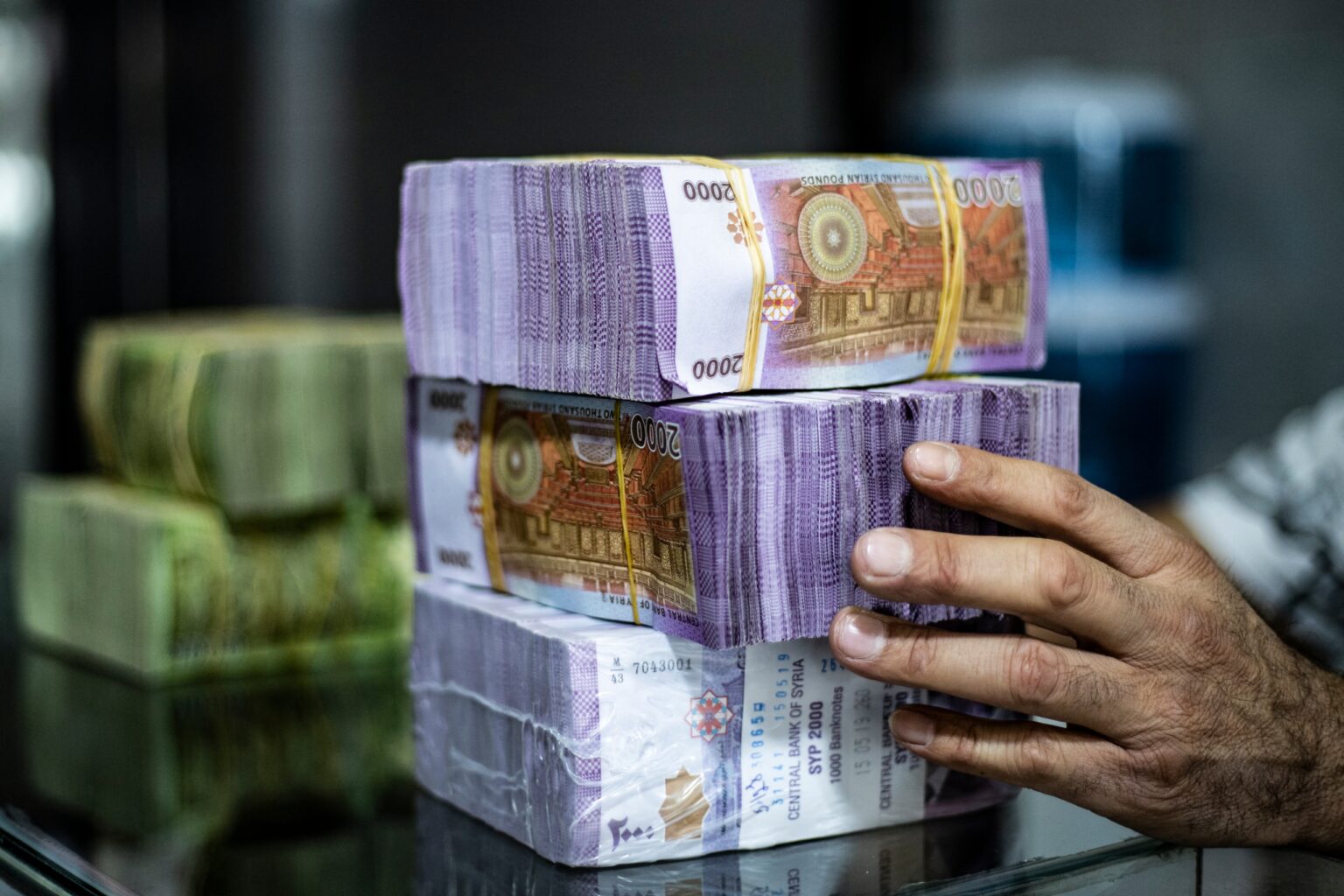
- The average salary of a government employee (subject to the Basic Civil Service Law) ranges between 900,000 and 1.5 million Syrian pounds per month (equivalent to approximately $80–$150 USD according to the exchange rates prevailing in February 2026), a level that covers no more than 10 days of basic living expenses for an average-sized family.
- The monthly public sector payroll exceeds one trillion Syrian pounds, representing approximately 40–50% of total government spending in the 2025–2026 budget.
- A previous 200% increase, enacted by Presidential Decree No. 102 of 2025, raised the minimum wage to 750,000 Syrian pounds (approximately $75), but it failed to prevent the erosion of purchasing power due to relatively high inflation rates during the 2024–2025 period.
The Syrian Future Movement asserts that a 400% increase—if implemented gradually and sustainably—could raise the average government salary to between 3.6 and 6 million Syrian pounds per month (depending on job grade), equivalent to roughly $300–$500 (based on a relatively stable exchange rate). This level is close to the minimum acceptable standard of living in a transitional economy like Syria’s.
However, the Syrian Future Movement stipulates a set of precise economic criteria for the success of this step:
- Sustainable Financing: The increase must be covered by real sources (a 20–30% improvement in tax revenues expected from restructuring collection, proceeds from unfreezing Syrian assets abroad estimated at tens of billions of dollars, and targeted regional and international support for wages during the transitional phase) without resorting to uncontrolled monetary expansion that could push inflation back into double digits.
- Link to Macroeconomic Indicators: The phases of the increase should be linked to a decrease in the inflation rate to less than 10–15% annually, a stable exchange rate within ±10%, and real GDP growth of at least 4–6% annually.
- Protection of Vulnerable Groups: Absolute priority must be given to the lowest-income segments (teachers, doctors, essential service workers, retirees, and residents of rural and remote areas), ensuring that their actual increase is no less than 450–500% to compensate for the historical gap in purchasing power.
- Parallel structural reforms: Restructuring the banking sector, developing the electronic payment system, and improving the efficiency of public spending to reduce the fiscal deficit to less than 5% of GDP.
The Syrian Future Movement calls on the transitional government to:
- Issue a clear and public timetable within the coming weeks outlining the implementation phases, beneficiary groups, and calculation mechanisms based on job grades.
- Involve labor unions, civil society representatives, and independent economic experts in joint advisory committees to draft the final mechanism and monitor implementation.
- Establish an independent oversight committee (comprising representatives from the Central Bank of Syria, the Ministry of Finance, labor unions, and civil society) to ensure transparency and equitable access, with quarterly public reports.
The Syrian Future Movement reiterates its commitment to supporting economic reforms that restore confidence in the national currency and encourage local production. It emphasizes that salary increases must be part of a comprehensive strategy that translates promises into tangible realities felt by every citizen in their daily purchasing power.