

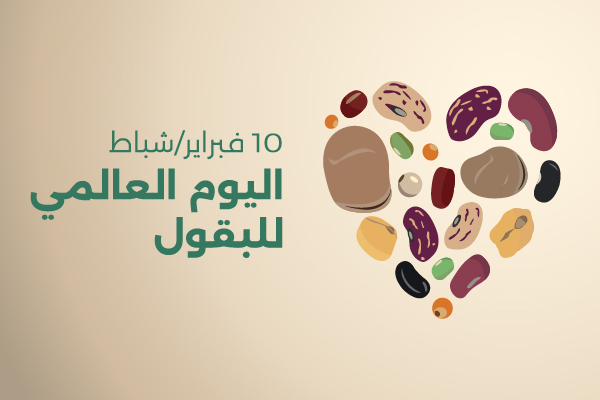
The Syrian Future Movement, with deep appreciation and national pride, commemorates World Pulses Day, established by the United Nations General Assembly in its resolution A/RES/73/251 of December 20, 2018, and celebrated annually on February 10 under the auspices of the Food and Agriculture Organization of the United Nations (FAO).
This celebration builds upon the great success of the International Year of Pulses in 2016, launched by the FAO to highlight the role of these crops in promoting global food security and sustainable agriculture.
The Syrian Future Movement believes that this year, 2026, the theme for World Pulses Day is “Pulses of the World: From Modesty to Excellence,” a slogan that reflects the desired transformation of these historically humble crops—such as beans, lentils, chickpeas, peas, broad beans, peanuts, and others—into a prominent position as a global strategic food source.
We believe this slogan aims to challenge the misconception that legumes are merely a simple or “poor” food, highlighting instead their nutritional, economic, and environmental significance, and their role in culinary innovation and global cultural diversity.
The Syrian Future Movement sees this day as a golden opportunity to emphasize the multiple values embodied by legumes:
- High Nutritional Value: Legumes are an excellent source of high-quality plant protein (up to 20-25% of their dry weight), dietary fiber which helps prevent heart disease, diabetes, and obesity, and essential minerals such as iron, zinc, magnesium, and folate, in addition to B vitamins. These properties make them an ideal and affordable alternative to animal protein sources, especially given the economic challenges facing Syrian families.
- Environmental Value and Sustainability: Legume cultivation contributes to naturally improving soil fertility by fixing atmospheric nitrogen through bacteria symbiotic with their roots, significantly reducing the need for chemical fertilizers (up to 50-100 kg of nitrogen per hectare) and protecting the soil from depletion. It also consumes less water compared to other crops, helps combat desertification and climate change, and supports biodiversity in agricultural systems.
- Economic and social value: Legumes enhance food security by providing affordable and nutritious food, support the rural economy by creating employment opportunities for small farmers and women, and reduce reliance on imports amidst fluctuating global grain and meat prices.
The Syrian Future Movement believes that in the current Syrian context, this day is doubly important. After years of conflict, mass displacement, and severe environmental degradation, Syria faces profound food, economic, and environmental challenges, including: declining agricultural production in vast areas due to drought, pollution, and damage to rural infrastructure; rising prices for basic foodstuffs; widespread acute malnutrition among children (especially those under five), pregnant women, and lactating women; and worsening rural poverty.
However, legumes have been—and remain—an integral and deeply rooted part of Syrian agricultural heritage and traditional cuisine. Chickpeas, lentils, beans, and broad beans are among the most prominent ingredients in everyday dishes such as hummus with tahini, mujaddara, ful medames, fattoush with beans, and lentils with oil and cumin.
In light of this occasion, the Syrian Future Movement calls for the launch of comprehensive and sustainable national initiatives focused on:
- Reviving and expanding legume cultivation in rural Syria by providing direct technical support, improved drought- and disease-resistant seeds, and intensive training for farmers in sustainable and integrated farming methods.
- Integrating legumes more broadly and systematically into school feeding programs, humanitarian relief programs, and healthcare centers to combat chronic and acute malnutrition and promote the growth of children and youth.
- Encouraging local and household consumption through widespread awareness campaigns via media outlets, schools, mosques, and local associations, with a focus on contemporary and innovative traditional Syrian recipes that blend heritage and modernity to enhance food sovereignty and reduce dependence on imports.
- Supporting national and cooperative agricultural research to develop new legume varieties that can withstand Syria’s changing climatic conditions (drought, salinity, and high temperatures), while leveraging international and local expertise.
- Strengthening cooperation with the Food and Agriculture Organization (FAO) and other international and regional organizations to secure additional resources, both technical and financial, for rehabilitating damaged agricultural lands, establishing pilot projects in areas of displacement and return, and developing value chains for legumes from production to marketing.
- Encouraging the private sector and NGOs to establish agricultural cooperatives and small-scale processing and packaging plants for legumes, thereby creating job opportunities and increasing the added value of Syrian produce.
The Syrian Future Movement believes that commemorating this day is not merely a symbolic or ceremonial occasion, but a practical and urgent call to transform “modesty” into “excellence”—as expressed in the 2026 slogan—through genuine recognition of the value of these humble crops and elevating them to the status of strategic and sustainable food sources that can contribute to rebuilding the national economy and achieving social stability.
In light of the great challenges facing Syria today, the Syrian Future Movement renews its firm commitment to building a strong future Syria in terms of food, environment, and economy, where every citizen has access to healthy, affordable, and diverse food, and where the land regains its natural fertility, and people regain their dignity and hope for a better tomorrow.