
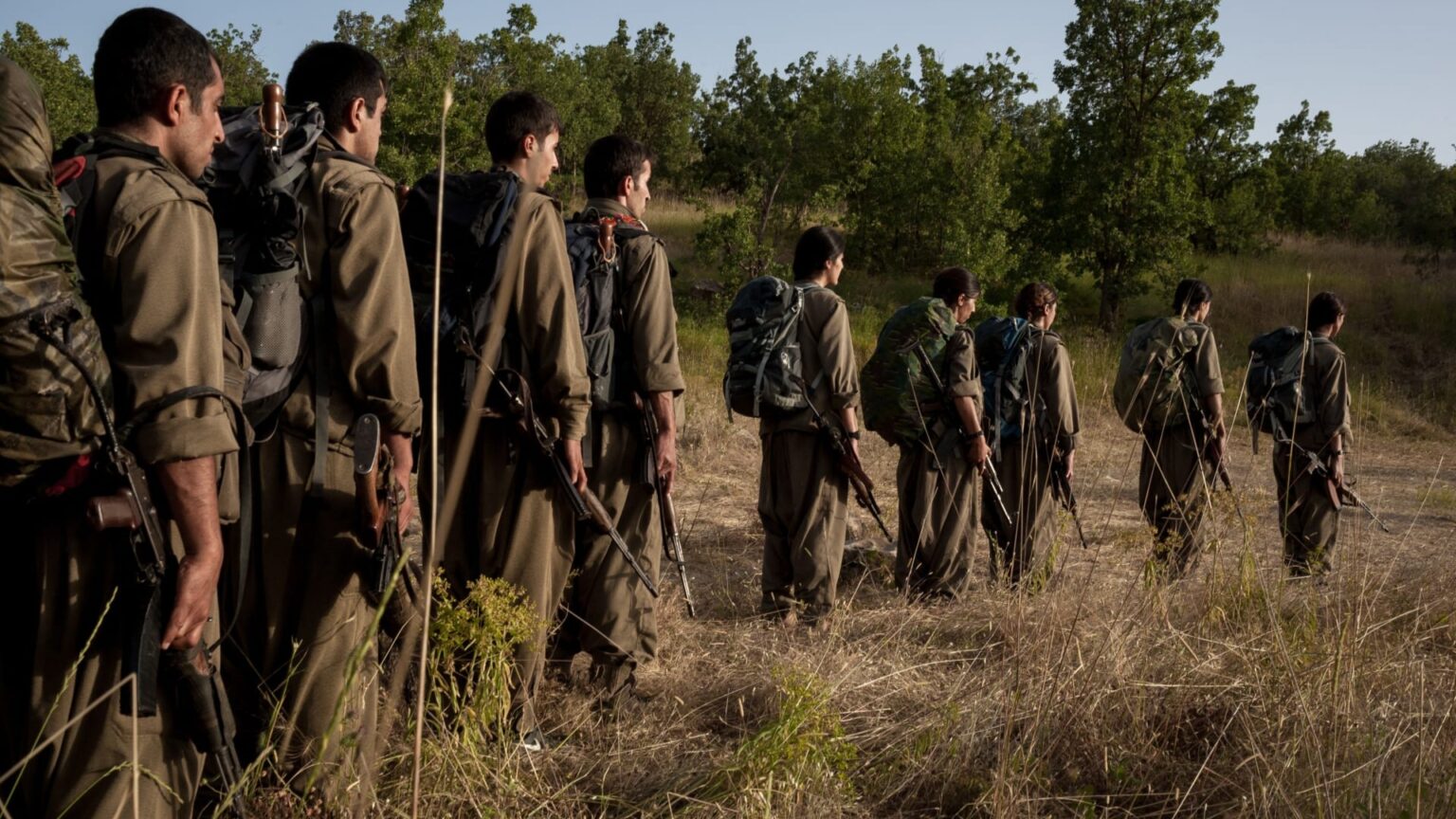
Credible media reports (Al-Monitor, Al-Majalla, etc.) began to surface in early February 2026, indicating that approximately 100 non-Syrian Kurdish fighters—including prominent leaders such as Fahman Hussein (known as “Bahoz Erdal”)—had left northeastern Syria for the Qandil Mountains in northern Iraq.
This move, though initially limited in scale, represents the early implementation of a key and sensitive clause in the January 30, 2026 agreement between the Syrian Interim Government and the Syrian Democratic Forces (SDF). This clause stipulates the removal of all non-Syrian members of the Kurdistan Workers’ Party (PKK) from Syrian territory.
The Strategic and Geopolitical Context:
This return did not occur in a vacuum.
This is a direct result of a series of military and political developments in Syria since late 2025:
- The rapid Syrian military operations in December 2025 and January 2026 (Aleppo, Raqqa, Deir ez-Zor, and parts of Hasakah) resulted in significant territorial losses for the SDF, forcing them to negotiate under real pressure on the ground.
- Direct US mediation, which was keen to preserve the SDF as a counter-ISIS force, recognized that the continued presence of the “Qandil extension” within Syria posed an obstacle to any stable settlement.
- The role of Iraqi Kurdistan (especially Nechirvan Barzani) in pressuring the SDF to sever its organizational and ideological ties with Qandil, within the context of a broader restructuring of the Kurdish movement.
The Syrian geopolitical benefits:
- Regaining a symbolic and de facto portion of sovereignty over the northeast.
- Weakening the “deep state” within the SDF, which was historically managed from Qandil through figures like Bahoz Erdal and Murat Karayılan.
- This opens a window for easing tensions with Turkey, which could contribute to accelerating the lifting of Western sanctions and attracting reconstruction aid.
This move is interpreted by Turkey as a “positive first step” (according to media outlets close to Ankara), but it still falls far short of Ankara’s demands (the complete removal or dismantling of the PKK’s influence within Syria).
The Syrian National Perspective: Opportunity and Challenge
From a Syrian national perspective, this return represents a historic opportunity to end the chapter of the “transnational project” that has fueled ethnic and sectarian divisions for a decade and a half.
The removal of non-Syrian personnel seems to mean:
- The possibility of integrating the Syrian Kurdish component (which now constitutes the vast majority within the SDF) as equal citizens within the state, free from the stigma of “affiliation with a foreign project.”
- The strengthening of the concept of a “unified Syria” and the restoration of control over strategic resources (oil, gas, and the Euphrates River).
However, this opportunity remains fraught with challenges, namely:
- The remaining number: Only 100 people in the first phase, while unofficial estimates suggest that 800–1200 other non-Syrian personnel may leave in later phases.
Most importantly, the ideological and organizational influence of Qandil remains strong within the Syrian leadership of the SDF. - Community trust: Many Syrian Kurds fear being treated as an extension of the PKK, while others see the agreement as a surrender or a sell-out of their gains.
- The absence of transitional justice: A unified nation cannot be built without accountability for violations committed by both sides, compensation for victims, and guarantees for the rights of all (language, culture, limited local governance). To ensure this return is not merely a “temporary security arrangement,” we in the Syrian Future Movement believe it must be accompanied by deeper steps, including:
- Severing ideological and organizational ties, rehabilitating Syrian leaders within the SDF, and transforming it into a purely Syrian national force, independent of any external influence.
- Clear constitutional guarantees through a permanent constitution that recognizes the rights of all, including Kurdish as an official local language, fair representation in institutions, and limited decentralization.
- Comprehensive transitional justice, the formation of impartial committees to investigate violations, compensation for victims, and the safe return of displaced persons.
- A broad national dialogue encompassing Arab tribes, Syrian Kurds, civil society, and political parties to formulate a new “social contract” that rebuilds trust.
- Neutral international support through UN, US, and European monitoring of the agreement’s implementation to prevent a resurgence of violence and expedite the lifting of sanctions.
Conclusion:
The return of Qandil cadres, though limited in number so far, is a significant initial strategic step. We believe this opens the door to restoring Syrian sovereignty, reducing tensions with Turkey, and the possibility of genuinely integrating the Kurdish component within the state.
But true success lies not in the evacuation of hundreds of people, but in building a unified state that transcends exclusion and divisions.
Syria deserves to be a homeland for all its citizens, not an extension of any foreign project.
The opportunity is there now, and national will and serious implementation will determine whether this is the beginning of the end of a painful chapter, or merely another transitional phase in our long history.