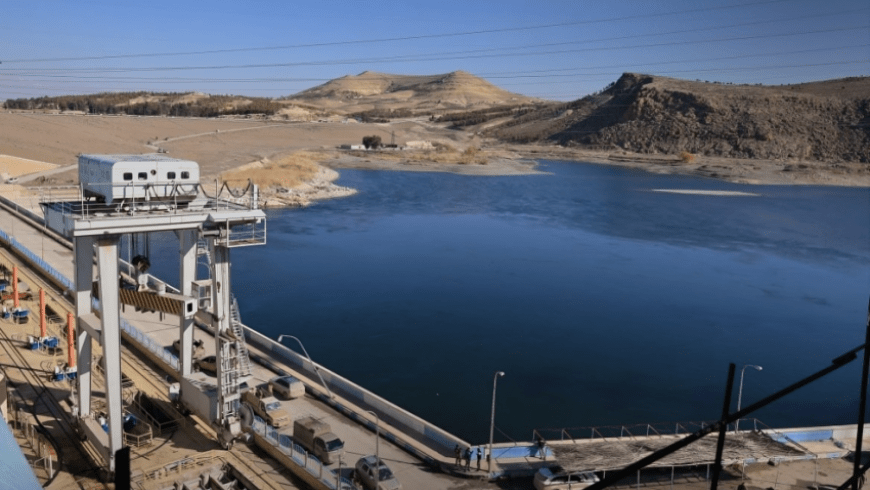
The Syrian Future Movement records its assessment of the achievement announced by the Ministry of Energy on January 31, 2026, regarding the reconnection of the Tishreen Dam to the national electricity grid, after a disruption that lasted for nearly a full year.
We consider this achievement, which was accomplished through comprehensive maintenance work on the Al-Babiri-Tishreen Dam power transmission line (230 kV), and the removal of landmines from its path by Syrian Army engineering teams, to be a necessary corrective step, but insufficient in the face of the collapse of energy infrastructure, which has accumulated over years of conflict, administrative neglect, and ineffective control over strategic resources.
From a technical standpoint, the Syrian Future Movement believes that the new connection restores the turbines (6 units, each with a capacity of 105 megawatts, for a total design capacity of 630 megawatts) to operation according to technical programs that are compatible with the fluctuating water inflow and the reservoir’s storage capacity (approximately 1.9 billion cubic meters).
However, actual production remains significantly limited – estimated under current conditions at only about 50-100 megawatts at best, compared to the maximum capacity – due to low water inflows resulting from climatic factors (increasing drought) and suboptimal management of transboundary flows with Turkey and Iraq.
Therefore, we believe that this reality highlights the previous failure to implement preventive maintenance and security protection protocols, as the prolonged disruption led to enormous economic losses estimated at billions of Syrian pounds in industrial and agricultural production, and exacerbated the humanitarian crisis in the eastern regions that depend on electricity for irrigation and essential services. The Syrian Future Movement believes that what has happened and is happening reflects a chronic weakness in the management of Syria’s energy and water resources diplomacy. Previous regional agreements have failed to guarantee fair and sustainable water flows from the Euphrates basin, exposing the system to the risks of drought resulting from climate change (according to United Nations Environment Programme reports).
Furthermore, the excessive reliance on hydropower (which constitutes a large percentage of available production) without sufficient diversification towards other renewable sources – such as concentrated solar or wind energy in the eastern regions – makes the grid vulnerable to seasonal fluctuations, with energy losses exceeding 25-30% in some periods due to the outdated infrastructure and the lack of advanced storage systems.
Nevertheless, this achievement opens up an ambitious vision for transforming the energy sector into a true engine for sustainable development and economic independence.
The Tishreen Dam, as part of the three-dam system (Tishreen, Euphrates, and Mansoura), can become a model for modern technological integration by incorporating smart grid systems with artificial intelligence to manage load and predict water inflows, raising the capacity factor from its current low levels (approximately 10-20%) to over 60% in optimized scenarios.
In our future vision, Syria will transform into a regional hub for green energy, leveraging its geostrategic location to export energy through international interconnection lines (with Jordan, Iraq, and Turkey), and building specialized human capacities in renewable energy engineering and water resource management, to achieve energy independence that supports economic and social recovery.
The Syrian Future Movement recommends the following to achieve this comprehensive vision:
- A comprehensive engineering assessment and advanced hydrological modeling through simulation studies using hydrological models (such as SWAT or HEC-HMS) to predict water inflows over 10-20 years, along with the rehabilitation of turbines and the installation of SCADA systems for remote monitoring, with the aim of gradually increasing actual production to an average of 400-500 megawatts annually.
- Strengthening integrated security protection and developing advanced security protocols that include remote sensing, drones, and specialized risk mitigation units to cover the entire Euphrates basin, with contingency plans to address any future threats, to avoid a recurrence of costly disruptions.
- A strategy for diversifying renewable energy sources by launching concentrated solar power (CSP) and photovoltaic projects in the eastern regions with a total capacity of 500-1000 megawatts within 5 years, with return on investment (ROI) calculations based on international financing models (such as the World Bank or the European Union), to reduce reliance on hydropower by 25-30% and enhance resilience against climate change.
- Transparent governance and community participation, and the establishment of an independent body to monitor energy performance, publishing periodic reports on efficiency indicators (Capacity Factor, Lost Load, System Reliability), with the involvement of independent experts and local communities in monitoring processes to ensure equitable energy distribution and prevent corruption.
- Active water and energy diplomacy, along with renegotiating Euphrates Basin agreements to ensure fair and sustainable water allocations, supported by joint studies with Turkey and Iraq, and international partnerships to finance storage and transportation projects, will transform energy into a tool for regional stability.
The Syrian Future Movement remains committed to its constructive and visionary role, advocating for a fundamental transformation that makes energy a cornerstone of national unity and shared prosperity. We see this achievement, despite its limitations, as a historic opportunity to rebuild a modern, sustainable, and transparent energy sector worthy of the Syrian people’s sacrifices and guaranteeing a better future for generations to come.