
Amid the numerous challenges facing Syria on its path toward stability and national unity, the Syrian Future Movement is following recent developments in the northeast of the country with great interest, relying on a comprehensive national vision focused on strengthening Syrian sovereignty and integrating all components of the Syrian people within a unified state based on justice and democracy.
In this context, we announce our position on the news regarding the withdrawal of Syrian army forces from the vicinity of the city of Hasakah on February 10, 2026.
The Syrian Future Movement believes that this withdrawal is part of the implementation of the comprehensive agreement concluded between the Syrian government and the Syrian Democratic Forces (SDF) in late January 2026, which aims to unify military and administrative efforts in the region.
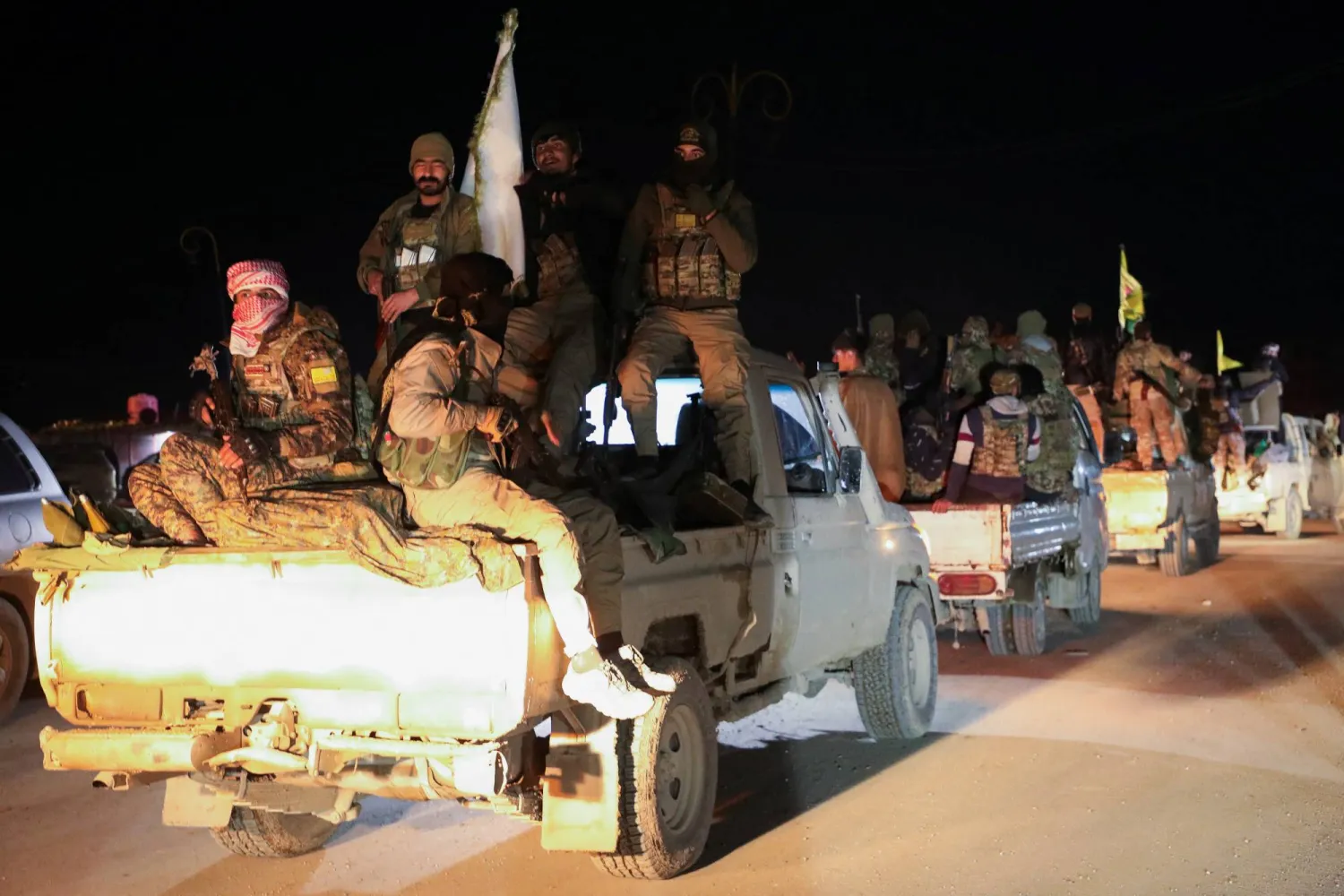
The Syrian army began withdrawing from the front lines around the city of Hasakah, with the deployment of internal security forces affiliated with the Syrian Ministry of Interior in the vacated areas to enhance security and stability.
The army’s operations command also confirmed the SDF’s commitment to the agreement, as it withdrew its forces from the southern and western front lines to designated barracks. The agreement also includes the formation of joint military brigades, such as a division comprising three brigades of SDF elements within the Syrian Army, in addition to a special brigade for Ain al-Arab (Kobani) within the Aleppo Division. The focus is on law enforcement, addressing the civil and educational rights of the Kurdish community, and the return of displaced persons.
The Syrian Future Movement views this development as a significant strategic step within the context of national efforts to end the divisions resulting from the conflict that has persisted since 2011. It reflects the possibility of achieving internal understandings that contribute to strengthening Syrian sovereignty over all its territory.
We also believe that, given the external and internal pressures, the agreement represents an opportunity to transform the northeastern regions from an area of tension into a model of national coexistence. This will enhance the state’s ability to confront shared economic and security challenges and pave the way for comprehensive reconstruction.
The Syrian Future Movement emphasizes the following positive aspects:
- Unifying the territory and forces. The withdrawal contributes to removing military contact points, thus reducing the risk of escalation and paving the way for the integration of the SDF into the structure of the Syrian Army, a step towards strengthening national unity.
- Protecting cultural and civil rights, the agreement also guarantees the resolution of education and local governance issues for the Kurdish community, reflecting a contractual approach that respects Syrian diversity without compromising sovereignty.
- Security and economic stability: The deployment of internal security forces strengthens internal peace, facilitates the return of displaced persons and reconstruction efforts, and supports sustainable development in the region.
- Looking ahead, this model could become the foundation for lasting integration based on national agreements that guarantee equal participation, thus strengthening Syria as a unified state capable of confronting regional challenges.
The Syrian Future Movement warns that this withdrawal raises some legitimate national concerns, as it may be perceived as a temporary concession and could lead to the consolidation of local control by the SDF without full integration.
Among the main drawbacks is the lack of mutual trust between the two parties, which could delay implementation or reignite tensions. Furthermore, relying on internal security forces instead of the army could be interpreted as a loss of direct control, especially given concerns about the continued existence of de facto independent Kurdish structures.
The Syrian Future Movement believes there are challenges that must be addressed, including:
- Ensuring the individual integration of SDF members without the formation of parallel entities.
- Countering external interference (such as Turkish or American pressure) and maintaining national balance to avoid any sense of marginalization among Arab or other groups.
- The agreement may face challenges in its implementation, especially given the spread of rumors on social media reflecting societal divisions.
The Syrian Future Movement calls for:
- The formation of a joint national committee comprising representatives from all parties to monitor the agreement’s implementation step by step, with transparent periodic reports for the public.
- Strengthening comprehensive national dialogue to ensure the SDF’s integration is contractually sound and permanent, based on a Syrian constitution that protects collective rights without division, with a focus on joint training programs for the forces.
- Supporting economic reconstruction programs in the northeastern regions, in cooperation with international organizations, to promote social and economic integration.
- Countering rumors and divisions through national media campaigns that promote unity, while encouraging activists to engage in constructive dialogue instead of escalation.
- Adherence to democratic principles in any future agreements is essential to ensure that Syria remains a unified and strong state, capable of building a prosperous future for all its citizens.
The Syrian Future Movement affirms its commitment to supporting any steps that strengthen national unity, while emphasizing that agreements must be based on the interests of the Syrian people as a whole, free from foreign interference. We will continue to monitor developments and urge all parties to exercise wisdom and patience in building the future of Syria.