
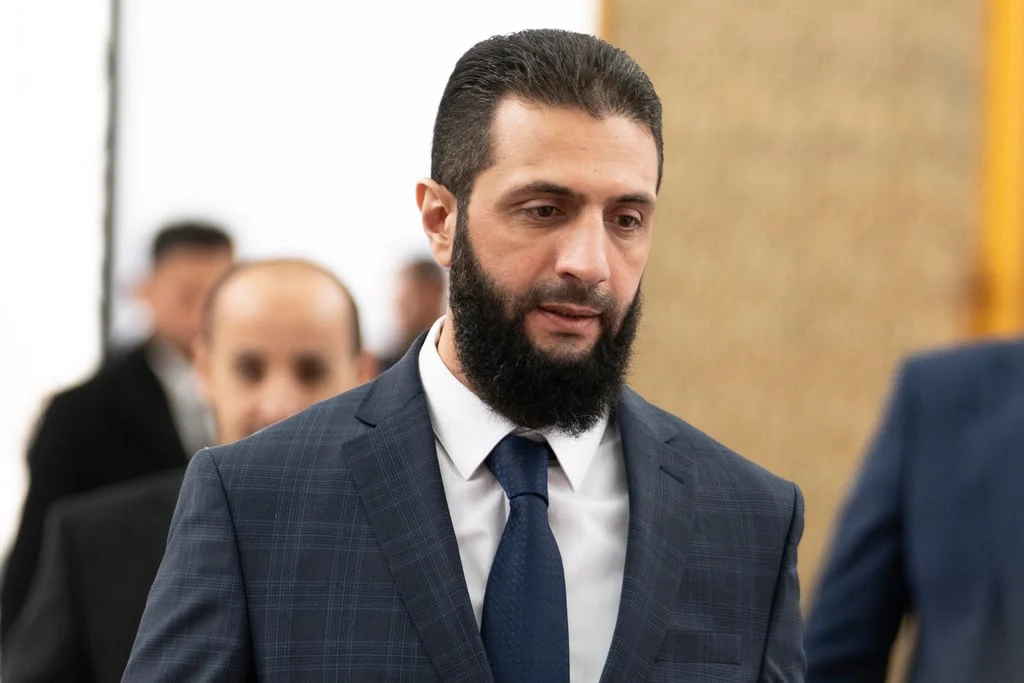
President Ahmad al-Sharaa issued Legislative Decree No. (29) of 2026.
This comes within the context of the transitional phase Syria is undergoing after a decade and a half of devastating conflict, which has led to the near-total collapse of the productive sector, the destruction of infrastructure, and a collapse in the value of the Syrian pound by more than 99% compared to 2011. It has also resulted in the accumulation of structural debt across all sectors. This decree—officially published on February 9-10, 2026—is considered one of the most prominent initial economic measures aimed at restructuring the social security system and stimulating the private sector as a key driver of recovery.
The text of the decree and its precise mechanisms:
The decree grants a full exemption from interest, fines, and additional charges stipulated in Articles 74, 77, and 177 (and other related articles) of Social Security Law No. 92 of 1959 and its subsequent amendments.
This exemption is conditional upon the payment of the outstanding basic contributions within a period of one year (365 days) from the date of the decree’s entry into force.
Categories eligible for exemption (according to official texts):
- Employers who are delinquent in paying their employees’ monthly contributions.
- Those who have previously paid their contributions in full (retroactive exemption from accumulated penalties).
- Those who are delinquent in paying work injury costs.
- Those with previous installment payment requests (with a commitment to pay the final installment within the deadline and to continue paying new contributions).
- Pensioners or their beneficiaries who received payments unjustly.
Employees benefiting from insurance procedures (service addition, percentage increase, compensation refund) who are delinquent in cash or installment payments.
Regarding the essential controls and exceptions:
- Submission of the legally required insurance forms within the deadline is mandatory.
- No form or amendment will be recognized retroactively after the decree comes into effect.
- Previously paid amounts are non-refundable.
- Any delay after the deadline will reinstate the full penalties.
The Director General of the General Organization for Social Insurance, Hassan Khatib, confirmed in official statements that the decree aims to collect core revenues (principal contributions) instead of holding onto uncollectible “dead” debts, while also strengthening dialogue with the federations of chambers of industry, commerce, agriculture, and tourism to encourage worker registration and payment of dues. The underlying economic context: Why has this measure become necessary?
- Accumulation of uncollectible debts: Decades of conflict have led to the closure of thousands of establishments, the dismissal of hundreds of thousands of workers, and a collapse in the ability to pay.
The accumulated fines and interest (which in some cases reach several times the principal debt) have become a burden preventing any settlement.
Weak revenues and sustainability: The organization relies primarily on monthly contributions to fund pensions and compensation. - The decline in official registration and tax/insurance evasion have led to a chronic deficit, exacerbated by the delay in disbursing February 2026 pensions due to technical adjustments to align programs with the “new currency.”
This decree represents a “conditional amnesty”—a common model in struggling or post-conflict economies (such as the tax amnesty programs in Lebanon from 2018 to 2020, or the debt settlements in Iraq after 2003).
The core idea is to relinquish “fictitious” (accumulated interest) in exchange for collecting “real” (principal contributions), thereby restoring liquidity to the market and improving the institution’s balance sheet.
Expected short- and medium-term benefits include:
- Releasing trapped liquidity, providing employers with hundreds of millions (or billions) of Lebanese pounds that were held as fines, allowing them to reinvest in production, purchase raw materials, or hire new employees.
- Improving the institution’s real revenues instead of theoretical, uncollectible debts, and anticipating the collection of a significant percentage of principal contributions, thus supporting the sustainability of pension payments.
- A sign of confidence for the private sector, the decree sends a message that the transitional government is adopting a flexible and realistic approach, which may encourage a return to the formal economy and the registration of new workers.
- Indirect support for the labor market by reducing the financial pressure on businesses helps preserve existing jobs or facilitate re-employment, especially in the small and medium-sized enterprises (SMEs) that form the backbone of the Syrian economy. Structural risks and challenges:
- Social imbalance and public perception, as it is seen as a “favor to capital” at the expense of workers and retirees, especially given the delayed payment of February 2026 pensions and the rising cost of living.
This may exacerbate the sense of injustice in the absence of immediate salary increases. - Risks of exploitation and evasion: Without strict field monitoring, some large employers may postpone payments or manipulate the forms.
- Limited short-term impact on revenues: The exemption reduces potential additional revenue and may not offset the loss unless 70-80% of those covered comply.
- Lack of integration with other reforms: The decree is relatively isolated. It lacks a link to a comprehensive social security reform program (such as gradually raising the retirement age, expanding the contributor base, and integrating the informal sector).
Conclusion:
Based on the above, we at the Economic Office of the Syrian Future Movement recommend improving implementation efficiency and achieving a greater impact to transform the decree from a “tactical step” into a sustainable structural reform, through:
- Joint digital and field monitoring: Establishing a joint committee (social security + chambers of commerce + Ministry of Labor) to monitor compliance, with the publication of transparent monthly reports on payment rates.
- Additional employment-related incentives: Further partial exemptions (or reductions in future contributions) for establishments that hire new workers or restart dormant production lines.
- A balanced social settlement program: A supplementary decree allocating a portion of the collected revenues to a temporary increase in pensions or compensation for delays in their disbursement.
- Long-term structural reform: Initiating a national dialogue to redraft the social security law (raising the retirement age, integrating the informal sector, and partially linking pensions to inflation).
Awareness campaign Partnership and collaboration: Widespread dissemination through chambers of commerce and the media to encourage registration, along with the provision of electronic forms for submission.
Finally, we believe that Decree 29/2026 will not be a radical solution to the insurance crisis or the Syrian economy, but it appears as a realistic cornerstone in a transitional phase that requires exceptional flexibility. Its success depends on the compliance rate (which must exceed 70%), in addition to the quality of oversight and its integration with other measures that support the purchasing power of employees and retirees.
We believe that if implemented correctly, it can become a model for “conditional settlement” policies in other sectors (taxes, electricity, customs), thus contributing to rebuilding the confidence of the private sector and citizens in the transitional state. Without this integration, it will remain a positive step but insufficient to address the deep-seated structural challenges.