
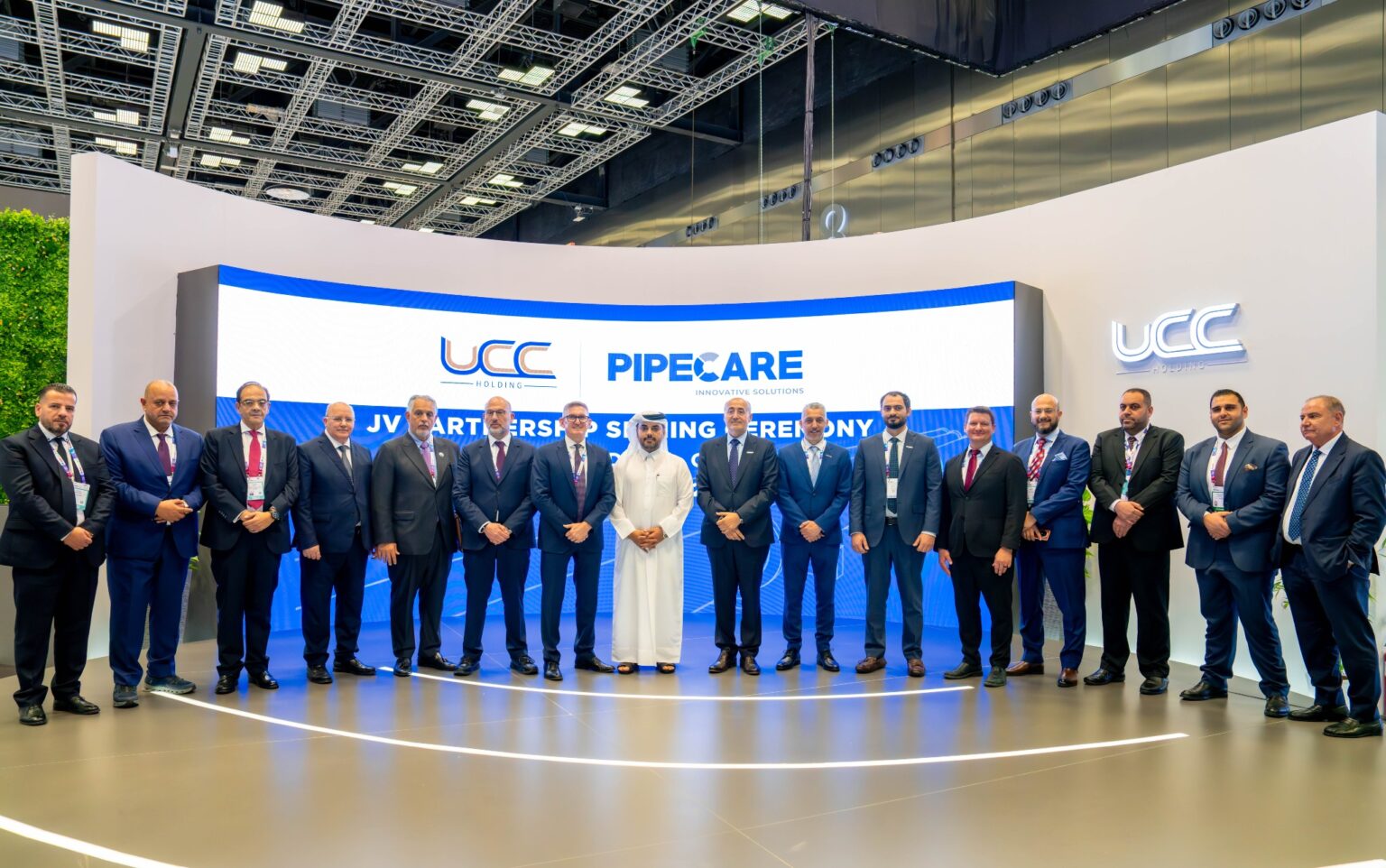
The Syrian Future Movement is following with interest the announcement by Qatar’s UCC Holding and the global PIPECARE Group of a strategic partnership agreement signed during the LNG2026 conference in Doha (February 2-3, 2026). This agreement will launch a joint venture called UCC PIPECARE, which aims to establish an exclusive national platform for pipeline safety, advanced internal inspection (ILI), structural rehabilitation, and comprehensive lifecycle maintenance, in cooperation with the Syrian Petroleum Company (SPC) and all relevant government agencies and ministries.
The Syrian Future Movement believes this agreement represents a qualitative leap forward in the reconstruction of Syria’s energy sector. The national pipeline network has suffered over 70% destruction in recent years (according to estimates by specialized international organizations such as World Pipelines and the World Bank’s 2025 reports).
This destruction has led to:
- A decrease in oil production from approximately 385,000–400,000 barrels per day before 2011 to less than 90,000 barrels per day currently.
- A decline in natural gas production to levels that limit electricity generation to 2–4 hours per day in most areas.
- Cumulative economic losses are estimated at tens of billions of dollars, with a direct impact on industry, agriculture, transportation, and essential services.
The Syrian Future Movement views the project as a multi-dimensional strategic investment:
- Restoration of Production and Exports: Rehabilitating the network could increase gas production to 8–12 million cubic meters per day within 3–5 years, revitalizing the Arab Gas Pipeline and opening export opportunities to Lebanon, Jordan, Turkey, and even Europe via regional interconnection lines.
- Improvement of Electricity: Increased gas supplies will support raising electricity generation capacity to 10,000–15,000 megawatts within the next decade, reducing power outages and boosting economic productivity.
- Job Creation and Knowledge Transfer: The project will generate thousands of direct and indirect jobs, while transferring advanced pipeline inspection and rehabilitation technology and training specialized Syrian personnel, thus building sustainable national capabilities.
- Economic Value: Initial estimates indicate that rehabilitating the network could generate additional revenue for the public treasury of up to $2–4 billion annually once stable production levels are reached, with an estimated investment cost of $5–8 billion implemented in phases.
The Syrian Future Movement views this project as part of a series of major Qatari investments in Syria (Damascus Airport $4 billion, power generation agreements $7 billion, and partnerships with Chevron for offshore exploration), reflecting a regional shift toward economic cooperation following the lifting of sanctions. UCC Holding (part of Power International Holding) has a successful track record in energy and reconstruction projects, while PIPECARE Group provides global expertise in non-destructive testing and rehabilitation technologies, ensuring high efficiency and technical safety.
The Syrian Future Movement sees this project as a model for the new Syrian economy, which should be based on:
- Specialized international partnerships with guaranteed technology and knowledge transfer, ensuring at least 70% local participation in the medium and advanced implementation phases.
- Environmental sustainability, strict adherence to international emissions standards, minimizing leakage risks, and integrating smart monitoring technologies to protect the environment and public health.
- Good governance and transparency through the establishment of a clear regulatory framework and the formation of a joint national committee comprising representatives from the government, civil society, independent experts, and the private sector to oversee implementation and the equitable distribution of revenues among regions and communities.
- Integration with a comprehensive national plan and linking the project to a national energy strategy that includes renewable energy (solar and wind), modernization of power generation plants, and development of transmission and distribution infrastructure, with the goal of achieving a balanced energy mix (50% natural gas, 30% renewable, 20% oil and other sources) by 2040.
The Syrian Future Movement supports this partnership as a necessary step towards economic recovery and calls for:
- Accelerating project implementation with a clear timeline and measurable phases.
- Ensuring that revenues are prioritized towards improving essential services (electricity, water, health, and education).
- Strengthening similar partnerships in other sectors (electricity, transportation, and industry) while preserving national sovereignty and the public interest.