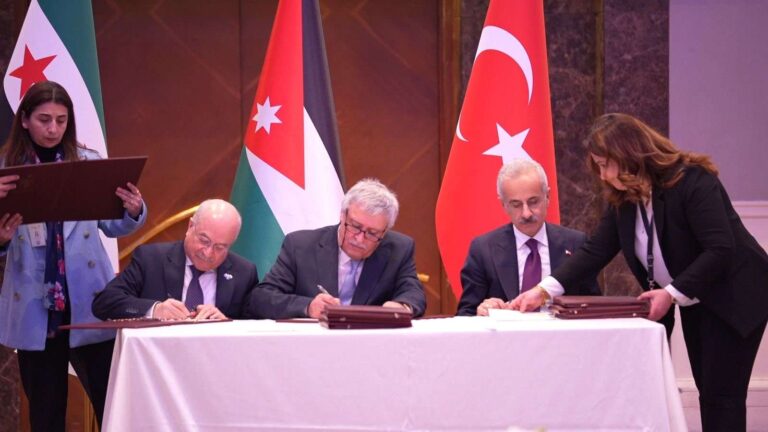
The Syrian Future Movement is following with great interest the developments related to the historic agreement signed between the Syrian government and the Syrian Democratic Forces (SDF) on January 30, 2016, which represents a bold step towards reunifying Syrian territory and ending years of division and conflict.
We, as a political movement committed to a comprehensive national vision, see this agreement as a genuine opportunity to build the Syria of the future: a civil, democratic state based on the principles of equal citizenship, respect for cultural diversity, and social justice, drawing inspiration from successful international experiences such as the 2016 peace agreement in Colombia and South Africa’s transition after the end of apartheid in 1994.
The Syrian Future Movement believes that this agreement reflects a shared will to overcome the devastating effects of the conflict that has plagued the Syrian people for many years. The agreement includes key provisions such as an immediate ceasefire, the integration of the SDF’s military and security forces individually into the Ministries of Defense and Interior after security vetting, the government’s takeover of border crossings and oil and gas fields, and the settlement of civil and educational rights for the Kurdish component, including the recognition of cultural and linguistic rights through Presidential Decree No. 13 of 2026.
We also believe that Syrian unity is fundamental to restoring full sovereignty over the land and the people, while adhering to the Charter of Coexistence that unites all segments of Syrian society.
The Syrian Future Movement views the agreement as the beginning of a new phase in Syria’s history, where ethnic and cultural diversity can be transformed from a source of tension into a constructive force.
We call for the future Syria to be a model of a pluralistic state, where everyone participates in decision-making through transparent democratic mechanisms.
Furthermore, we envision the future Syria as an economically prosperous state, investing the resources of eastern Syria in joint development projects that benefit all governorates, and strengthening regional cooperation to combat terrorism and rebuild affected areas. We see the need to draw on models such as the 1995 Dayton Accords for Bosnia, which preserved unity while recognizing ethnic particularities.
The Syrian Future Movement believes the agreement carries potential risks that must be addressed firmly.
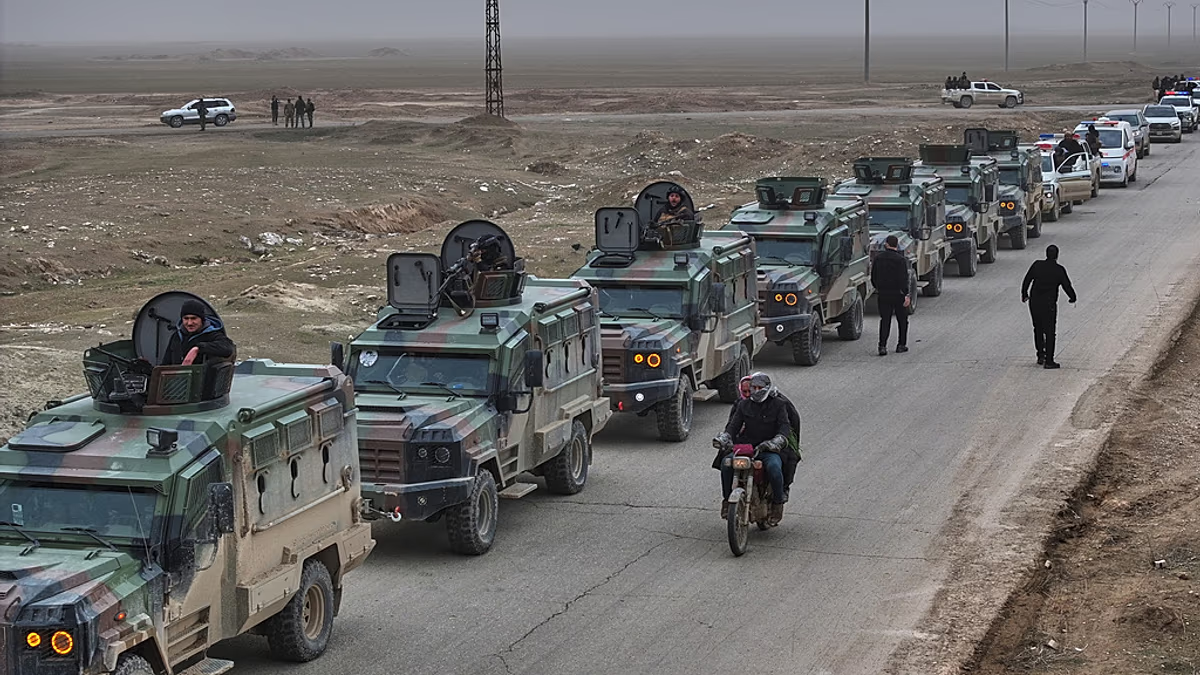
The most prominent of these is the risk of incomplete implementation of the provisions, especially given reports of a heavy security presence by the SDF in Hasakah and Qamishli, and the arrests of civilians, which threaten to erode trust between the parties.
External interference, whether from the Kurdistan Workers’ Party (PKK) or other regional powers, also poses a significant challenge that could escalate tensions. We believe other challenges include the effective management of ISIS prisons and camps, and the safe return of displaced persons, as any shortcomings could lead to a humanitarian or security catastrophe.
Furthermore, disagreements over implementation details, such as the integration of civilian institutions, could delay the confidence-building process and reinforce feelings of exclusion among some groups.
The Syrian Future Movement recommends the following:
- Binding International Guarantees: The United Nations and major international powers (such as the United States and Russia) should be called upon to provide binding guarantees for implementation, including the formation of an international monitoring committee comprised of neutral observers to ensure adherence to the agreement’s provisions, similar to the monitoring model of the Colombia agreement.
- Confidence-Building Mechanisms: Establishing “Creative National Dialogue Forums” in the eastern Syrian governorates, bringing together representatives of Arab tribes, the Kurdish community, and Christians to discuss field challenges on a weekly basis. These forums should utilize digital technologies, such as interactive applications, to gather youth perspectives, thereby enhancing popular participation and transforming the agreement into a community-based project.
- Creative Rehabilitation Programs: Developing rehabilitation programs for fighters, inspired by the South African experience, that include joint arts and cultural workshops (such as Kurdish-Arab music festivals) to promote social integration, alongside vocational and economic training focused on utilizing oil resources in sustainable projects such as renewable energy.
- Enhancing Transparency and Accountability: Establishing a national electronic platform to monitor the agreement’s implementation, enabling citizens to report violations, and forming independent transitional courts to address human rights complaints and prevent any return to escalation.
- Creative initiatives for safe return: Launching the “One Syria” media campaign, which includes short documentaries showcasing successful stories of coexistence in liberated areas, to encourage the return of displaced persons, along with economic support through partnerships with international organizations to rebuild homes sustainably.
The Syrian Future Movement affirms its commitment to supporting this agreement as a means to achieve comprehensive peace and calls on all parties to adhere to its national spirit.