
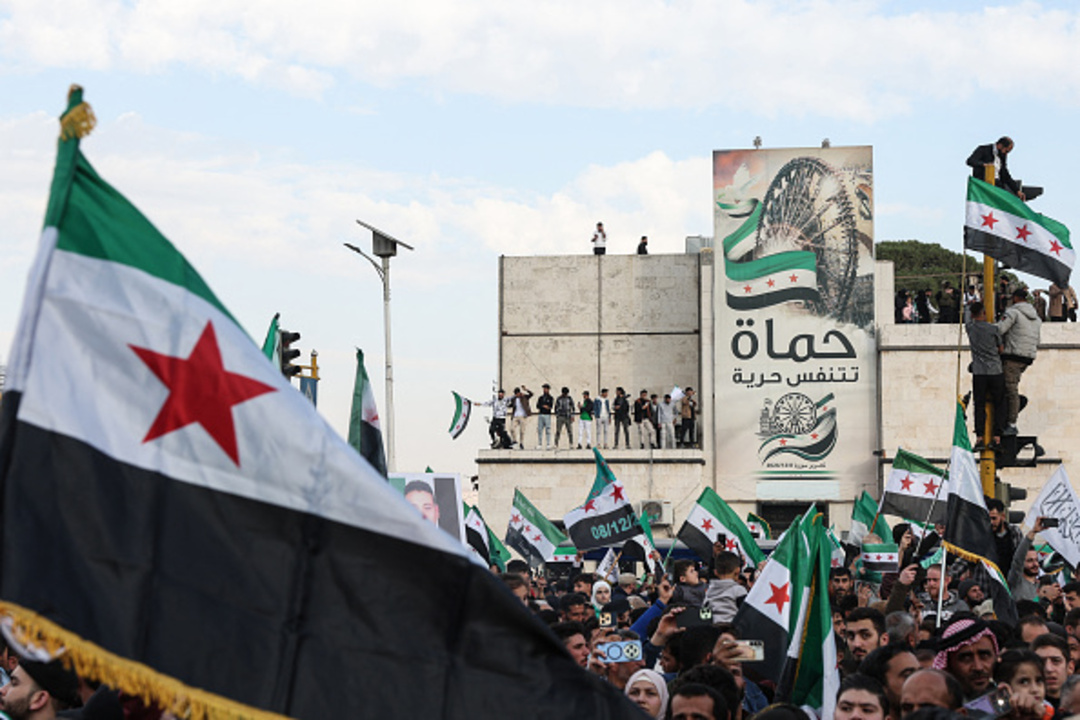
The memory of the bloody Hama massacre, which began on February 2, 1982, and lasted for 27 days until February 28, 1982, under the regime of Hafez al-Assad, is ever-present in the minds of the Syrian people.
This massacre was a brutal response to the Syrian uprising in the city, resulting in the deaths of between 10,000 and 40,000 innocent civilians, the enforced disappearance of thousands more, and the destruction of entire neighborhoods such as al-Kilaniyah and the Old Market.
The military operations included a complete siege of the city, indiscriminate artillery shelling, airstrikes, summary executions, and grave violations of human rights.
The Syrian Future Movement believes that these events were a systematic attempt to silence any dissenting voice, but they have become a symbol of Syrian resistance against tyranny.
Therefore, we reaffirm our commitment to uncovering the full truth about this heinous crime and holding all those involved accountable, including Rifaat al-Assad, who led the military operations, and the heirs of the legacy of tyranny.
The Syrian Future Movement believes that the fall of Bashar al-Assad’s regime in December 2024, which represented an extension of his father’s crimes, opens a historic window to confront the legacy of violations that has spanned more than four decades and to build a Syrian state based on the rule of law and social justice.
We call upon the Syrian transitional government, the international community, and human rights organizations to:
1- Form independent commissions of inquiry to uncover the fate of those missing and forcibly disappeared since February 1982, and to document the crimes to ensure that the perpetrators do not escape punishment, while utilizing international reports such as those issued by Amnesty International in the 1980s.
2- Support the families affected psychologically and materially, and compensate them for the losses they have suffered across generations, including the reconstruction of the destroyed neighborhoods in Hama.
3- Preventing the recurrence of such crimes by promoting education and awareness of human rights, and reforming the Syrian judicial system to ensure fair trials for those involved in the 1982 events.
4- Pressuring the international community to take decisive action in the Security Council to end the impunity that has contributed to the continuation of violations, as happened in other massacres such as the Tadmor prison massacre in 1980 or the bombing of Daraya in 2012.
The Syrian Future Movement believes that the anniversary of the Hama massacre is a call for collective action to build the Syria of the future—a free, united, and independent Syria that guarantees the rights of all its citizens without discrimination. For our part, we remain committed to the goals of the Syrian revolution in achieving civil peace and national reconciliation, so that the Syrian people become the focus of the state, not instruments of oppression.