Introduction:
Water security is a crucial element in state reconstruction, especially in the wake of the profound political transformations Syria has undergone since the fall of Bashar al-Assad’s regime on December 8, 2024. According to reports from the Food and Agriculture Organization of the United Nations (FAO), Syria experienced its worst drought in decades in 2025, leading to critically low water levels in dams, particularly in Quneitra Governorate, where 98% of dams reached “dead storage” levels by July 2025. This situation, which is expected to continue into 2026, is attributed to climatic factors such as reduced rainfall, as well as political and geopolitical legacies, including Israel’s control over water resources in the region since January 2025. This challenge also poses a threat to socio-economic stability, as water is linked to national unity and connects diverse geographical areas.
This research article, employing an analytical and historical methodology, aims to review the historical background of water resources in Syria and analyze the causes and current impacts of the crisis, drawing on reliable sources such as reports from the FAO and the United Nations Office for the Coordination of Humanitarian Affairs (OCHA).
It also presents a future vision based on sustainable strategies, derived from the recommendations of international organizations.
Historical Background of Water Resources in Syria:
Ancient Syrian civilizations relied on advanced irrigation systems in the basins of the Euphrates and Orontes rivers.
Before the outbreak of the revolution in 2011, Syria’s water storage capacity reached approximately 19 billion cubic meters across more than 185 major dams, with 60% reliance on groundwater, as reported in the FAO report “The Syrian Arab Republic: Farmers struggle amid worst agricultural crisis in decades,” published in September 2015. However, the military conflict between the former regime and the Syrian people led to widespread destruction of water infrastructure, with water stations damaged by up to 50% in some areas, as documented in the OCHA report “Syrian Arab Republic: Humanitarian Overview Issue No. 1,” published in November 2015, which also indicated that the damage would continue into 2015 due to the ongoing clashes.
In Quneitra Governorate, near the occupied Golan Heights, the main dams were a vital source of agricultural and drinking water. However, these dams have been affected by the Israeli occupation since 1967, resulting in chronic water shortages. In 2025, an exceptional drought led to a 20-30% decrease in rainfall, as documented in the FAO report “Syria Drought 2025: Worst Crisis Threatening Food Security,” published in May 2025, which described the drought as the worst crisis in decades.
This reality reflects the interplay between climate change and political factors. The occupation resulted in Israel controlling approximately 40% of southern water resources by 2025, as confirmed by several international reports in January 2025.
Furthermore, the previous drought between 2006 and 2010 caused significant losses in livestock and agriculture, paving the way for subsequent crises. OCHA reports in 2025 indicate that clashes in the northeast damaged additional water stations, such as the Khafsa station in January 2025, further exacerbating regional disparities in water availability.
Analysis of the Current Crisis: Causes and Context:
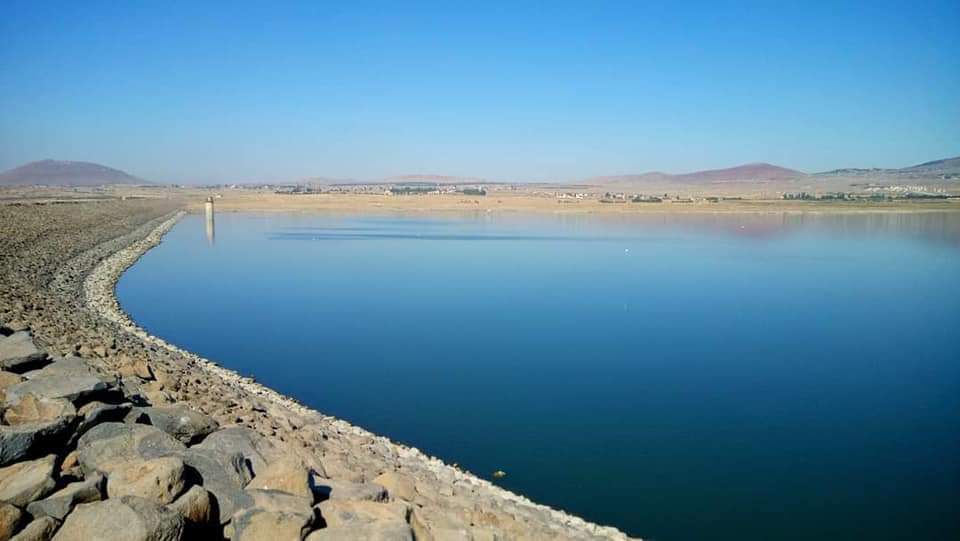
The water crisis in Quneitra will persist into 2026, with most dams reaching “dead storage” levels since mid-2025, despite some seasonal rainfall.
This is attributed to severe drought and highly absorbent volcanic soil, as well as geopolitical interventions. For example, Israel seized control of the Al-Muntara Dam in January 2025, leading to water shortages in surrounding areas, as documented in the June 2025 report, “Israel aggravates drought problem in Quneitra.” Geopolitically, Israeli control over water resources since 1967 has exacerbated the situation, with estimates suggesting control over 40% of southern Syria’s water resources by November 2025.
In contrast, governorates like Tartus and Hama have experienced relative improvement thanks to higher rainfall, highlighting regional disparities that necessitate unified national policies. The FAO report, “The Impacts of Drought in the Syrian Arab Republic,” published in July 2025, indicates that water levels will drop three months early, affecting 20% of irrigated land, with drought expected to continue into 2026.
From a climatic perspective, rainfall of only 94.9 mm in the first quarter of 2025 threatens the food security of more than 14.5 million people.
Economic, Social, and Environmental Impacts:
Economically, the drought has led to a 30-40% decrease in agricultural production in 2025, with a wheat harvest shortfall of up to 2.73 million tons, according to FAO reports from September 2025. This deepens dependence on imports, further straining the already struggling Syrian economy.
Socially, internal displacement has increased, with health risks such as the spread of waterborne diseases, which are projected to reach up to 30% in affected areas, as documented by OCHA in its 2025 reports. Environmentally, drought is accelerating desertification, with the loss of more than 6 million cubic meters of water from Lake Euphrates in 2025, threatening biodiversity.
In Quneitra specifically, Israeli control has led to a shortage of drinking water, forcing residents to rely on private water trucks. These impacts compound the humanitarian challenges, with 16.5 million people requiring assistance in 2025, including 7.1 million internally displaced persons.
The Future Vision: Strategies for Sustainable Water Management: To address this crisis, the Syrian Future Movement proposes the following:
- Focus on rehabilitating infrastructure, including repairing dams and water stations, as proposed by the FAO in its Emergency and Resilience Plan for 2026-2028, which aims to increase agricultural production through sustainable productive assets.
- Implement drip irrigation techniques to increase efficiency by 50%, while leveraging international cooperation to train farmers.
- Regionally, it is necessary to strengthen cooperation with Turkey and Jordan to manage transboundary rivers, such as the Yarmouk River, and establish joint mechanisms for resource sharing.
OCHA also recommends establishing a reconstruction fund to support affected areas, with a focus on environmental awareness campaigns to raise awareness of climate change.
In 2026, rainfall enhancement projects can be expanded to increase precipitation by 10-15%, supported by modern technologies.
Furthermore, an integrated water resources management (IWRM) approach, which focuses on balancing agricultural, industrial, and domestic uses, should be integrated, along with continuous monitoring of groundwater levels to prevent over-extraction.
Conclusion:
The water storage crisis in the Quneitra dams represents a national challenge that extends beyond climatic conditions to include political and geopolitical factors. Based on the FAO and OCHA reports for 2025 and 2026, this crisis can be transformed into an opportunity for the sustainable reconstruction of Syria.
This requires collective efforts, including regional cooperation and technological innovation, to ensure water security for future generations while preserving national unity and balanced development.