
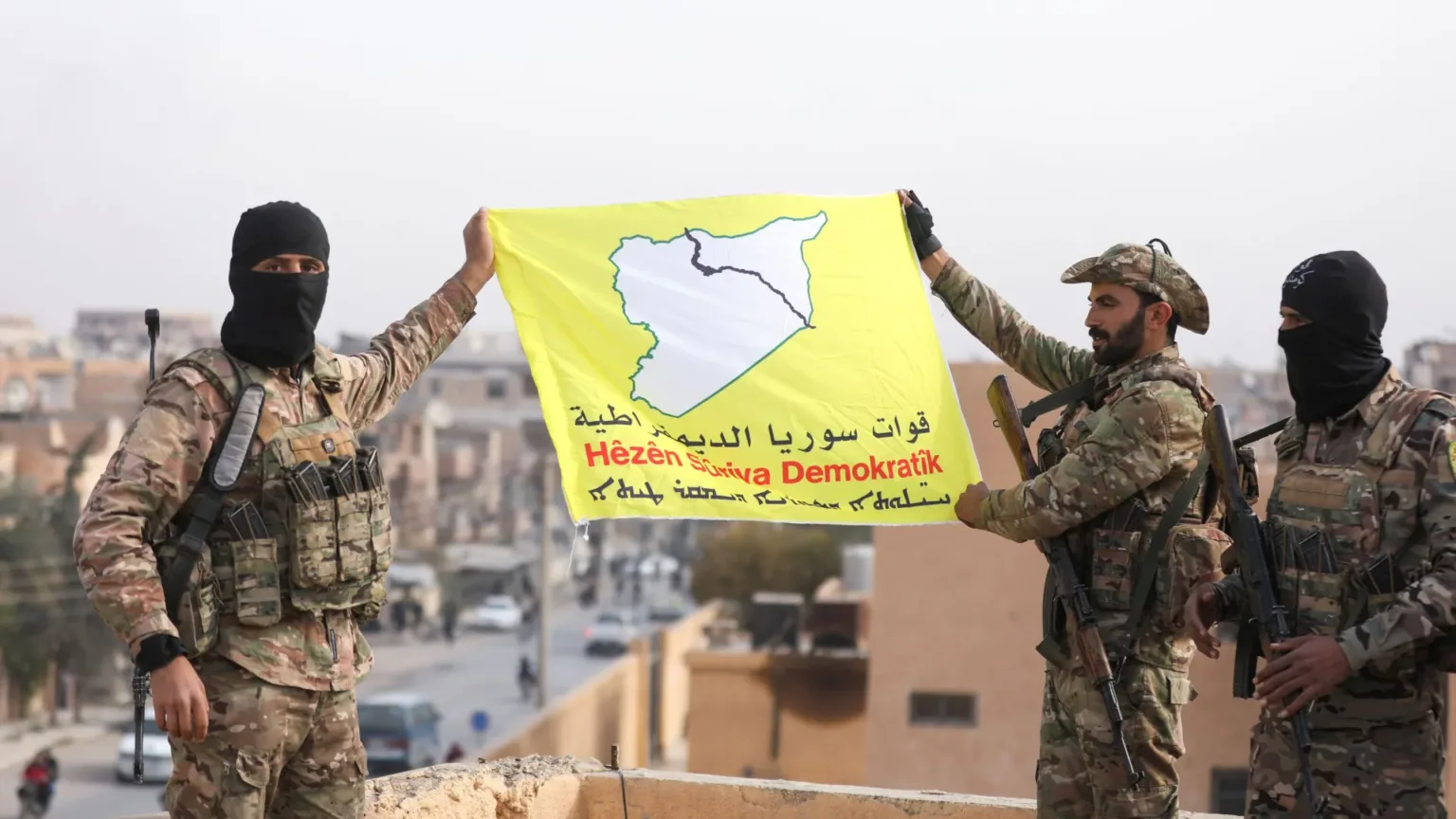
The Syrian Democratic Forces (SDF) have become a crucial element in the Syrian stability equation following the fall of Bashar al-Assad’s regime in December 2014, a development that constituted a massive geopolitical shift in the Middle East.
Formed in 2015 as a Kurdish-Arab-Assyrian alliance to combat ISIS, the SDF now controls roughly a third of eastern and northeastern Syria, including key oil fields in Deir ez-Zor and gas fields in Raqqa.
This control represents a model of multi-ethnic governance in a region historically divided.
According to several reports, including one published by the Carnegie Middle East Center in 2014, the SDF could play a positive role in Syria’s reconstruction if it transforms from a military entity into a political partner, contributing to regional stability by preventing the resurgence of terrorism and supporting economic development through the shared exploitation of natural resources. From a geopolitical perspective, the SDF’s role is situated within the context of regional power balances between Turkey, which views the SDF as an extension of the Kurdistan Workers’ Party (PKK); Iran, which seeks to maintain its influence in eastern Syria; and the United States, which has relied on the SDF as a partner in the fight against terrorism.
As noted in the Brookings Institution report of December 2024, “Beyond Assad: Syria and the Region,” the SDF has the potential to serve as a bridge for Syria’s diversity, particularly under a transitional government. If the SDF seizes this opportunity, it can contribute to preventing the disintegration of Syria and promoting regional peace through agreements such as the revised Adana Agreement, which governs Turkish-Syrian relations.
However, this requires judicious choices in light of the options available to the SDF following its recent withdrawal from the Ashrafieh and Sheikh Maqsoud neighborhoods of Aleppo and its impending military withdrawal from the Deir Hafer region.
This article will examine the main options available to the Syrian Democratic Forces (SDF) during this transitional phase. The aim is to provide an objective analysis that helps in understanding the risks and opportunities, while advising the SDF to avoid military escalation, which could lead to its defeat. It will also consider opposing viewpoints that see military escalation as necessary to maintain control and advocate for a political path that strengthens the SDF’s long-term influence for the benefit of the Syrian people.
A. Military Escalation: The Risks of a Return to War in Syria During the Transitional Phase:
The option of military escalation for the SDF, especially after its withdrawal from Ashrafieh and Sheikh Maqsoud on January 11, 2016, is a dangerous scenario that threatens to reignite the Syrian conflict on a large scale. According to the International Institute for Strategic Studies (IISS) report of October 2025, “Prospects for Security Sector Reform in Post-Assad Syria,” any escalation by the Syrian Democratic Forces (SDF) could lead to a direct confrontation with the Turkish-backed Syrian Army, plunging Syria back into the cycle of violence that has claimed more than half a million lives since 2011. In Deir Hafer, where the Syrian Army declared the area a “military-closed zone” on January 13, 2026, the troop buildup suggests a readiness for a confrontation, but escalation would only worsen the situation.
This scenario carries structural risks, such as reduced US support. The Pentagon announced plans in February 2025 to halve its forces in Syria, as noted in the US Congressional report “Syria: Transition and US Policy” of September 2025. However, there are dissenting voices who advocate for escalation as a means of maintaining control.
For example, Syrian Kurdish researcher Ahmed Abu al-Khair, in an article published in Middle East Eye in November 2025, argues that escalation is necessary to prevent the transitional government from imposing its centralized control, pointing to the HTS’s history of suppressing minorities, as happened in Idlib before 2024. Similarly, US Senator Lindsey Graham, in a statement to Fox News in January 2026, supports continued military support for the SDF to counter Turkish threats, considering a US withdrawal a “betrayal” that could lead to the resurgence of ISIS, but he sees escalation as an opportunity to strengthen the SDF’s negotiating position.
Conversely, Robert Ford, the former US ambassador to Syria, warns in an article published in Foreign Affairs in March 2025: “A US withdrawal will leave the SDF vulnerable to Turkish or Syrian attacks, bringing terrorism back to the eastern regions.” Furthermore, the RAND Corporation’s 2020 report, updated in 2025 and titled “Reimagining U.S. Strategy in the Middle East,” indicates that escalation could lead to a resurgence of ISIS, which still maintains capabilities in the Syrian desert, as happened in 2019 when it attempted to disrupt the abrupt U.S. withdrawal.
Economically, the cost of renewed war would be catastrophic. Syria is heavily reliant on reconstruction, and the World Bank estimates that in 2025, it anticipates additional losses of up to $500 billion if a new conflict erupts.
Therefore, despite some supportive opinions, escalation appears to be a significant risk that could result in the SDF losing its strategic position.
B. Transition to Political Action:
The option of laying down arms and transitioning to political action, instead of escalation, presents a golden opportunity for the SDF to strengthen its role as a guarantor of Syrian diversity.
Assuming a transitional government dominated by a single Islamist faction (HTS), as described in the March 2025 Carnegie report “New Syria: Halting the Dangerous Decline,” the SDF, with its secular and multi-ethnic character, could contribute to fostering diversity, thus preventing Syria from becoming a mono-ethnic state.
However, this option requires participation in the state without sectarian power-sharing, as suggested by scholars such as Dafna Rand in her 2025-2026 interview with the Massachusetts Institute of International Studies, where she emphasized that “the Syrian transition needs a model that ensures representation based on merit, not sect.”
From a socio-political perspective, the SDF could work through the state process to push for decentralization, which would serve the interests of Syria’s diverse regions.
As the 2025 Brookings report “Rebuilding Syria: From Sectarianism to Tribalism” noted, decentralization would allow for local management of resources, such as the oil fields in the northeast, thereby strengthening the state’s ability to manage them effectively.
Economic Decision.
The SDF, which has run a relatively successful self-administration in Raqqa and Hasakah, could mobilize popular support for this path, drawing on its experience in confronting ISIS, as documented in a 2019 International Crisis Group report, updated in 2025.
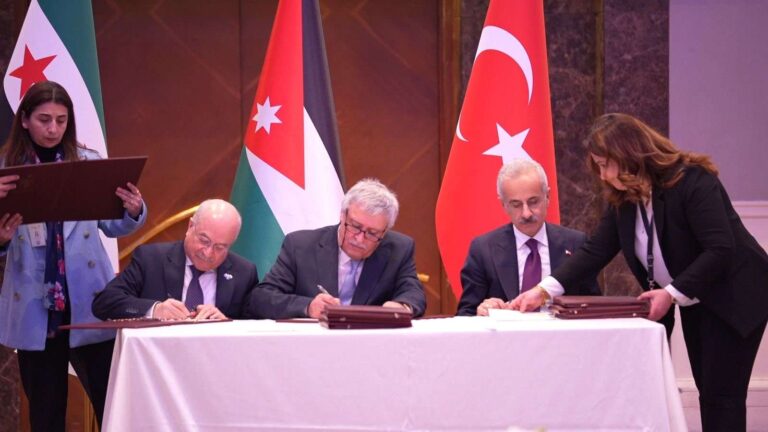
For example, the March 2025 agreement recognized the Kurds as an integral component, guaranteeing their language rights and local governance, as reported by Reuters on March 12, 2025.
However, there are opposing views that see risks in this option, such as the loss of military control.
As Turkish researcher Sinan Ülgen warns in a Carnegie Center report in April 2025, the political integration of the SDF could lead to its marginalization if the HTS continues its centralist policies, citing past violations in similar agreements.
Furthermore, some Kurdish leaders within the Democratic Union Party (PYD), as reported by Foreign Policy magazine in June 2025, believe that political integration without strong military guarantees could expose the Kurds to Turkish threats, recalling Operation Peace Spring in 2019. However, this option serves the overall Syrian interest, preventing partition and building a unified, pluralistic state. As analyst Charles Lister stated in his weekly publication, Syria Weekly, in January 2026, the political integration of the Syrian Democratic Forces (SDF) would prevent escalation in areas like Raqqa and even Hasakah, and open doors to international investment, especially after the lifting of US sanctions in June 2025, as announced by the White House.
C. Maintaining a State of Neither Peace Nor War:
The option of maintaining a state of “neither peace nor war” means relying on continued American support, but this is an unsafe bet given the policies of Donald Trump’s second administration. According to an Al Jazeera report on February 5, 2025, Trump did not officially inform the SDF of the American withdrawal plans. However, NBC News reports that same month, citing Pentagon sources, confirmed that the US administration was planning to withdraw troops within 30, 60, or 90 days to support the central government in Damascus.
Secretary of State Marco Rubio also confirmed in a statement to Congress in January 2025 that “the United States will support the integration of the SDF into the Syrian state, while reducing its military presence.”
This option appears likely to derail the transitional phase, as warned by the International Crisis Group’s March 2025 report, “The New Syria: Stopping the Dangerous Decline,” which indicated that it would freeze the situation, hindering stability and investment.
Nevertheless, some support this option as a wait-and-see strategy. In March 2025, Nicholas Heras, a researcher at the New Lines Institute, argued that maintaining the status quo would give the SDF time to strengthen its international alliances, particularly with Europe. He noted that the US withdrawal might not be complete, as was the case in 2019 when support was partially reinstated. Similarly, some US politicians, such as Congressman Adam Schiff, who told CNN in December 2025 that the US should wait until the transitional government proves its credibility, believe that a “no-peace” situation prevents unnecessary escalation.
In Deir Hafer, where military preparations are ongoing, a US withdrawal could trigger a Turkish or Syrian offensive, as Heras predicted.
This option would thus prolong the crisis, turning Syria into a frozen conflict zone, as outlined in the July 2025 British Parliament report, “Post-Assad Syria: Consequences and Interim Authorities.” However, it could also provide an opportunity for negotiation if international support continues.
Conclusion: Towards a Balanced Option Combining Pragmatism and Caution
In conclusion, the options facing the SDF—military escalation, which carries the risk of a return to war despite some support for it as a defensive measure; political transition, which offers an opportunity for diversity but also carries the risk of marginalization; and a state of neither peace nor war, which may be a temporary gamble but hinders progress—reveal the complexity of the Syrian situation.
The activation of the March 2025 agreement, which stipulates the integration of weapons and the SDF’s participation in the political process, stands out as the best balanced alternative, drawing on historical lessons such as the peace agreements in Colombia and South Africa, where integration successfully built stable states.
This agreement, welcomed by the European Union and the United States, guarantees the rights of the Kurds and prevents escalation, thus promoting stability. As Ambassador Tom Barrack stated in a State Department statement in August 2025, “Syria needs a unity that respects everyone.”
Therefore, we in the Research and Studies Department of the Scientific Office of the Syrian Future Movement advise the SDF not to be drawn into war with the Syrian government, as it may be the loser. Rather, we recommend focusing on political action while being wary of its risks, in order to achieve a greater impact in building the new multifaceted Syria, where diversity becomes a source of strength, not weakness.